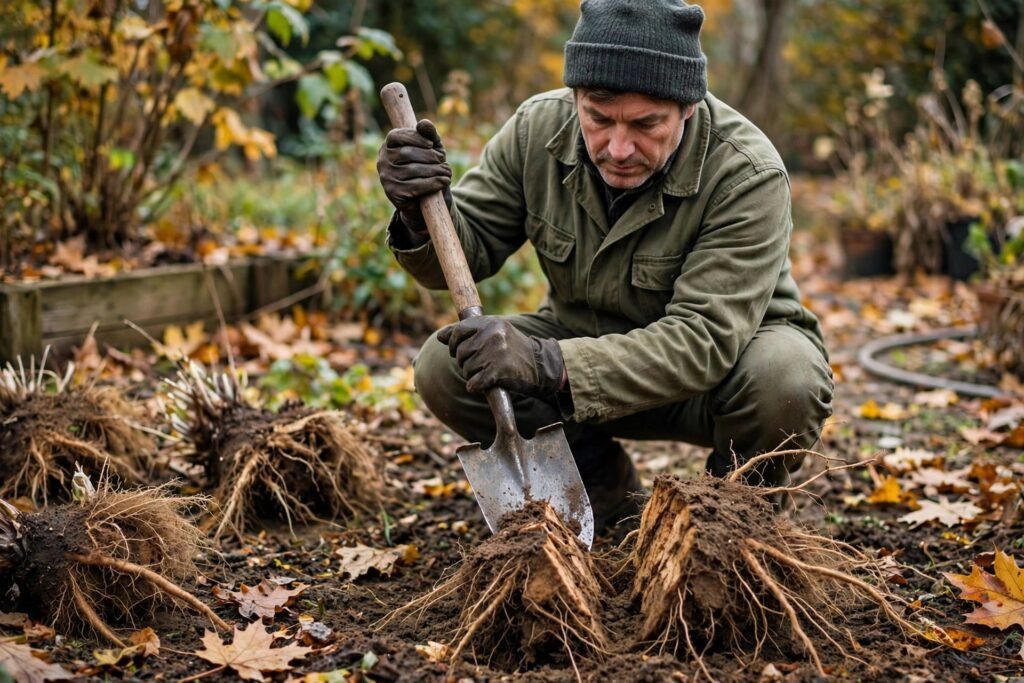
When Should You Divide Your Perennials? Timing, Tools, and Technique
Your daylilies bloomed spectacularly for years, then gradually… less. Fewer flowers, smaller blooms, a congested clump that looks tired. The plant is not dying — it is crowded. Most perennials eventually outgrow their space, with the center dying out while the edges struggle on. Division — digging up the clump, splitting it, and replanting the pieces — is the great rejuvenator: it restores vigor, multiplies your plants for free, and prevents the slow decline that gardeners mistake for a plant “wearing out.” But timing and technique make the difference between revival and ruin. Here is when and how to divide perennials correctly.
When to Divide: The Seasonal Rules
The universal rule: divide when the plant is not in active bloom or peak stress. For most spring- and summer-blooming perennials (daylilies, hostas, coneflowers, bee balm), early spring as new growth emerges or early fall (4–6 weeks before hard frost) are ideal — the plant can focus energy on root recovery without supporting flowers or fighting heat. Spring division lets you see exactly where to cut as shoots emerge; fall division gives roots a head start before winter.
The exceptions matter. Fall-blooming perennials (asters, mums, ornamental grasses) divide in spring only — fall division removes the energy they need for their imminent bloom and winter survival. Peonies divide exclusively in early fall (they resent spring disturbance profoundly). Irises (bearded) divide in late summer right after blooming. Spring bulbs are divided “in the green” after foliage fades or in fall. When in doubt, spring is the safer default for most perennials — the plant has the whole growing season ahead to recover. Your state’s extension service publishes regional division calendars; cross-reference yours for zone-specific timing, since optimal division windows shift by several weeks between zones 4 and 8.
Signs It’s Time
Divide when: the center of the clump is dead or sparse, flowering has noticeably declined, the clump has outgrown its space, or it has been 3–5 years since the last division (varies by species — aggressive spreaders like bee balm need it every 2–3 years; peonies can go decades).
How to Divide: Technique by Root Type
Fibrous-rooted perennials (daylilies, hostas, ornamental grasses, coneflowers): dig the entire clump with a sharp spade, shake or wash off soil to see the crown, then split — small clumps pull apart by hand, large ones need two garden forks back-to-back or a sharp spade/knife. Each division needs 3–5 healthy shoots (“fans” for daylilies/iris) plus ample roots. Discard the woody dead center; replant only vigorous outer portions.
Tap-rooted perennials (butterfly weed, gas plant, false indigo, poppies): do not divide — they resent it deeply and often die. Propagate these by seed or root cuttings instead. Rhizomatous spreaders (bearded iris, lily-of-the-valley): lift, cut rhizomes into sections each with a fan of leaves and roots, trim foliage by half to reduce water loss, and replant shallowly (iris rhizomes sit at the soil surface — burying them causes rot). Woody-based perennials (lavender, Russian sage): rarely divide well; take cuttings instead. Matching technique to root type is the entire skill — the wrong method on the wrong plant is how divisions die.
Aftercare: The Critical First Month
Divisions are trauma patients: they have lost most of their root mass and need intensive care for 2–4 weeks. Plant immediately — never let divisions dry out; keep them shaded and moist if planting must wait hours. Plant at the same depth as the original (the number-one division killer is planting too deep), water deeply at planting, then keep consistently moist (not soggy) until new growth signals recovery.
Mulch lightly to retain moisture but keep mulch away from crowns to prevent rot. Skip fertilizer for the first month — stressed roots cannot use it, and salts can burn them; begin half-strength feeding once active growth resumes. Provide temporary shade in hot weather (a strategically placed lawn chair works). Most divisions look miserable for 1–2 weeks — wilted, sad, alarming — then rebound as new roots establish. Patience is the aftercare; the plant knows what it is doing. These recovery principles mirror houseplant revival basics: water, patience, and resisting the urge to “help” too aggressively.
What to Do With the Extras
Division produces more plants than any garden needs — a single hosta clump can yield a dozen divisions. This is a feature, not a problem. Pot extras for plant swaps (garden clubs run them every spring — free plants and new friends), gift to neighbors (the classic gardener currency), donate to school or community gardens, or heel them into a nursery bed for future projects.
Never compost healthy divisions — that is throwing away money and plants. And label everything: divisions all look identical in pots, and “mystery perennial” is a frustrating garden feature. A garden that divides regularly becomes self-sustaining and generous — the mature gardener’s garden is largely built from divisions, not purchases. For the landscape-level view, improving curb appeal with free divided perennials is the highest-ROI landscaping there is.
Perennials You Should (and Shouldn’t) Divide
Divide eagerly: daylilies, hostas, asters, bee balm, black-eyed Susans, coneflowers, ornamental grasses, mums, Shasta daisies, yarrow — all respond with explosive renewed vigor. Divide cautiously: peonies (fall only, and they sulk for a year), irises (right technique, right time), hellebores (they resent it; divide only when necessary).
Never divide: butterfly weed, gas plant, baby’s breath, false indigo, Oriental poppies, lavender (take cuttings), Russian sage (take cuttings). For these, division is not rejuvenation — it is assault. Learn your plant’s root type before lifting the spade; five minutes of research saves five years of regret. A good perennial reference book, tabbed by species, earns its place on the potting bench for exactly these questions.
Expert Division Demonstrations
Watching an expert divide a plant once teaches more than reading about it ten times. Fine Gardening’s perennial division tutorials show proper crown-splitting technique in detailed photographs, and the University of Minnesota Extension’s dividing guide lists optimal timing by species for northern gardens. One viewing session before your first division day will save several plants.
Conclusion
Divide perennials when they show crowding, declining bloom, or dead centers — in spring or fall for most (spring only for fall-bloomers, fall only for peonies), using the technique matched to the root type, with diligent aftercare for the first month. The reward is renewed vigor, free plants by the dozen, and a garden that propagates itself. The spade is the perennial gardener’s most powerful tool. Use it without fear, but with knowledge.
Frequently Asked Questions
Can I divide perennials in summer?
It is possible but stressful — heat plus root loss is a hard combination. If you must, do it on a cool cloudy day, cut foliage back by half, water obsessively for two weeks, and provide temporary shade. Spring or fall is always preferable.
How small can divisions be?
Each division needs enough roots and 3–5 shoots to sustain itself — smaller pieces survive but take years to become garden-worthy. Bigger divisions (fist-sized or larger) establish faster and bloom sooner. When in doubt, divide less aggressively.
Why did my divisions die?
The common causes: planted too deep, allowed to dry out before or after planting, divided at the wrong time (blooming or extreme heat), or the species resent division (tap-rooted types). Match technique to root type and prioritize immediate planting and watering.
Should I fertilize new divisions?
Not immediately — wait until active new growth appears (2–4 weeks), then use half-strength balanced fertilizer. Stressed roots cannot process full-strength feed, and the salts can further damage them. Compost worked into the planting hole is the gentlest starter nutrition.