When Should You Plant Perennials in Michigan? A Zone-by-Zone Guide
Michigan gardeners live by a different calendar than the rest of the country. Plant your perennials too early and a late May frost turns them to mush; plant too late and they never establish before winter’s hammer. The state’s split personality — Upper Peninsula zone 4 winters versus Detroit’s zone 6b — means generic “plant in spring” advice is useless without Michigan specifics. Timing is the single biggest factor in perennial success here, more than soil, more than variety selection. Here is the Michigan perennial planting calendar, built for the state’s actual climate.
Understanding Michigan’s Planting Windows
Michigan has two prime perennial windows, not one. Spring planting runs from late April (southern Lower Peninsula) through early June — after the last frost date, which ranges from late April in Detroit to mid-June in the Keweenaw. Fall planting runs from late August through early October, giving roots 6–8 weeks to establish before the ground freezes (typically late November in the south, mid-October in the UP).
Both windows work, but they serve different goals. Spring planting gives the full growing season for establishment — safest for marginally hardy varieties and for gardeners who want first-year blooms. Fall planting exploits warm soil and cool air: roots grow vigorously while top growth slows, and fall-planted perennials often outperform spring-planted ones in year two. Michigan State University Extension’s gardening resources confirm fall as the underused sweet spot for most of the state.
Spring Planting: Timing by Zone
Zone 6b (Detroit, Ann Arbor): last frost ~late April — plant hardy perennials from late April, tender ones from mid-May. Zone 6a (Grand Rapids, Lansing): last frost ~early May — shift everything a week later. Zone 5 (central/northern Lower): last frost mid-to-late May — wait until Memorial Day for most planting. Zone 4 (UP): last frost early-to-mid June — planting season is brutally short; prioritize established nursery plants over small plugs.
Spring rule of thumb: soil temperature matters more than air temperature. Perennials establish fastest when soil hits 50°F+ — test with a $10 soil thermometer rather than guessing. Cold, wet spring soil rots crowns faster than any frost; if the ground squelches, wait a week. Container-grown nursery plants (the standard) transplant far more forgivingly than bare-root in Michigan’s fickle springs. Once planted, a layer of mulch and consistent water matter more than fertilizer — and the houseplant care principles of right-light-right-water apply outdoors too.
The Memorial Day Rule
For most of Michigan’s Lower Peninsula, Memorial Day weekend is the traditional safe-planting milestone — after it, frost risk is minimal and soil is warm. Use it as your default, adjusting earlier for the southeast and later for the north.
Fall Planting: Michigan’s Secret Advantage
Fall is arguably the better window for most Michigan perennials. Plant from late August (north) through early October (south), targeting 6–8 weeks before the ground freezes solid. Warm late-summer soil triggers explosive root growth while cooling air reduces transplant shock — the plant invests everything underground, exactly what you want before winter.
Fall rules: plant earlier rather than later (September beats October), water deeply until freeze-up (fall drought kills more transplants than cold), and mulch heavily after the first hard freeze — not before, since early mulching invites rodents and rot. Skip fall planting for marginally hardy varieties (zone-pushers) and for anything that hates wet winter soil; those want spring. Evergreen perennials and ornamental grasses establish particularly well in fall. For year-round structure, improving curb appeal with well-timed perennial plantings pays off in every season.
What to Plant When: Michigan’s Top Performers
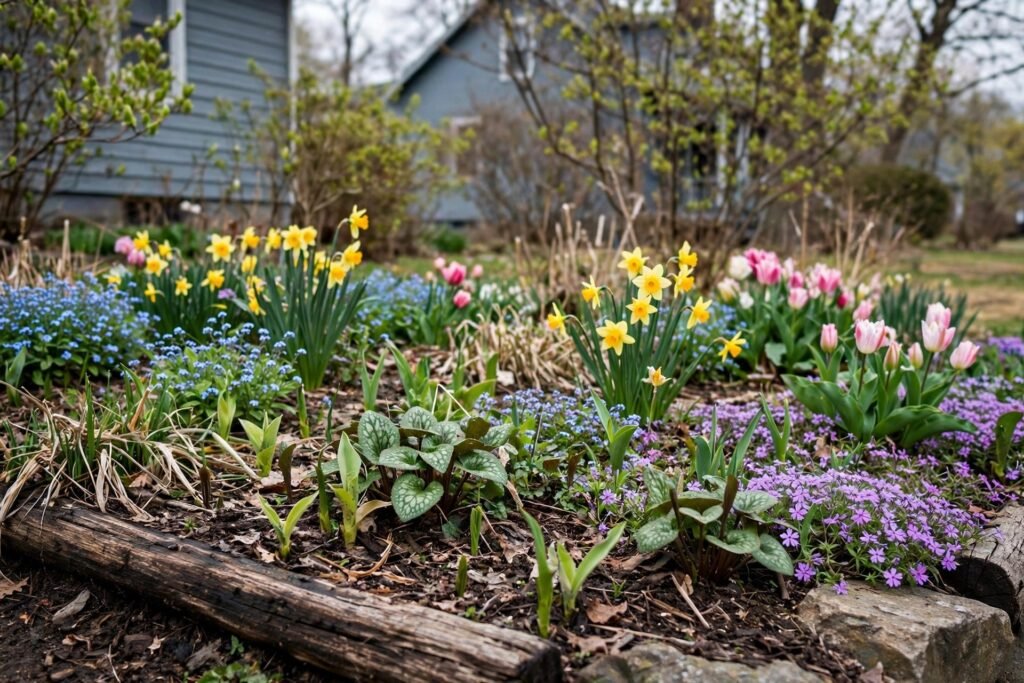
Bulletproof Michigan perennials that thrive on correct timing: daylilies, hostas, coneflowers, black-eyed Susans, bee balm, Russian sage, sedum, and ornamental grasses — all hardy statewide and forgiving of imperfect timing. For spring planting, add delphiniums and lupines (they want the full season). For fall, prioritize peonies (fall planting is traditional and superior), spring bulbs (plant September–October), and anything you want blooming early next year.
Michigan-specific cautions: avoid planting in the soggy clay thaw of March–April (wait for drainage), protect new fall plantings from freeze-thaw heaving with extra mulch in exposed sites, and remember lake-effect zones get more snow (great insulation) but later springs. Native Michigan perennials — wild bergamot, butterfly weed, little bluestem — outperform imports because they evolved for exactly these conditions.
Michigan-Specific Resources Worth Bookmarking
Michigan gardeners have unusually good local resources — use them, because national planting advice often misses the state’s lake-effect quirks. Michigan State University Extension publishes region-specific perennial guides and runs the statewide garden hotline, where you can get answers tailored to your county’s soil and microclimate. Their fall-planting trials consistently show that perennials planted by mid-September in the Lower Peninsula establish root systems 30–40 percent larger by frost than October plantings — data worth respecting when you are tempted to delay.
For timing precision, the Old Farmer’s Almanac planting calendar, customized by ZIP code, gives frost dates and planting windows for your exact location — far more useful than the statewide averages on seed packets. And do not overlook your county’s MSU Extension office fall plant sales, where locally grown perennials (already acclimated to Michigan conditions) sell for a fraction of nursery prices. Local provenance matters enormously: a coneflower grown from Michigan seed stock will outperform the same variety shipped from a Georgia greenhouse, because it has never known an easier climate and carries genetics tuned to genuinely harsh northern winters.
Conclusion
Plant perennials in Michigan in two windows: spring after the soil warms (late April in Detroit, June in the UP) or fall 6–8 weeks before freeze-up — with fall often the stronger choice for root establishment. Match timing to your zone, test soil temperature instead of guessing, mulch after freeze-up, and lean on natives. Get the calendar right and Michigan’s challenging climate becomes an asset: the cold winters that demand careful timing also deliver the chill hours that make peonies, lilacs, and bulbs perform spectacularly.
Frequently Asked Questions
Can I plant perennials in Michigan in summer?
Yes, with caveats — container perennials plant fine all summer if you water religiously through establishment (daily for two weeks, then regularly). Avoid the hottest weeks for the most delicate varieties, and mulch immediately. Summer planting works; it just demands more aftercare than spring or fall.
Is fall really better than spring for planting perennials?
For most hardy perennials, yes — warm soil plus cool air produces superior root establishment, and fall-planted perennials typically outperform spring-planted ones in their second year. The exception is marginally hardy varieties, which are safer planted in spring.
How late is too late to plant perennials in Michigan?
When you cannot get 6 weeks of root growth before the ground freezes — roughly early October in southern Michigan, early September in the UP. Planting later risks freeze-thaw heaving that pushes crowns out of the ground. When in doubt, heel the plants into a sheltered spot and plant in spring.
Do I need to protect new perennials their first Michigan winter?
Mulch is the main protection: 3–4 inches applied after the ground freezes (not before) insulates against freeze-thaw cycles. Skip wrapping or covering except for marginally hardy varieties. Snow is excellent insulation — the danger is bare, freeze-thawing ground, not cold itself.