How to Get Over Nerves When Auditioning: A Performer’s Playbook
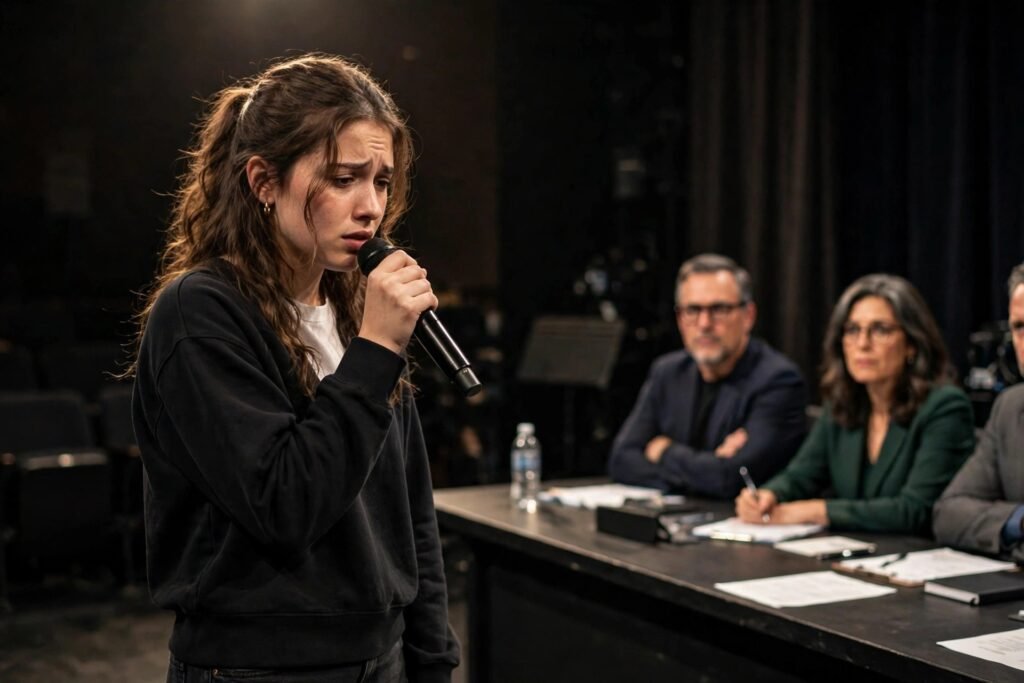
Your hands are shaking. Your throat has closed around the first note. There are three people behind a table with clipboards, and suddenly the song you have sung perfectly a hundred times in your bedroom has evaporated from your memory. Audition nerves — the dry mouth, racing heart, blank mind — hit nearly every performer, from first-time community theater hopefuls to professionals with decades on stage. The difference between those who crumble and those who deliver is not talent or fearlessness. It is a set of concrete techniques for managing the body’s alarm system so your preparation can actually show up. Here is the performer’s playbook.
What’s Happening in Your Body (and Why It’s Normal)
Stage fright is the fight-or-flight response misfiring: your brain interprets the panel’s attention as a survival threat, dumping adrenaline that was designed for escaping predators, not singing high C’s. Heart pounds to oxygenate muscles, breathing shallows, fine motor control degrades (hence shaky hands), digestion halts (nausea), and the prefrontal cortex — your memory and artistry center — gets hijacked by the amygdala. Forgetting lyrics mid-audition is not a character flaw; it is neurochemistry.
Two reframes change everything. First, the symptoms are your body trying to help — the energy is fuel, not failure; Olympic athletes feel exactly this and call it being “pumped.” Second, the panel wants you to succeed — auditions are tedious for judges, and they are rooting for the next person to be the one. You are not facing enemies; you are facing tired people hoping you are great. Internalizing this drains the threat response at its source. Before you even book the room, finding open mic nights nearby gives you low-stakes stages to desensitize on.
Preparation: The Anxiety Antidote
Nerves feast on uncertainty, so starve them with over-preparation. Know your material cold — not “pretty well” but automatic: practice until you can perform it while distracted (sing while doing dishes, recite while walking). Prepare the boring logistics obsessively: sheet music in a binder that lies flat, backup tracks tested, outfit decided days ahead, route mapped with 30 minutes’ buffer. Every decided detail is one less thing for anxiety to chew on.
Simulate the pressure: perform for friends, record yourself (the red light triggers a mini version of panel nerves — excellent training), rehearse in the actual clothes and shoes. Do a full mock audition including the walk-in, the slate (“Hi, I’m…”), and the awkward waiting — familiarity with the ritual drains its power. And prepare your recovery: decide in advance that a cracked note gets a breath and a smile, not a spiral. Local theater performances are ideal practice venues — real audiences, low stakes, frequent opportunities.
The 5-4-3-2-1 Grounding Technique
In the waiting room, run this: name 5 things you see, 4 you hear, 3 you can touch, 2 you smell, 1 you taste. It yanks your brain from catastrophic future-tripping into present-moment sensing, measurably lowering acute anxiety in minutes. Pair it with slow exhales — longer out than in — to manually downshift your nervous system.
Day-Of Protocol: Body First, Mind Follows
On audition day, manage physiology before psychology. Move: 20 minutes of exercise that morning burns off baseline adrenaline. Eat lightly 2–3 hours before (a full stomach plus nerves equals nausea; an empty one plus adrenaline equals shakiness). Hydrate well — dehydration thickens vocal folds and fogs thinking. Avoid excess caffeine (it mimics and amplifies anxiety symptoms) and never use alcohol or beta-blockers without medical guidance.
Warm up thoroughly and privately: voice, body, and the material itself — never let the audition room be the first time your voice opens that day. Arrive early enough to acclimate to the space; unfamiliar rooms spike anxiety, familiar ones calm it. In the final minutes, use power posing’s legitimate cousin: expansive posture and slow breathing for two minutes genuinely reduce cortisol and raise confidence markers. Then walk in with one thought: “I prepared, I belong here, let’s share this.”
During the Audition: Performing Through the Storm
The first 30 seconds are the worst — adrenaline peaks, then your training takes over if you let it. Anchor to the material, not the panel: pick a focal point just above their heads, breathe into your first phrase, and trust the muscle memory you built. If your mind blanks, do not apologize or explain — pause, breathe, and restart the phrase; panels respect recovery far more than perfection.
Reframe the panel in real time: they are collaborators discovering whether you fit their puzzle, not judges sentencing you. Make one genuine connection — a smile at the accompanist, eye contact on the emotional line — because connection reads as confidence and confidence reads as castability. And remember the secret professionals know: the panel forgets 90 percent of auditions within hours. This liberates you — a imperfect-but-alive performance beats a careful-but-dead one every time, because they remember feeling, not flawlessness.
After: The 24-Hour Rule and Long-Term Desensitization
Post-audition rumination is the mind replaying the worst 10 seconds on loop. Institute the 24-hour rule: no analyzing the audition for a full day. Then do a structured debrief — what worked, one thing to improve, and move on. Never email the panel asking how you did; it reads as insecurity and changes nothing.
Long-term, nerves shrink through exposure, not avoidance. The desensitization ladder: perform monthly at open mics, then quarterly auditions for shows you mildly want, building to the ones you desperately want. Each rung teaches your nervous system that panels are survivable. Many performers also benefit from performance-anxiety coaching or CBT — reframing catastrophic thoughts (“I’ll humiliate myself”) into realistic ones (“I’ll be nervous and mostly fine”) is a trainable skill with strong evidence. The American Psychological Association’s anxiety resources cover performance anxiety specifically, and the techniques transfer to interviews, presentations, and every other evaluated moment in life.
Learning From Professional Audition Coaches
Beyond self-study, working with an audition coach — even for two or three sessions — can transform your preparation. A coach hears the tension you cannot feel, spots the interpretive choices that read as nervous rather than expressive, and runs mock auditions under realistic pressure. Many university music departments and community music schools offer affordable coaching; the Music Teachers National Association maintains a teacher directory searchable by specialty, and Backstage’s audition advice archive collects professional casting directors’ guidance on everything from slate delivery to handling redirection. One coached mock audition typically teaches more than a month of solitary practice — the feedback loop is that much faster.
Conclusion
Getting over audition nerves is not about eliminating fear — it is about preparing so thoroughly that training survives adrenaline, managing your body on the day, anchoring to the material instead of the panel, and desensitizing through repeated low-stakes exposure. Every performer you admire has stood where you are standing, shaking. They just learned the playbook. Now you have it too. Break a leg — you have done the work, and the work is what shows.
Frequently Asked Questions
How do I stop my voice from shaking when nervous?
Shaky voice comes from shallow breathing and throat tension. Breathe low into the belly, drop the jaw and tongue root consciously, and start with a supported hum before singing. The shaking usually settles within the first phrase once breath support engages.
Should I tell the panel I’m nervous?
A brief, warm acknowledgment (“I’m excited to be here”) is fine; apologizing for nerves is not — it focuses everyone on the anxiety instead of the performance. Panels expect nerves; they are evaluating what you do with them.
What if I completely blank on my material?
Pause, breathe, smile, and restart the section — do not apologize or explain. Panels see blanks regularly and judge the recovery, not the lapse. Having a “restart point” pre-decided for each piece makes recovery automatic instead of panicked.
Do beta-blockers help with audition anxiety?
They blunt physical symptoms for some performers but require a doctor’s prescription and guidance — they are not candy, and they do not address the mental component. Many musicians use them; many more succeed with the behavioral techniques above. Discuss with a physician, never self-prescribe.