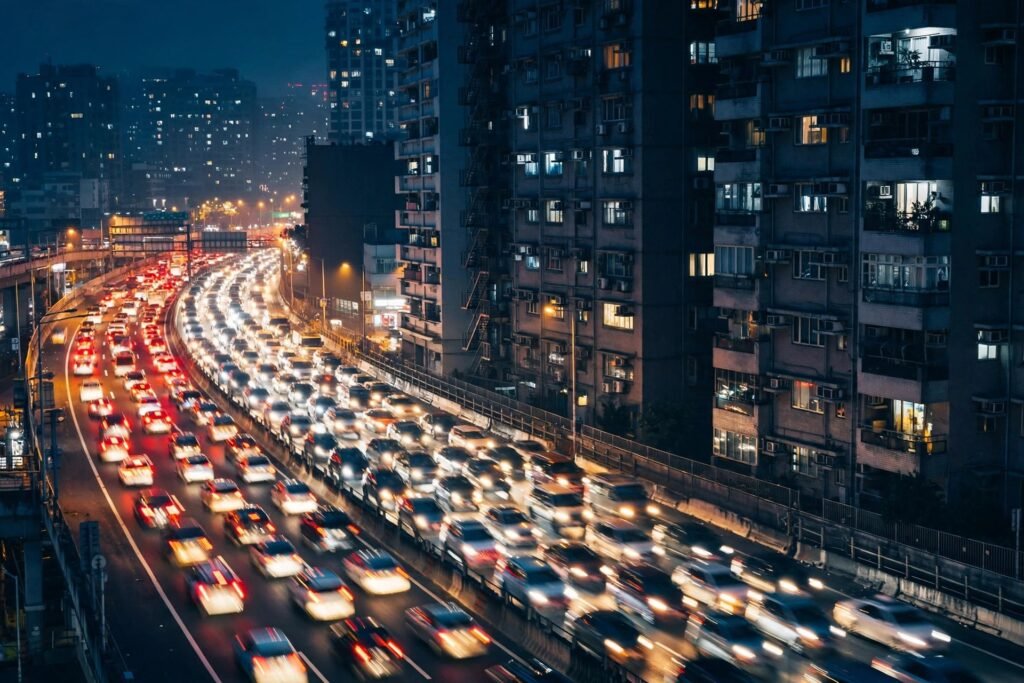
How Does Noise Pollution Affect Human Health? The Evidence
We treat noise as an annoyance — the price of modern life, something to grumble about and tune out. But epidemiologists treat it as a pollutant, every bit as real as smog: the World Health Organization ranks environmental noise among the top environmental health risks in the developed world, linking chronic exposure to heart disease, stroke, cognitive impairment in children, and tens of millions of lost healthy life-years annually across Europe alone.
Noise does not just bother you; it measurably damages your cardiovascular system, your sleep architecture, your children’s learning, and your mental health — mostly through pathways you never consciously register. This guide explains the science of how sound becomes a health hazard, where the dangerous exposures hide, and what actually reduces them.
How Noise Harms the Body: The Stress Pathway
The core mechanism is not the ears — it is the stress response. Your auditory system evolved as an alarm network: sudden or persistent sound triggers the amygdala, which activates the hypothalamic-pituitary-adrenal axis — cortisol, adrenaline, elevated heart rate and blood pressure. This is useful when the sound is a predator. It is destructive when the sound is the highway outside your bedroom, night after night, for years.
Crucially, this happens whether or not you consciously notice the noise. Sleeping subjects show spikes in cortisol and blood pressure in response to nighttime noise events they do not remember. Children in noisy schools show elevated stress hormones without reporting annoyance. The body keeps score even when the mind has tuned out — which is why “I’ve gotten used to it” is physiologically false. Habituation of annoyance does not mean habituation of harm.
The Cardiovascular Evidence
The strongest causal evidence links chronic noise exposure to cardiovascular disease. Large European cohort studies (including the landmark HYENA and subsequent meta-analyses) find that long-term exposure to road traffic noise above ~53 decibels (WHO’s recommended limit) raises the risk of ischemic heart disease, hypertension, and stroke by measurable margins — roughly a 5-8 percent increase in heart disease risk per 10 dB increase in exposure. The proposed pathway runs through chronic stress hormones, endothelial dysfunction, and disrupted sleep — all established cardiovascular risk factors. Aircraft noise shows similar associations. The CDC’s noise and health resources summarize the cardiovascular findings for U.S. audiences.
Sleep: The Most Vulnerable Target
Nighttime noise is the most damaging exposure because sleep is when the body repairs — and noise fragments sleep architecture even without full awakenings. Traffic, aircraft, and rail noise cause micro-arousals, reduce deep slow-wave sleep and REM, and elevate nighttime blood pressure. The WHO’s night-noise guidelines set 40 dB as the target maximum outside bedrooms — a level exceeded by tens of millions of Americans living near highways, airports, and rail lines.
The effects compound: fragmented sleep impairs next-day cognition, mood regulation, and metabolic health — and chronic short sleep is independently linked to obesity, diabetes, and dementia risk. If traffic noise is degrading your sleep, the bedroom is the highest-ROI intervention point in your home. Our guide to soundproofing a bedroom wall on a budget covers the practical fixes (sealing, mass, decoupling) in order of cost-effectiveness, and general sleep hygiene in our falling asleep without pills guide addresses the behavioral half.
Children: Learning and Development
Children are disproportionately harmed. The landmark RANCH study (across the UK, Netherlands, and Spain) found aircraft noise exposure linearly impaired children’s reading comprehension and memory — a 5 dB increase in aircraft noise associated with a 2-month reading delay. Classroom noise from nearby roads and airports measurably degrades attention, language acquisition, and standardized test scores. The mechanisms: direct interference with speech perception (children need quieter conditions than adults to understand speech), chronic stress elevation, and teacher-voice masking that reduces effective instruction time.
The implication for school siting and classroom acoustics is direct — and for parents, it means the “background” noise of the home learning environment (TV always on, traffic through thin windows) has measurable cognitive costs during homework hours.
Hearing Damage: The Direct Injury
Beyond the stress pathway, loud noise directly destroys hearing. The mechanism: excessive sound overworks the hair cells of the cochlea, generating free radicals that kill them — and mammalian hair cells do not regenerate. The damage is cumulative and permanent. The danger thresholds: 85 dB over 8 hours (the occupational limit — a lawnmower, heavy traffic), with safe duration halving every 3 dB (88 dB: 4 hours; 91 dB: 2 hours; concerts at 100-110 dB: minutes). Personal audio devices at full volume hit 100-105 dB — capable of permanent damage in under 15 minutes.
Tinnitus (ringing) after loud exposure is the warning light — it signals hair cell distress. Recurring tinnitus means recurring damage. Foam earplugs ($0.25/pair) at concerts, musician’s earplugs for regular exposure, and the 60/60 rule for headphones (60 percent volume, 60 minutes max) are the cheap, effective defenses.
Mental Health and Cognition
Chronic noise exposure correlates with higher rates of anxiety, depression, and irritability — partly mediated through sleep disruption and partly through the chronic low-grade stress of uncontrollable environmental intrusion. The annoyance itself is a health-relevant outcome: perceived lack of control over one’s acoustic environment predicts distress better than the decibel level alone. Workplace noise degrades complex cognitive performance (reading, problem-solving) even at moderate levels, with open-office research showing measurable productivity costs.
What Actually Reduces Exposure
At the source: the most effective interventions are collective — quieter road surfaces, low-noise tires, rail grinding, night-flight restrictions, urban planning that separates housing from highways. Support these politically; individual fixes cannot substitute.
At the building: sealing air gaps (noise follows air), adding mass (a second layer of drywall with damping compound), double- or triple-glazed windows facing the noise, and bedroom placement on the quiet side of the home. White noise machines mask intermittent sounds effectively for sleep.
Personal: earplugs for loud events and work, volume discipline with headphones, and — underrated — choosing quieter routes, quieter appliances (check dB ratings when buying), and quiet hours as a household norm.
The EPA’s noise pollution resources cover federal noise policy history and community action guidance, though the EPA’s noise office has been defunded since 1982 — a policy gap advocates are still trying to close.
Conclusion
Noise pollution harms human health through the chronic stress pathway — elevated cortisol, blood pressure, and inflammation that the body sustains even during sleep and even when you think you have tuned it out. The evidence is strongest for cardiovascular disease, sleep fragmentation, children’s learning impairment, and permanent hearing damage. Treat noise as the pollutant it is: protect sleep first, protect children’s learning environments second, protect your hearing always — and support the collective source-reduction policies that individual earplugs can never replace.
Frequently Asked Questions
Can noise pollution cause heart disease?
Yes — large cohort studies link chronic traffic and aircraft noise exposure to increased risk of hypertension, ischemic heart disease, and stroke, likely through chronic stress-hormone elevation and sleep disruption. Risk rises roughly 5-8% per 10 dB of exposure.
What is a safe decibel level for sleep?
The WHO recommends keeping nighttime noise below 40 dB outside the bedroom. Traffic, aircraft, and rail noise above this fragments sleep architecture even without conscious awakenings.
Does noise affect children’s learning?
Measurably. Studies show aircraft and road noise impairs reading comprehension, memory, and attention in children — a 5 dB increase in aircraft noise associated with roughly a 2-month reading delay. Children need quieter conditions than adults for speech comprehension.
How loud is too loud for hearing damage?
85 dB for 8 hours is the damage threshold, with safe time halving every 3 dB. Concerts (100-110 dB) can cause permanent damage in minutes; max-volume earbuds (~105 dB) in under 15 minutes. Tinnitus after exposure is a warning sign.
What is the most effective noise reduction at home?
Seal air gaps first (noise follows air), then add mass to walls, upgrade windows facing the noise source, and use white noise for sleep masking. The bedroom is the highest-priority room. Collective source reduction (quieter roads, flight rules) matters most at scale.