How to Choose Sunscreen for Sensitive Skin: Dermatologist Guide
For people with sensitive skin, sunscreen shopping is a special kind of misery. You need daily sun protection — dermatologists are unanimous that it is the single most effective anti-aging and skin-cancer-prevention step — but half the sunscreens on the shelf leave you red, stinging, or broken out. The wrong formula does not just fail to protect; it creates the exact irritation you were trying to avoid.
Choosing sunscreen for sensitive skin is a solvable chemistry problem. This guide explains which filters irritate and which do not, how to read an ingredients label like a dermatologist, the formulas worth trying, and the application habits that make any sunscreen work better.
Why Sunscreen Irritates Sensitive Skin
The culprits are specific and identifiable. Chemical (organic) UV filters — especially oxybenzone and, for some people, avobenzone, octinoxate, and homosalate — are the most common irritants. They work by absorbing UV radiation and converting it to heat, a process that happens in the skin, which is precisely why reactive skin objects. Oxybenzone is also the filter with the most concerning systemic-absorption data and the one Hawaii and other jurisdictions have restricted for coral-reef toxicity.
Beyond filters, the supporting cast causes trouble: fragrance (the number one cosmetic allergen — “unscented” is not the same as “fragrance-free”), drying alcohols (alcohol denat, listed high in the ingredients), essential oils and botanical extracts marketed as “natural soothing agents” that are actually common sensitizers, and preservatives like methylisothiazolinone in some formulations. Sensitive skin reacts to the formula, not just the filter — which is why two mineral sunscreens can feel completely different.
Mineral vs. Chemical: The Sensitive-Skin Verdict
Mineral (inorganic) filters — zinc oxide and titanium dioxide — are the default recommendation for sensitive skin, echoed by the American Academy of Dermatology (AAD). They sit on top of the skin and scatter/reflect UV rather than absorbing it chemically, which means less interaction with reactive skin. Zinc oxide is the broader-spectrum of the two (it covers the full UVA range); titanium dioxide covers UVB and short UVA well.
The trade-offs are real: mineral formulas can leave a white cast (newer micronized and tinted versions are much better, especially for medium and deep skin tones), feel thicker, and historically offered lower SPF ceilings — though SPF 50 mineral options are now common. Chemical sunscreens feel more elegant and are easier to apply generously, which matters because under-application is the number one sunscreen failure. If your skin tolerates a modern chemical filter set (like bemotrizinol-based European formulas), consistent generous use beats grudging use of a mineral formula you hate.
The Filters to Seek and Avoid
Seek: non-nano zinc oxide (broadest, gentlest), titanium dioxide. Usually tolerated: newer-generation filters (bemotrizinol/Tinosorb S, ecamsule/Mexoryl SX) — excellent protection with low irritation rates, though U.S. availability lags Europe. Approach with caution: avobenzone, octocrylene, homosalate. Avoid if reactive: oxybenzone, fragrance, drying alcohols high on the list.
How to Read the Label
Flip the bottle. Under “Active Ingredients” you will find the UV filters with percentages — this tells you mineral vs. chemical instantly. Then scan “Inactive Ingredients” for the irritant hall of fame: fragrance/parfum, alcohol denat, essential oils (lavender, citrus, tea tree), and methylisothiazolinone. Shorter inactive lists are generally kinder — fewer ingredients, fewer suspects.
Look for meaningful claims, not marketing: “fragrance-free” (regulated meaning: no added fragrance), “hypoallergenic” (unregulated, but a signal of intent), “for sensitive skin,” “non-comedogenic” (won’t clog pores — relevant if you break out), and “dermatologist tested.” Ignore “natural,” “chemical-free” (everything is chemicals, including zinc oxide), and SPF numbers above 50 — above SPF 50, the incremental protection is marginal and the numbers encourage under-application.
The Patch Test Protocol
Never debut a new sunscreen on your full face before an important day. Apply a strip to the jawline or behind the ear for 3-5 consecutive days of normal use. Sensitive-skin reactions are often delayed — irritant contact dermatitis can take 48-72 hours to appear. A product that passes the patch test usually passes the face.
Application: Where Most People Fail
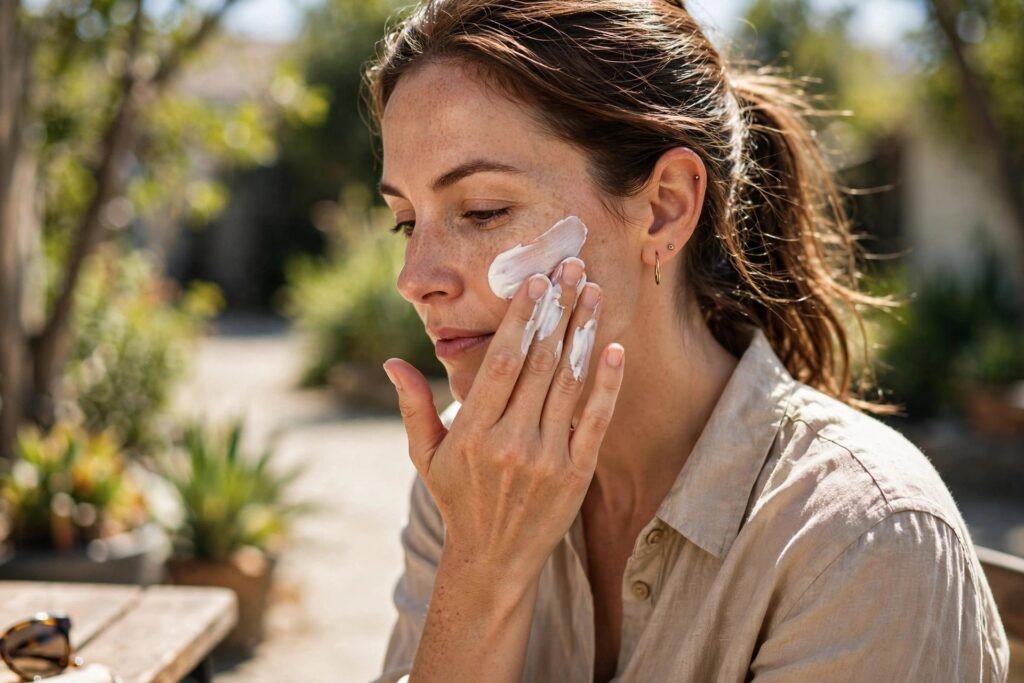
Dermatologists’ most repeated statistic: people apply one-quarter to one-half the tested amount, turning SPF 50 into effective SPF 8-15. The correct dose is about a shot-glass full (one ounce) for full body, or two finger-lengths for face and neck. Apply 15 minutes before sun exposure (critical for chemical filters; mineral works immediately but the habit is the same), and reapply every two hours — and after swimming or heavy sweating, regardless of “water resistant” claims (note: no sunscreen is “waterproof”).
Do not forget the commonly missed spots: ears, back of neck, tops of feet, lips (use SPF lip balm), and the scalp part line. And remember sunscreen is the last step of skincare, first step before makeup — give it a few minutes to set. For related guidance on building a gentle routine around sun protection, see our earlier guide to choosing the right sunscreen for sensitive skin, and note that seasonal changes affect more than skin — seasonal hair shedding often coincides with the spring sun-ramp-up when protection matters most.
Formula Types Worth Trying
Tinted mineral SPF: iron oxides in tinted formulas add visible-light protection (relevant for melasma) and eliminate white cast. Often the best-tolerated daily option.
Mineral sticks: excellent for reapplication and for kids; the waxy base adheres well. Keep one in every bag.
Fluid/serum textures: newer mineral fluids apply thinly and layer well under makeup — the answer for people who abandoned mineral years ago because of the paste texture.
Powder SPF: useful only for reapplication over makeup, never as primary protection (impossible to apply enough). A supplement, not a strategy.
When to See a Dermatologist
If every sunscreen seems to cause reactions, you may be dealing with a specific contact allergy (patch testing can identify the exact ingredient), a photosensitivity condition, or rosacea that needs management beyond product swaps. A dermatologist can also prescribe high-protection options for extreme sensitivity. Persistent rashes, swelling, or hives after sunscreen use warrant prompt evaluation rather than more product roulette.
The Skin Cancer Foundation (skincancer.org) maintains a searchable database of recommended sunscreens across categories, all vetted for meeting their protection standards.
Conclusion
For sensitive skin, the winning formula is almost always a fragrance-free mineral sunscreen built on zinc oxide, applied generously and reapplied on schedule. Read the inactive ingredients, patch-test before committing, dose correctly, and treat “sensitive skin” marketing as a starting filter rather than a guarantee. The best sunscreen remains the one you will actually wear every day — find the gentle formula you do not hate, and the protection takes care of itself.
Frequently Asked Questions
Is mineral or chemical sunscreen better for sensitive skin?
Mineral (zinc oxide, titanium dioxide) is the dermatologist-recommended default for sensitive skin because the filters sit on the skin’s surface rather than being absorbed. Chemical filters — especially oxybenzone — are the most common sunscreen irritants.
What ingredients should I avoid in sunscreen for sensitive skin?
Oxybenzone, fragrance/parfum, drying alcohols (alcohol denat), essential oils, and methylisothiazolinone. Check inactive ingredients, not just the SPF number — the formula’s supporting ingredients cause many reactions.
How much sunscreen should I apply?
About one ounce (a shot glass) for full body, or two finger-lengths for face and neck — most people apply one-quarter to one-half of this, drastically reducing protection. Reapply every two hours and after swimming or sweating.
Does SPF over 50 matter?
Marginally. SPF 30 blocks ~97% of UVB, SPF 50 ~98%. Above 50, gains are tiny and high numbers encourage under-application. Proper amount and reapplication matter far more than the number on the bottle.
Can I use sunscreen if I have rosacea?
Yes — sun is a major rosacea trigger, so protection is essential. Choose fragrance-free mineral formulas; tinted zinc oxide options often work well. If flares persist, see a dermatologist to manage the underlying condition.