How to Calm a Dog During Thunderstorms: Vet-Approved Plan
The sky darkens, the first distant rumble rolls through, and your normally confident dog transforms: panting, pacing, drooling, wedging herself behind the toilet or clawing at the door. Storm phobia is one of the most common canine behavior problems — studies suggest up to half of dogs show significant fear of thunderstorms — and it tends to worsen with age if unmanaged. Worse, panicked dogs injure themselves: breaking through windows, chewing through doors, running blindly into traffic.
The good news: storm anxiety is highly treatable with the right combination of environment management, behavior modification, and (when needed) veterinary support. This guide covers what is actually happening in your dog’s brain during a storm, what to do in the moment, and the long-term training protocol that reduces fear at its root.
Why Storms Terrify Dogs: It Is Not Just the Noise
Thunder is only part of the assault. Dogs experience storms through multiple channels humans barely register: barometric pressure drops (dogs can sense the pressure change hours before the storm — which is why anxiety often starts before you hear anything), static electricity buildup in their fur (a real, measurable charge that delivers tiny shocks, especially in long-coated breeds), low-frequency rumbles below human hearing range, ozone and metallic smells carried on storm winds, and flashes that strobe through windows.
Some breeds are genetically predisposed — herding breeds (border collies, Australian shepherds), sporting breeds, and mixes thereof show higher rates of noise phobia, likely because generations of selection for environmental sensitivity amplified startle responses. Early life matters too: puppies under-socialized to loud noises during the critical 3-to-14-week window are significantly more vulnerable as adults.
Why It Gets Worse Over Time
Untreated storm phobia follows a predictable escalation: each terrifying storm sensitizes the dog further, so the fear triggers earlier (at the first pressure drop) and generalizes (to rain, wind, even dark skies). This is classical conditioning running in reverse — and it is why “she’ll get used to it” is the worst advice. Without intervention, dogs do not habituate to storms; they sensitize.
In the Moment: The Storm Protocol
When the storm is already here, your goals are safety and damage control — not training. Training happens between storms; during the storm, manage.
1. Secure the environment first. Close windows, curtains, and blinds (reducing flashes and muffling sound). Move the dog to an interior room or basement — the most insulated space. Check that doors, gates, and fences are latched; more dogs are lost during storms than any other single cause. Verify ID tags and microchip registration now, not after an escape.
2. Create a safe den. A crate (if the dog already loves it — never force a panicked dog into a crate), a bathroom, or a closet with blankets. The space should feel enclosed and be as sound-insulated as possible. Some dogs self-select a spot — let them; the bathtub is a classic because porcelain grounds static electricity.
3. Mask the sound. White noise machines, loud fans, or bass-heavy music/TV at solid volume. The goal is not silence — it is unpredictability reduction. A constant loud hum masks the sudden cracks that trigger startle responses. Classical music specifically has modest evidence for calming kennelled dogs; heavy bass tracks work by physically masking low thunder frequencies.
4. Try pressure wraps. Snug-fitting anxiety wraps (the Thundershirt is the known brand) apply maintained pressure, similar to swaddling. Evidence is mixed but positive — roughly half of owners report meaningful improvement. They work best put on before the dog panics, at the first sign of pressure-drop restlessness.
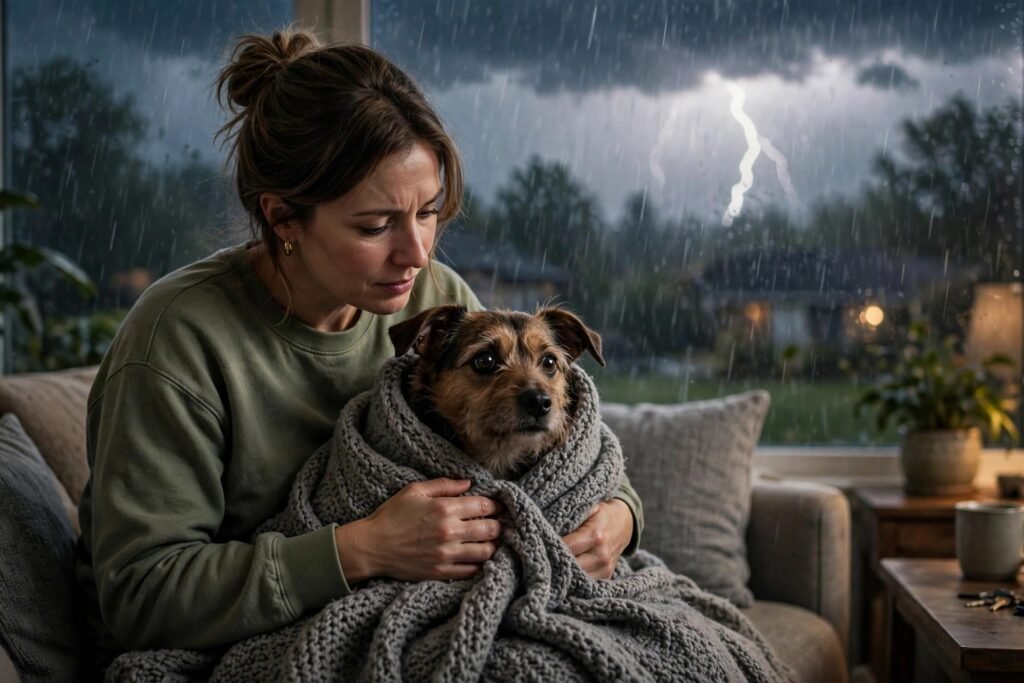
5. Be calmly present — the right way. The old advice “ignore the dog or you’ll reinforce the fear” is outdated and wrong. You cannot reinforce an emotion; fear is not a behavior. Calm, matter-of-fact companionship — sitting nearby, gentle petting if the dog seeks it — reduces stress without creating dependency. What you should not do is frantically soothe (“oh no baby it’s okay!!”), which signals that there is indeed something to panic about.
What Not to Do
Never punish fear behaviors (crying, hiding, accidents) — punishment layers a second fear on top of the first. Never force “flooding” (dragging the dog outside during the storm to “face it”) — flooding without professional guidance causes psychological harm. And never leave a severely phobic dog alone during a predicted storm if it can be avoided; the self-injury risk is real.
Between Storms: Desensitization That Works
The long-term fix is systematic desensitization paired with counter-conditioning (DS/CC) — the gold-standard behavior protocol:
Build a storm soundtrack. Find high-quality thunderstorm recordings (several hours long, with distant rumbles progressing to close cracks). Play them at barely audible volume while the dog does something wonderful — eating a stuffed Kong, playing, training for high-value treats. Over weeks, gradually increase the volume in tiny increments, always staying below the fear threshold. If the dog shows stress, you went too fast — drop back down.
Add the other triggers. Sound alone is incomplete desensitization (remember: pressure, static, flashes). Advanced protocols add strobe-light flashes and even static-generating fabrics, but most owners get 80 percent of the benefit from sound work plus the in-the-moment management above.
Timeline expectations. Realistic DS/CC takes 8-16 weeks of short daily sessions (5-10 minutes). It requires patience and consistency — similar to the commitment behind getting a pet as a busy person, where honest assessment of your available time determines success. Rushing the protocol is the number one reason it fails.
When to Call the Veterinarian
See the vet when: the dog injures itself or damages property during storms, fear generalizes to rain or cloudy skies, the dog cannot eat or take treats during storms (stress beyond the training threshold), or DS/CC stalls after consistent effort. Modern veterinary behavioral medicine has excellent tools:
Situational medications like trazodone or sileo (an FDA-approved noise-aversion gel for dogs) take the edge off specific events. Daily anti-anxiety medications (fluoxetine, sertraline) lower the baseline for dogs with generalized anxiety. These are not sedation and not “drugging the dog” — they restore the brain chemistry that lets learning happen. A dog too panicked to think cannot learn from desensitization; medication opens the window.
Ask for a referral to a veterinary behaviorist (DACVB) for severe cases — they are the specialists for exactly this problem, and their treatment plans outperform general advice dramatically.
Storm-Season Preparedness Checklist
Before storm season: verify the safe room setup, test the white noise machine, confirm the pressure wrap still fits, refill any prescribed situational medication, check fences and gates, update ID tags and microchip info, and download a radar app with lightning alerts. Keep the car clean and ready for a quick drive to the vet or a friend’s basement if needed — our tips for keeping your car clean with pets help when the dog is riding along stressed and muddy.
The ASPCA’s behavior resources and the AKC’s storm anxiety guides both offer vet-reviewed protocols consistent with what is described here.
Conclusion
A dog terrified of thunderstorms is not being dramatic — she is experiencing a multi-sensory assault her brain cannot contextualize. Manage the moment with a safe den, sound masking, and calm presence; fix the root with months of gradual desensitization; and bring in veterinary support when fear outruns training. Storms will keep coming. With the right protocol, the panic does not have to.
Frequently Asked Questions
Why is my dog scared of thunder but not other loud noises?
Storms combine multiple triggers — barometric pressure drops, static electricity, low-frequency rumbles, ozone smells, and flashes — that fireworks or traffic do not. Dogs often detect the pressure change before humans hear anything, so anxiety can start hours early.
Do Thundershirts actually work?
Evidence is mixed but leaning positive: roughly half of owners report meaningful calming. They work best applied before panic sets in and as one part of a broader management plan, not as a standalone fix.
Should I comfort my dog during a storm?
Yes — calmly. The old advice that comforting reinforces fear is outdated; you cannot reinforce an emotion. Quiet companionship reduces stress. Avoid frantic soothing, which signals that panic is warranted.
Can storm phobia be cured?
Significantly improved, usually; “cured” is optimistic for severe cases. Systematic desensitization with counter-conditioning over 2-4 months meaningfully reduces fear in most dogs, especially combined with environmental management and, when needed, veterinary medication.
When does storm anxiety need medication?
When the dog injures itself, cannot eat or learn during storms, fear generalizes beyond storms, or behavior modification stalls. Situational meds (trazodone, sileo) and daily anti-anxiety medications are standard veterinary tools — discuss with your vet.