How the Great Lakes Affect Midwest Weather, Explained (2026)
In January 2019, Chicago’s wind chill hit -55°F — colder than parts of Antarctica — while just a few hundred miles south in St. Louis, it was merely bitter. The culprit wasn’t latitude alone. It was the five inland seas sitting at the top of the Midwest, holding summer’s heat in their depths and winter’s cold in their ice, exhaling weather that shapes everything from Detroit’s snow totals to Iowa’s growing season. The Great Lakes don’t just border the Midwest; they run its climate.
Together, the lakes hold about 21% of the world’s surface fresh water — 6 quadrillion gallons. That much water is a thermal flywheel, and it rewrites the rules of Midwestern weather in ways that surprise even lifelong residents. Here’s how.
Lake-Effect Snow: The Famous One
The mechanism is elegant. When frigid Arctic air — often 20°F or colder — sweeps across the relatively warm, unfrozen lake surface in late fall and early winter, the air mass picks up heat and moisture from the water. As that warmed, moistened air reaches the far shore and is forced upward by the terrain, it cools rapidly and dumps its moisture as snow. The result: narrow bands of intense snowfall that can bury one town under three feet while a town ten miles away gets flurries.
The snowbelts are precisely mapped: Michigan’s western shore (Grand Rapids, Muskegon, Traverse City), northwestern Indiana, northeastern Ohio around Cleveland, and western New York. These areas routinely record 100–200+ inches per season — among the snowiest inhabited places in America. The National Oceanic and Atmospheric Administration’s Great Lakes research shows lake-effect events intensifying as lakes stay ice-free longer into winter, a trend with real consequences for infrastructure budgets.
The Thermal Flywheel: Cooler Summers, Warmer Falls
Water heats and cools far slower than land, and the lakes’ enormous volume means they lag the seasons by weeks. In summer, the lakes are still cool from winter, chilling the air that crosses them — lakeshore cities like Chicago, Milwaukee, and Cleveland run noticeably cooler on summer afternoons than inland areas at the same latitude. The classic “cooler by the lake” isn’t folklore; it’s thermodynamics.
In fall, the effect reverses. The lakes release stored summer heat, warming nearby air and delaying the first frost by weeks in lakeshore zones. This extended growing season is why Michigan’s fruit belt — cherries, apples, wine grapes — thrives in a narrow band along Lake Michigan’s eastern shore. The lake moderates temperature swings just enough to protect blossoms from late frosts that would kill the same crops fifty miles inland. Farmers inland watch the lakeshore forecast the way sailors watch tides.
Storm Fuel and the November Witch
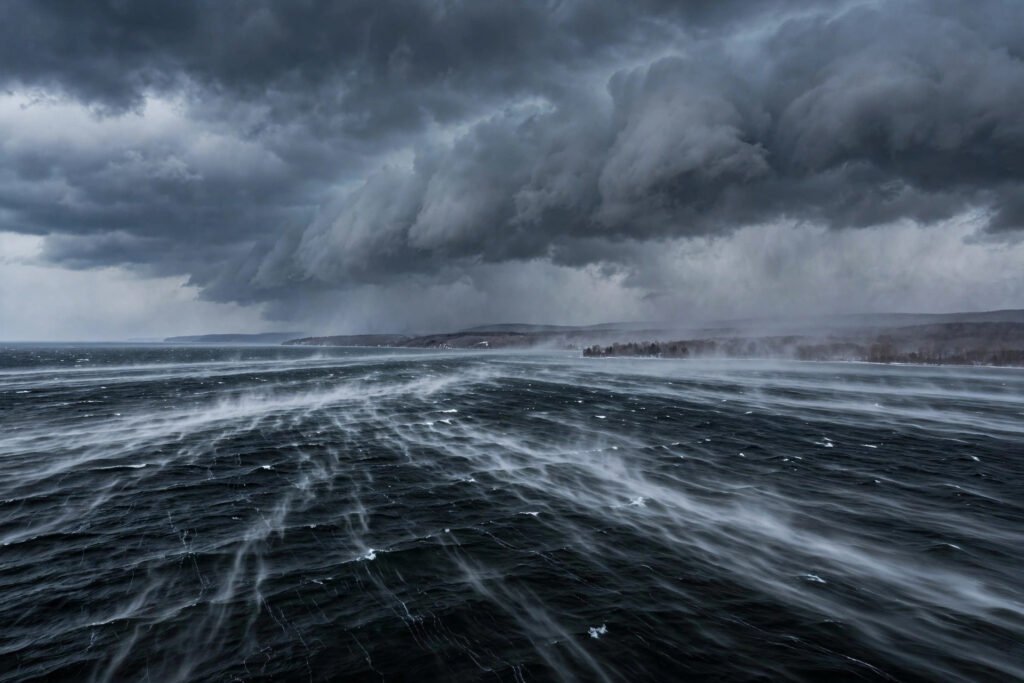
The lakes don’t just moderate weather — they energize it. Fall storms crossing the relatively warm lakes tap extra heat and moisture, intensifying rapidly. The most infamous example: the Edmund Fitzgerald storm of November 1975, when a November gale over Lake Superior generated hurricane-force winds that sank the great freighter. “November witch” storms remain a Great Lakes signature — extratropical cyclones that deepen explosively over warm lake water.
Even ordinary cold fronts behave differently here. The temperature contrast between cold land and warmer lake water sharpens frontal boundaries, and the flat terrain around the lakes lets storms move fast and hit hard. The National Weather Service’s forecast offices around the lakes maintain specialized lake-effect and marine forecasting precisely because standard models underperform where water dominates.
Ice Cover: The Winter Switch
Whether the lakes freeze changes everything. In high-ice winters, frozen lakes cut off the moisture supply, killing lake-effect snow and letting Arctic air plunge unmodified deep into the Midwest — colder, drier winters. In low-ice winters, open water keeps feeding moisture into cold air masses, producing epic snow seasons but slightly milder temperatures. The winter of 2013–14 froze over 90% of the lakes and delivered brutal cold; recent low-ice winters have delivered record snowfalls instead.
The long-term trend is toward less ice — maximum ice cover has declined measurably over recent decades. That shift is quietly rewriting Midwestern winter climatology: snowier but less bitterly cold winters, with knock-on effects for everything from shipping schedules to municipal snow budgets to the ecology of the lakes themselves.
What It Means for Daily Life
Understanding lake influence makes Midwesterners better weather readers. A forecast of “northwest winds” in December means lake-effect snow for the snowbelts and flurries elsewhere. Spring near the lakes runs weeks behind inland areas — don’t plant by the calendar date, plant by the lake’s mood. And the famous Midwestern weather whiplash, 60°F one day and snow the next, is partly the lakes’ doing: they’re big enough to matter, small enough that air masses cross them in hours.
Dressing for this climate is its own skill — layering for cold weather without looking bulky is practically a Midwestern rite of passage. And since lake-driven drafts find every gap in older housing, sealing gaps around windows for winter pays for itself in the first cold snap.
The Future: A Different Kind of Winter
Climate projections suggest the lakes’ influence will intensify in some ways and fade in others. Warmer air holds more moisture, so lake-effect snow events may grow more intense even as the snow season shortens — the paradox of “warmer but snowier” winters that parts of the snowbelt already experience. Meanwhile, declining ice cover means the lakes moderate temperatures more of the year, gradually shifting the region’s climate character. For Midwesterners, the practical takeaway is to plan for volatility: infrastructure, insurance, and wardrobes built for the old patterns will all need updating.
Conclusion
The Great Lakes affect Midwest weather as a giant thermal battery: fueling lake-effect snow when cold air crosses warm water, cooling summers and warming falls along the shores, energizing November storms, and flipping the region’s winter character based on ice cover. They make the Midwest’s climate more extreme in some ways and more moderate in others — often in the same week. Six quadrillion gallons of water doesn’t just sit there. It breathes, and the whole region breathes with it.
Frequently Asked Questions
What is lake-effect snow?
Snow produced when cold air moves across warmer, unfrozen lake water, picking up moisture and heat that then falls as intense, narrow snow bands on the downwind shore. It requires a temperature difference of roughly 23°F between the air and water.
Which Great Lake causes the most lake-effect snow?
Lake Michigan and Lake Erie produce the most impactful lake-effect snow due to their orientation relative to prevailing northwest winter winds and their large downwind population centers.
Do the Great Lakes make summers cooler?
Yes, near the shoreline. The lakes’ cool water chills crossing air masses, making lakeshore cities noticeably cooler on summer afternoons than inland areas at the same latitude.
Do the Great Lakes affect tornadoes?
Indirectly. The lakes’ cool spring air can stabilize the atmosphere near shore, slightly reducing tornado likelihood in lakeshore counties during spring — though the effect is modest compared to the larger storm systems that drive Midwest tornadoes.
Are the Great Lakes freezing less than they used to?
Yes. Maximum winter ice cover has trended downward over recent decades, with more frequent low-ice winters — a shift that increases lake-effect snow while moderating extreme cold.