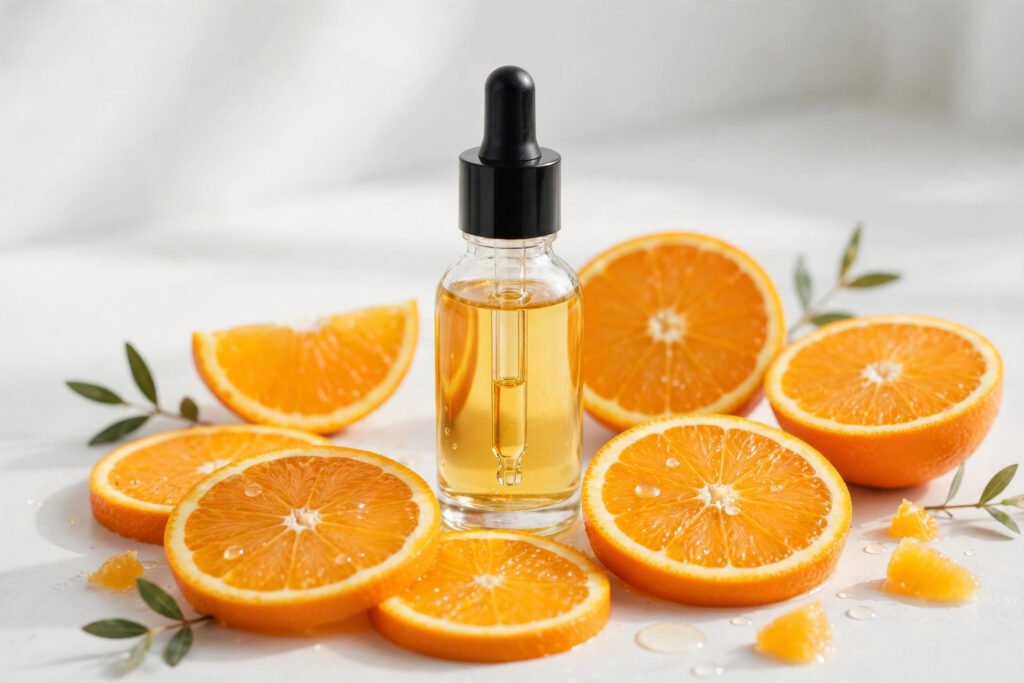
Is Vitamin C Serum Worth Adding to Your Routine? (Guide)
Vitamin C serum is the most recommended — and most questioned — product in skincare. Dermatologists love it, beauty editors swear by it, and the serums range from $12 to $180, which naturally raises the question: is it actually worth adding to your routine, or is it an expensive orange bottle of hope? The answer, unusually for skincare hype, is backed by real science — with a few important caveats about who benefits most and which formulas are worth the money.
Here is whether vitamin C serum is worth adding to your routine: what it actually does (and does not do), the evidence behind the claims, how to choose a formula that works, and how to use it without wasting your money.
What Vitamin C Actually Does for Skin
L-ascorbic acid (the pure form of vitamin C) works through three proven mechanisms. First, it is a potent antioxidant: it neutralizes the free radicals generated by UV exposure and pollution, preventing the cellular damage that drives premature aging. Second, it is essential for collagen synthesis — vitamin C is a cofactor in the enzymatic reactions that build collagen, and topical application measurably increases collagen production in studies. Third, it inhibits melanin production, fading dark spots and melasma and brightening overall tone.
The evidence is unusually solid for a cosmetic ingredient: multiple peer-reviewed studies show improved fine lines, firmer skin, and reduced hyperpigmentation with consistent use over 8 to 12 weeks. It does not replace sunscreen — nothing does — but it makes sunscreen work better: antioxidants plus SPF protect more than either alone, which is why dermatologists call vitamin C the ideal morning companion to sunscreen. If your skin is reactive, pair the introduction with learning how to choose the right sunscreen for sensitive skin — the two products work as a team.
What It Does Not Do
Vitamin C does not erase deep wrinkles, lift sagging skin, or work overnight. Results take 8 to 12 weeks of consistent daily use — anyone promising faster results is selling marketing, not chemistry. It does not replace retinoids for anti-aging (they work through different, complementary mechanisms — the ideal routine eventually includes both, introduced separately). And it cannot fix what it cannot reach: severe melasma and deep scarring need professional treatments, not serums.
Choosing a Formula That Actually Works
Concentration and form
Look for 10 to 20 percent L-ascorbic acid — the studied range. Below 10 percent, effects are modest; above 20 percent, irritation rises without proportional benefit. Derivatives (ascorbyl glucoside, sodium ascorbyl phosphate, 3-O-ethyl ascorbic acid) are gentler and more stable but less studied — reasonable choices for sensitive skin, with tempered expectations. The American Academy of Dermatology notes that formulation quality matters more than marketing claims for antioxidant serums.
Packaging and freshness
L-ascorbic acid oxidizes on contact with light and air — a clear bottle on a sunny shelf is dead product. Choose opaque, air-restrictive packaging (pump or dropper bottles kept closed), and check the color: fresh serum is clear to light straw; dark orange or brown means oxidized and ineffective. Buy small bottles you will finish in three months, not economy sizes that degrade.
Price reality
The most famous vitamin C serum costs $180; excellent alternatives cost $15 to $30. The active ingredient is a commodity chemical — you are paying for formulation elegance, stability systems, and branding, not a rarer form of vitamin C. Mid-range serums with proper concentration, pH (below 3.5 for L-ascorbic acid absorption), and opaque packaging perform comparably in practice. Fold it into how much you budget for monthly self-care at a price you can sustain — a serum you stop buying after one bottle delivers nothing.
How to Use It Correctly
Apply in the morning to clean, dry skin — vitamin C’s antioxidant protection is most valuable during daytime UV and pollution exposure. Use a pea-sized amount for the whole face; more is not better. Wait a minute, then layer moisturizer and sunscreen over it. Do not combine with benzoyl peroxide (they deactivate each other) or strong acids in the same routine when starting out — introduce one active at a time.
Start every other day for two weeks to assess tolerance — tingling is normal initially; persistent burning is not. If L-ascorbic acid irritates, switch to a derivative formula rather than abandoning vitamin C entirely. And store it properly: cool, dark place, cap closed — a $20 serum stored well outperforms a $100 serum left open on a sunny counter. Cleveland Clinic dermatologists emphasize this storage point because oxidized vitamin C is the most common reason serums “do not work.”
Who Benefits Most — and Who Can Skip It
Best candidates: anyone concerned with dullness, uneven tone, dark spots, or early fine lines — and anyone who wants to maximize their sunscreen’s protection. It suits most skin types, including sensitive skin via derivative formulas. You can reasonably skip it if: your routine is already complete and effective (do not fix what is not broken), you cannot commit to daily sunscreen (vitamin C without SPF is wasted potential), or your budget forces a choice — sunscreen and moisturizer outrank it in the hierarchy of needs.
Vitamin C in Your Full Routine: The Layering Order
Where vitamin C sits in the routine determines whether it works. The correct morning order: cleanser → vitamin C serum (on dry skin, pea-sized amount) → wait one minute → hydrating serum if used → moisturizer → sunscreen. Thinnest to thickest, with vitamin C early because its low pH absorbs best on bare skin. The evening routine stays vitamin-C-free: cleanser → retinoid or treatment → moisturizer.
Common layering mistakes: applying vitamin C over moisturizer (blocks absorption), mixing it directly with niacinamide in the same application (the combination is fine sequentially but the old “they cancel out” myth causes unnecessary fear — modern formulations coexist fine when layered, not mixed), and using it with benzoyl peroxide (genuinely incompatible — they deactivate each other, so separate by AM/PM). When introducing vitamin C to an established routine, change nothing else for two weeks — if irritation appears, you will know the culprit.
Conclusion
Vitamin C serum is worth adding to your routine if you want brighter tone, faded dark spots, firmer skin over time, and better daytime antioxidant protection alongside sunscreen — the evidence is genuinely strong. Choose 10–20 percent L-ascorbic acid (or a gentler derivative for sensitive skin) in opaque packaging, use it every morning under sunscreen, give it 12 weeks, and buy at a price you can sustain. It is not magic, but it is one of the few skincare products that does most of what it claims.
Frequently Asked Questions
Can I use vitamin C serum every day?
Yes — daily morning use is the studied protocol. Start every other day for two weeks to assess tolerance, then move to daily. Consistency matters more than concentration.
Can I use vitamin C with retinol?
Yes, but separate them: vitamin C in the morning, retinol at night. Using both in the same routine increases irritation risk without added benefit — they work through different mechanisms at different times.
Why did my vitamin C serum turn brown?
Oxidation — light and air degrade L-ascorbic acid, turning it dark orange or brown and rendering it ineffective. Store in a cool, dark place, keep the cap closed, and replace oxidized bottles.
Is expensive vitamin C serum better?
Not proportionally. The active ingredient is a commodity; what matters is concentration, pH, packaging, and freshness — all available at drugstore and mid-range prices. Pay for formulation quality, not branding.