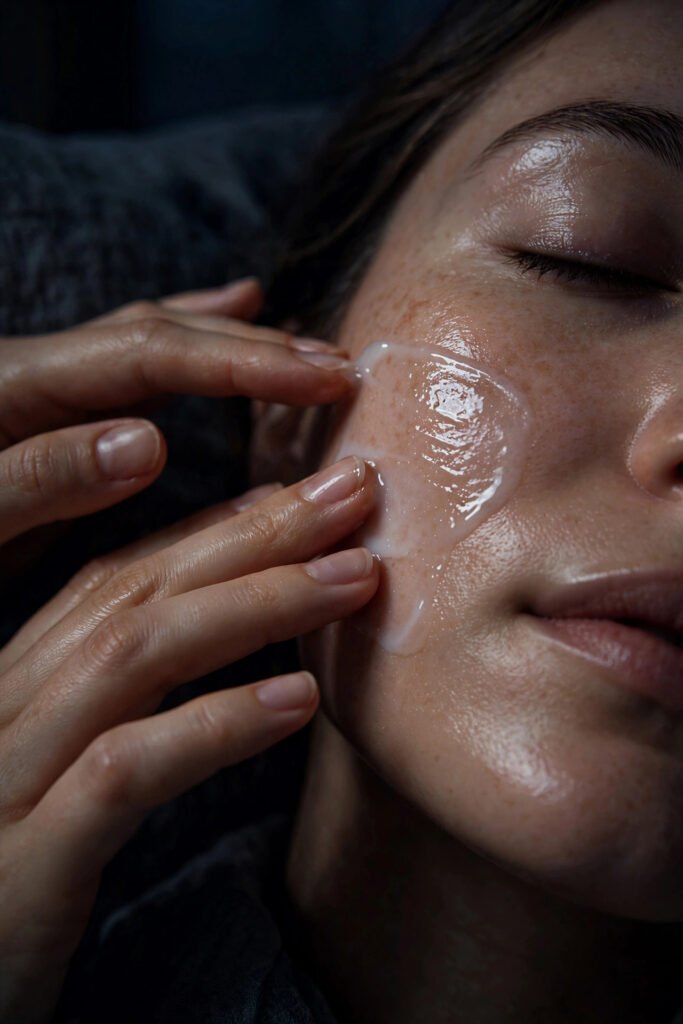
What Is Slugging and Does It Work for Dry Skin? (Guide)
Slugging — coating your face in a layer of petrolatum-based ointment before bed and waking up looking glazed like a donut — sounds like a dare. It started as a K-beauty practice, exploded on social media, and now has dermatologists weighing in with a surprising verdict: for the right skin, it genuinely works. For the wrong skin, it is a breakout waiting to happen. Here is the science of what slugging actually does, who benefits, and how to do it without wrecking your skin.
What Slugging Actually Is
Slugging means applying an occlusive — typically petrolatum-based ointment like Vaseline or Aquaphor, sometimes a balm — as the final step of your nighttime routine, over your serums and moisturizer. The name comes from the shiny, slug-like trail it leaves. The mechanism is simple physics: occlusives form a barrier that blocks transepidermal water loss, with petrolatum preventing up to 99 percent of moisture evaporation. Everything hydrating underneath stays put and penetrates better instead of evaporating into your pillow.
This is not new science — dermatologists have recommended petrolatum for barrier repair for decades. Slugging just gave the practice a catchy name and a nighttime ritual. It is essentially the occlusive step of any hydration-layering routine taken to its logical extreme.
Does It Work? What the Evidence Says
For dry, dehydrated, or barrier-damaged skin: yes, convincingly. Petrolatum is the most effective moisturizer ingredient known to dermatology — the American Academy of Dermatology has recommended it for barrier repair for decades — — it both seals in moisture and, unlike the myth, does not suffocate skin (it allows oxygen exchange while blocking water loss). Studies show it accelerates barrier recovery and improves hydration measurably. People with eczema-prone or winter-ravaged skin often see transformation within a week: less tightness, less flaking, calmer redness.
For oily or acne-prone skin: proceed with extreme caution. Cleveland Clinic dermatologists advise acne-prone patients to slug selectively — dry zones only — or skip it. Petrolatum itself is non-comedogenic — it does not clog pores — but sealing the skin traps everything underneath, including the oils and bacteria that drive breakouts. If you are breakout-prone, slugging over active acne or heavy products can worsen congestion. The American Academy of Dermatology notes petrolatum’s safety, but dermatologists consistently advise acne-prone patients to slug selectively or not at all.
Who Should Slug — and Who Should Not
Ideal candidates
Dry, normal, or combination skin — especially in winter or dry climates. Skin recovering from over-exfoliation or retinoid irritation (slugging calms the sting fast). Mature skin with increased water loss. Anyone whose barrier is compromised and needs intensive repair. If your skin drinks moisturizer and still feels tight an hour later, you are the target audience.
Skip it or modify if
You have oily, acne-prone skin with active breakouts — try slugging only the dry zones (cheeks, under eyes) and avoiding the T-zone. You are using strong actives that should not be sealed in — slugging over prescription tretinoin or strong acids intensifies them unpredictably; slug on alternate nights instead. You are prone to milia (tiny white bumps) — heavy occlusion can worsen them around the eyes.
How to Slug Properly
The routine order
Slugging is always last. The correct nighttime sequence: cleanse, apply hydrating serums to damp skin (hyaluronic acid, glycerin-based — slugging seals in hydration, so the hydrating layers underneath matter enormously), apply your regular moisturizer, then a thin layer of the occlusive over everything. Slugging over dry skin with nothing underneath just seals in dryness — the hydrating layers are the point.
Product choice
Plain petrolatum (Vaseline) is the purist’s choice — single ingredient, maximum occlusion, cheapest option — pennies per application, which makes slugging one of the easiest wins inside how much you budget for monthly self-care. Aquaphor adds glycerin and lanolin for slightly more comfort. CeraVe Healing Ointment adds ceramides for barrier support. Balms with squalane suit those who find pure petrolatum too heavy. A pea-sized to dime-sized amount for the whole face is plenty — more is not better, just greasier.
Frequency
Start two to three nights a week and assess. Many dry-skinned sluggers work up to nightly in winter and scale back in summer. There is no requirement for daily use — treat it as an intensive treatment, not a mandate. If breakouts appear, reduce frequency or restrict to dry zones before abandoning it entirely.
Common Mistakes
Slugging over dirty or unexfoliated skin traps debris — always cleanse first. Using too much product — a thick mask-layer just wastes ointment and ruins pillowcases (use an old pillowcase or a towel over it). Slugging every night from day one without testing tolerance — patch-test the routine for a week. And expecting miracles on wrinkles — slugging hydrates and plumps temporarily, which softens fine lines, but it does not rebuild collagen or reverse aging. It is hydration, not time travel.
Beyond Slugging: Related Techniques
Slugging sits in a family of moisture-sealing methods. Skin flooding — layering multiple hydrating toners and serums on damp skin before moisturizer — addresses the hydration side (getting water in) while slugging addresses the retention side (keeping water from leaving); the two combine powerfully. The “7-skin method” (seven thin layers of hydrating toner) is skin flooding taken to its extreme, popular for very dehydrated skin.
Alternatives to petrolatum exist for those who dislike the texture: facial oils with squalane or jojoba seal reasonably well (though no oil matches petrolatum’s 99 percent water-loss blockade), ceramide-rich night creams offer moderate occlusion with better cosmetic feel, and silicone-based sleeping masks provide a less greasy barrier. None are as effective as plain petrolatum — but the best occlusive is the one you will actually use nightly, and a slightly less effective product worn consistently beats petrolatum abandoned after three nights.
Conclusion
Slugging works — for dry, dehydrated, or barrier-damaged skin, a thin petrolatum layer over hydrating products is one of the most effective moisture-sealing treatments available, backed by decades of dermatological science. It is not for everyone: oily and acne-prone skin should approach cautiously or partially. Done right — hydrated layers underneath, thin occlusive on top, a few nights a week to start — it turns winter-ravaged skin around in days. Sometimes the trendiest-sounding advice is just the oldest science with better marketing.
Frequently Asked Questions
Can slugging cause breakouts?
Petrolatum itself does not clog pores, but sealing in oils, bacteria, and heavy products can worsen congestion in acne-prone skin. If you break out easily, slug only dry areas, keep layers underneath light, and reduce frequency.
How often should I slug?
Start two to three nights per week. Dry skin in winter often tolerates nightly use; oily or combination skin may do best with occasional use or zone-slugging (dry areas only).
Can I slug with Vaseline?
Yes — plain petrolatum is the original and most effective slugging product. It is non-comedogenic, hypoallergenic, and costs pennies per application. Fancier balms add comfort ingredients but not more occlusion.
Should I slug in the morning too?
No — daytime slugging interferes with sunscreen and makeup, looks excessively shiny, and collects dirt. Slugging is a nighttime treatment; mornings are for hydration, moisturizer, and SPF — and if your skin is reactive, take time to learn how to choose the right sunscreen for sensitive skin.
Does slugging help with wrinkles?
It plumps dehydrated skin, which temporarily softens fine lines — but it does not stimulate collagen or reverse structural aging. Think of it as excellent hydration support, not an anti-aging treatment.