How to Keep Indoor Cats Active During Long Winters (Guide)
By February, your indoor cat has been staring out the same window for three months, the novelty of the paper bag wore off in November, and the 3 a.m. hallway sprints have reached Olympic intensity. Winter boredom is real for indoor cats — and a bored cat is a destructive, anxious, overweight cat. But keeping a cat active through a long Midwest winter does not require a catio or a second mortgage. It requires understanding how cats actually play.
Here is how to keep indoor cats active during long winters: the play science that makes enrichment work, the best toys and setups by cat personality, DIY options that cost nothing, and how to build a daily routine that burns energy and prevents the winter weight gain so many indoor cats suffer.
Why Winter Is Hard on Indoor Cats
Cats are crepuscular hunters wired for short, intense bursts of activity followed by rest — a rhythm that winter disrupts. Shorter days shift their active periods, cold windowsills eliminate favorite lounging spots, and owners stuck inside tend to interact less, not more. The result: weight gain (indoor cats commonly add 10 to 15 percent of body weight over winter), furniture destruction, aggression between housemates, and stress behaviors like over-grooming.
The fix is structured play that mimics the hunt cycle — an approach supported by feline behavior research from the Cornell Feline Health Center: stalk, chase, pounce, catch, “kill,” eat, groom, sleep. A play session that ends with a small meal triggers the full sequence and produces a satisfied, sleepy cat — the holy grail of winter cat ownership.
The Right Toys for Your Cat’s Hunting Style
Wand toys: the universal winner
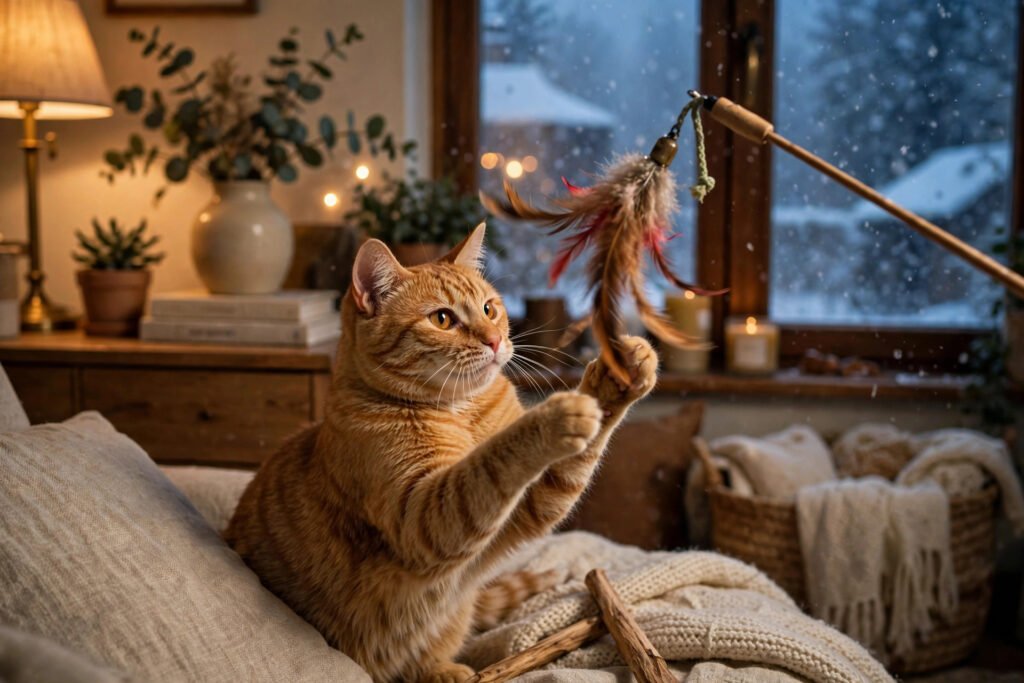
Feather wands, string toys, and ribbon teasers are the single best cat exercise tool because you control the “prey.” Mimic real prey movement: skitter the toy away from the cat, not toward it; let it hide behind furniture; vary speed. Two 10-to-15-minute sessions daily — morning and evening, matching crepuscular peaks — transform most cats’ behavior within a week. Rotate wand attachments to prevent habituation.
Match toys to personality
Bird-watchers (cats who chatter at windows) love flying feather toys and flapping attachments. Ground hunters prefer mice, crinkle balls, and toys that scurry along floors. Wrestlers want kick sticks and catnip-filled toys they can bunny-kick. Puzzle feeders engage thinkers — start easy, since a too-hard puzzle frustrates rather than enriches. Observe what your cat actually chases and buy accordingly; the $3 toy they love beats the $30 gadget they ignore.
Rotate, do not accumulate
Cats habituate to toys left out permanently. Keep two-thirds of the toy collection in a closet and rotate weekly — old toys become new again. This single habit does more for long-term engagement than buying new toys constantly.
Build a Winter Enrichment Environment
Vertical space
Cats think in three dimensions, and winter is the time to expand upward. A tall cat tree near a window, wall-mounted shelves creating a highway, or even cleared-off bookshelf tops give cats territory to patrol and perches to survey. Vertical space reduces conflict in multi-cat homes dramatically — the cat being bullied needs an escape route that goes up.
Window entertainment
A window perch with a bird feeder outside (placed to prevent actual hunting) provides hours of passive enrichment. In deep winter, add a heated window seat — warmth plus entertainment is irresistible. Rotate which windows are “open” by moving the feeder; novelty keeps the viewing fresh.
Scent and foraging enrichment
Scatter-feeding — tossing kibble across the floor instead of bowl-feeding — turns every meal into a hunt and slows fast eaters. Cat-safe herbs (silvervine, valerian root, olive wood) offer novelty for cats bored of catnip. Cardboard boxes with holes cut in them, paper bags, and crumpled paper remain undefeated as free enrichment: the container matters more than the contents to most cats.
The Daily Winter Routine That Works
Structure beats spontaneity. Morning: 10-minute wand session before breakfast, then scatter-feed the meal. Midday: rotate a puzzle feeder or hide treats around the house for foraging. Evening: the big 15-minute play session — the most important one — followed by dinner, which triggers the groom-and-sleep sequence right when you want a calm evening. End every wand session letting the cat “catch” the toy; a hunt that never succeeds frustrates rather than satisfies.
For multi-cat homes, play with cats separately if one dominates — the shy cat will not engage with a bully monopolizing the toy. And track weight monthly through winter; catching a half-pound gain early is far easier than reversing five pounds in spring. If winter travel takes you away, plan cat care early — whether that means a sitter or bringing the cat along to pet-friendly hotels that do not charge huge fees. If your cat is already overweight, discuss a winter weight plan with your vet — and if you are weighing whether a pet fits a busy lifestyle, know that this routine takes about 30 focused minutes a day, not hours.
When Inactivity Signals a Problem
Some winter slowdown is normal, but sharp changes warrant attention. A cat that stops playing entirely, hides more, eats significantly more or less, or over-grooms to bald patches may be dealing with pain (arthritis is common and underdiagnosed in cats over 7), depression, or illness — not just boredom. Cats hide pain instinctively, so behavioral changes are often the only signal — the ASPCA’s cat care resources cover the subtle signs worth watching. If enrichment does not move the needle within two weeks, schedule a vet check rather than buying more toys.
Conclusion
Keeping indoor cats active through long winters comes down to hunting-cycle play — two daily wand sessions ending in meals — plus vertical space, rotating toys, window entertainment, and foraging enrichment that engages their brains. Thirty focused minutes a day prevents the weight gain, destruction, and stress behaviors that make winter miserable for cats and owners alike. Spring will come; your furniture does not have to be a casualty in the meantime.
Frequently Asked Questions
How much play does an indoor cat need daily?
At least 20 to 30 minutes of active interactive play, split into two sessions matching their dawn/dusk activity peaks. Kittens and young adults often need more; seniors benefit from shorter, gentler sessions.
Why does my cat ignore expensive toys?
Cats habituate to anything left out permanently, and many prefer simple prey-mimicking movement over features. Rotate toys weekly, prioritize wand toys you animate yourself, and match toys to your cat’s hunting style.
Is it normal for cats to gain weight in winter?
Common but not healthy — indoor cats often gain 10 to 15 percent over winter from reduced activity. Monthly weigh-ins and portion control prevent the creep; discuss any significant gain with your vet.
Can I walk my cat outside in winter?
Some harness-trained cats enjoy brief winter outings, but most find cold, salted sidewalks unpleasant, and escape risk rises with bulky winter clothing on the handler. Indoor enrichment is safer and more reliable for the average cat.
My cats fight more in winter. What helps?
Resource competition intensifies when everyone is stuck inside. Add vertical escape routes, duplicate key resources (litter boxes, food, water, perches — one per cat plus one), and play with cats separately to burn off tension.