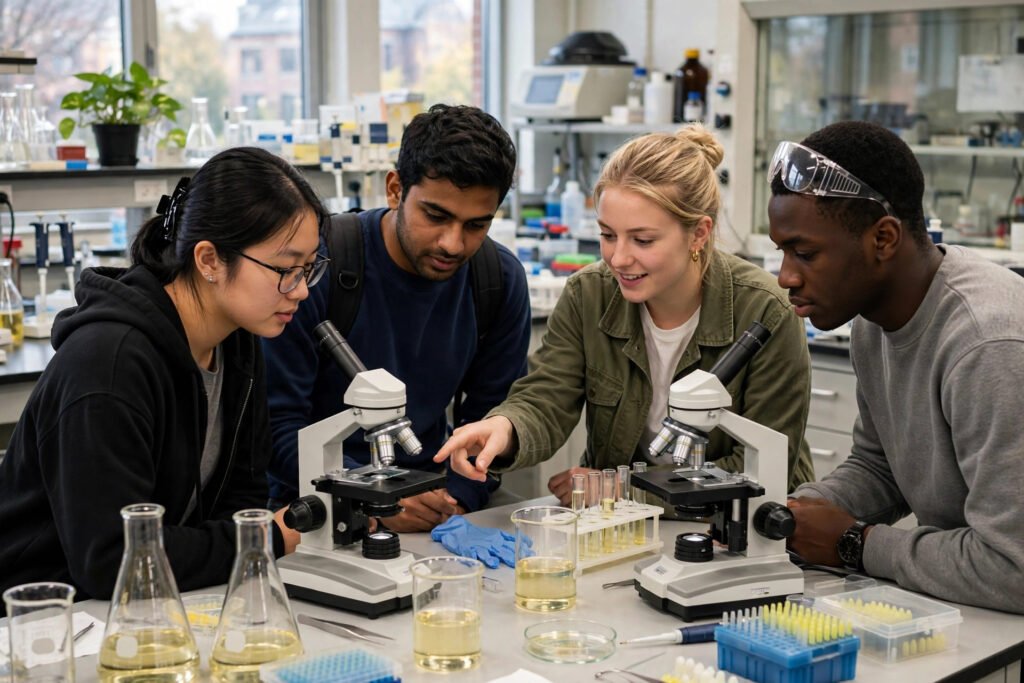
How to Get Research Experience as an Undergrad
Undergraduate research experience is the closest thing to a cheat code in higher education. It strengthens graduate school applications more than almost anything else, builds relationships with professors who write the letters that matter, teaches skills no classroom can, and — not incidentally — pays in many cases. Yet most students assume research is for seniors, geniuses, or “science people.” None of that is true. Professors in every department need undergraduate help, and the students who get these positions are usually just the ones who asked first and asked well.
This guide explains how to get research experience as an undergrad: where to look, how to approach professors, what to expect, and how to turn one semester into a career asset.
Why Research Matters (Beyond the Resume Line)
The benefits compound. Graduate and professional schools treat sustained research as the strongest signal of readiness — for PhD programs it is nearly mandatory; for medical school it is a major differentiator. Letters of recommendation from research mentors describe your actual work and character, unlike lecture-hall professors who barely know your name. Skills: experimental design, data analysis, scientific writing, and comfort with failure transfer to every career. Clarity: nothing reveals whether you actually enjoy a field like doing its real work — many students discover their passion (or disinterest) in a lab, saving years of wrong-track effort.
And the practical upside: many positions pay hourly, offer course credit, or come with summer stipends through programs like the NSF’s Research Experiences for Undergraduates (REU). Research is not charity work — it is often compensated training.
Where to Find Opportunities
Your own professors, first. The highest-probability path is asking professors whose classes you enjoyed and excelled in. They know you, they have projects, and they prefer known quantities. Go to office hours, express genuine interest in their research (read a paper first), and ask directly: “Do you have opportunities for undergraduates in your lab?” Departmental listings: most departments maintain research opportunity boards or web pages — check yours. University undergraduate research offices: many schools have centralized offices that match students with labs and administer funding.
NSF REU programs: the National Science Foundation’s REU sites fund summer research at universities nationwide — stipends around $6,000+ plus housing, open to students from any school. These are competitive and prestigious; apply in winter for the following summer. NIH programs: the National Institutes of Health Summer Internship Program offers biomedical research at NIH campuses. Course-based research: some departments offer research-methods or independent-study courses that embed you in a project for credit — the lowest-barrier entry point. Non-STEM fields: humanities and social science professors need research assistants too — archival work, data coding, literature reviews, fieldwork. Ask across the university, not just in the sciences.
How to Email a Professor (Templates That Work)
The cold email is the whole game, and most students do it badly — generic, long, and self-focused. The effective version is short, specific, and curious:
Subject: Undergraduate interested in your [specific topic] research
Dear Professor [Name], I am a [year] majoring in [X]. I really enjoyed your [paper/lecture] on [specific finding], particularly [specific detail that shows you read it]. I am hoping to get involved in research and wondered if your lab has opportunities for undergraduates. I have [relevant skill: coursework, programming, lab technique] and can commit [hours] per week. I have attached my resume. Thank you for your time, [Name].
Key principles: show you know their work specifically (professors can smell mass emails), state your availability concretely, attach a one-page resume, and keep it under 200 words. Email 5–10 professors; expect a 20–30% response rate. Follow up once after a week. Timing matters — ask 3–4 weeks before the semester starts, when labs are planning staffing. And build the relationship before you need the letter: engaging deeply with coursework (and showing up to office hours) is what makes professors remember you when positions open.
What to Expect (and How to Excel)
Your first semester will involve real but unglamorous work: literature reviews, data entry, lab maintenance, shadowing graduate students. This is normal — it is how you learn the lab’s language and earn trust. Excel at the unglamorous: be reliable (show up when you say you will), take notes on everything, ask questions that show you are thinking (not just executing), and read the lab’s papers on your own time.
As you prove yourself, responsibility grows: running your own experiments, analyzing data, presenting at lab meetings, and eventually co-authoring papers or presenting at undergraduate research conferences. The students who get publications are not necessarily the smartest — they are the most consistent over multiple semesters. Stay at least two semesters if you can; one semester barely gets you trained, while a year makes you genuinely useful. Keep a research journal documenting what you did and learned — it becomes gold for personal statements and interviews.
Funding Your Research
Do not assume research means working for free. Options: hourly pay from the professor’s grants (ask — many labs budget for undergrad assistants); course credit via independent study or research courses; university fellowships for undergraduate researchers (many schools offer $1,000–$5,000 summer stipends); REU and NIH programs for funded summers; and work-study funds, which some labs can use for assistants. Ask about compensation in the initial conversation — it is a normal question, not a presumptuous one.
Turning Research Into Career Capital
Present at your university’s undergraduate research symposium — public presentation experience is rare and valued. Consider regional or national conferences (the Council on Undergraduate Research lists opportunities). If your work contributes to a paper, discuss authorship expectations openly with your mentor. And when applying to graduate programs or jobs, your personal statement practically writes itself: specific projects, real challenges overcome, genuine intellectual growth. That narrative — “I discovered I love this work by doing it” — is exactly what selection committees want. Thinking about where research careers lead? Our guide to careers safest from automation highlights why research skills are among the most future-proof assets you can build.
The Bottom Line
Getting research experience as an undergrad is simpler than it looks: identify professors whose work genuinely interests you, email them specifically and concisely, start with unglamorous work and excel at it, stay multiple semesters, and present what you learn. The students who do research are not a special caste — they are the ones who asked. Ask.
Frequently Asked Questions
When should I start looking for undergraduate research?
Sophomore year is ideal — you have foundational coursework and two-plus years to develop in a lab. But freshmen can start (especially through course-based programs) and juniors are absolutely not too late.
Do I need a perfect GPA to do research?
No. Professors care more about genuine interest, reliability, and relevant skills than GPA. A 3.3 student who read the professor’s papers and asks smart questions beats a 4.0 student sending generic emails.
Is undergraduate research paid?
Often, yes — many positions pay hourly from grant funds, and summer programs like NSF REU offer stipends around $6,000 plus housing. Course credit and university fellowships are other common arrangements. Always ask about compensation.
Can humanities majors do research?
Absolutely. Humanities and social science professors regularly hire undergraduate research assistants for archival work, data analysis, interviews, and literature reviews. The same approach — specific, concise emails to professors whose work interests you — works in every department.