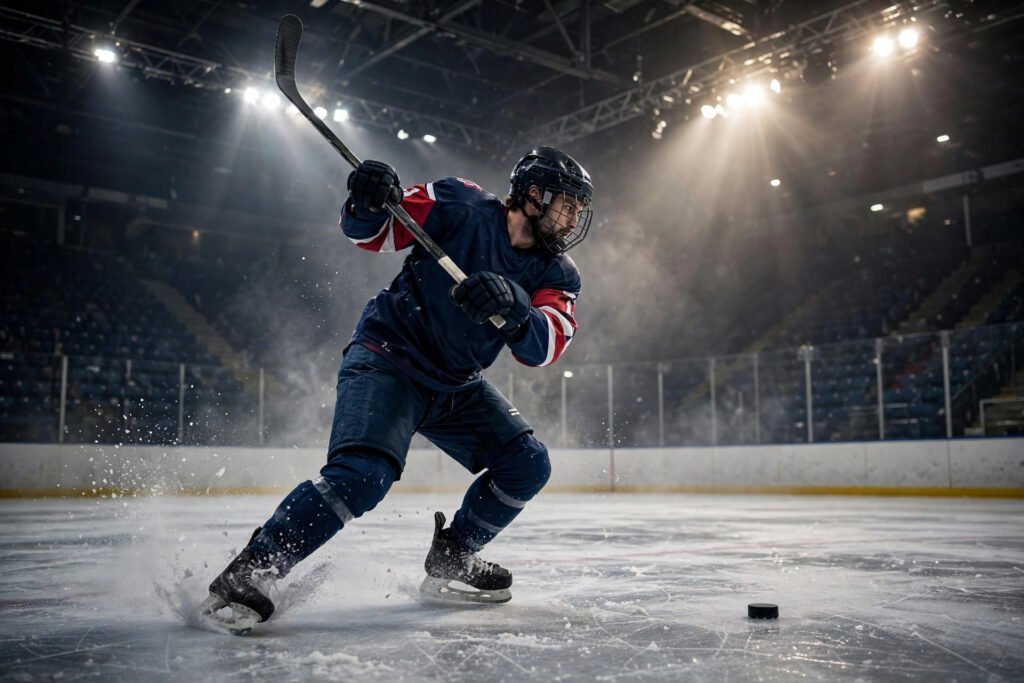
How to Improve Your Slap Shot in Hockey
The slap shot is hockey’s signature weapon — the wind-up, the flex of the stick, the puck exploding off the blade at over 100 miles per hour in the NHL. It is also the hardest shot in hockey to execute well. Most recreational players slap at the puck with stiff arms and wonder why their shot flutters wide while the pros make it look effortless. The difference is not strength. It is mechanics.
This guide breaks down how to improve your slap shot in hockey with the technique, equipment, and drills that actually move the needle — whether you play beer league, high school, or are coaching a young player learning the shot for the first time.
How the Slap Shot Actually Works
A great slap shot is a physics trick, not a strength contest. The power comes from loading energy into the stick shaft — bending it like a bow — and releasing that energy into the puck at contact. Your body weight transfers from back foot to front foot, your hands work as a lever system, and the stick’s flex does the violent part. Players who muscle the shot with their arms bypass the stick’s flex entirely, which is why their shots are slow and wild.
Watch an NHL defenseman in slow motion and you will see the sequence: the blade strikes the ice a few inches behind the puck, the shaft bends dramatically, the player drives through with hips and shoulders, and the puck leaves with a low, heavy trajectory. Every drill below is about grooving that sequence until it is automatic.
Stance and Setup: The Foundation
Start with your feet slightly wider than shoulder-width, knees bent, weight balanced. The puck should sit roughly in the middle of your stance or slightly behind it — too far forward and you cannot load the stick; too far back and you will fan on it. Your top hand grips near the top of the stick, your bottom hand about halfway down the shaft (lower for more flex load, higher for more control).
Wind up by bringing the stick back to about shoulder height — no higher. The giant overhead wind-ups look dramatic but slow your release and telegraph the shot to goalies and shot-blockers. Modern NHL shooters use compact wind-ups; the power comes from the downswing speed and weight transfer, not the height of the backswing.
The Four Phases of the Shot
1. The wind-up
Bring the stick back smoothly to shoulder height with your wrists cocked. Keep your eyes on the puck, not the target — your body alignment handles the aim.
2. The downswing and ice contact
Drive the blade down into the ice 2–4 inches behind the puck. This is the most important and most skipped step. Striking the ice first is what loads the shaft; players who try to hit only the puck get no flex and no power.
3. Weight transfer and contact
As the stick comes through, shift your weight explosively from your back foot to your front foot, rotating your hips and shoulders toward the target. Contact the puck with the blade slightly open, sweeping through it rather than chopping down on it.
4. The follow-through
Finish low and toward the target. A low follow-through keeps the puck down — rising shots sail over the net. Your bottom hand should finish pointing at the target, and your weight should end fully on your front foot.
Equipment: Flex, Lie, and Curve Matter More Than Price
Your stick specs affect your slap shot more than the brand name. The classic guideline is that your stick flex should be roughly half your body weight in pounds — a 180-pound player on an 85-flex stick. Too stiff and you cannot load it; too whippy and the blade twists, killing accuracy. Defensemen who shoot often tend toward slightly stiffer sticks for one-timer stability.
Blade lie matters for keeping the full blade flat on the ice through the shot — if only the toe or heel contacts, you lose power and accuracy. And while big curves help lift the puck, an extreme curve makes the slap shot harder to control. A mid curve is the best all-around choice for developing shooters. None of this requires the most expensive stick on the rack; a correctly spec’d mid-range stick outperforms a mismatched pro model every time.
Drills That Actually Improve Your Slap Shot
The flex-load drill: Without a puck, practice the downswing slowly, feeling the shaft bend against the ice. Do 20 reps focusing purely on striking the ice behind the imaginary puck and feeling the stick load. This builds the single most important sensation in the shot.
Stationary targets: Place targets (cones, water bottles) in the corners of the net and take 50 slap shots from the point, aiming for one corner at a time. Track your hit rate — pros practice accuracy far more than raw power.
One-timer progression: Have a partner pass to you as you skate into the shot. Start with the pass coming slowly from short distance, and increase speed as your timing improves. One-timers are about timing the flex load to the pass arrival, and they are a separate skill worth dedicated practice.
Off-ice shooting pad: A synthetic shooting pad and a bucket of pucks at home will do more for your shot than any clinic. Fifteen minutes a day of deliberate reps builds the muscle memory that shows up in games. Pair it with an off-ice workout routine focused on core rotation and wrist strength, and your shot will transform within a season.
Common Mistakes (and Fixes)
Standing too upright: kills weight transfer. Fix: bend your knees until you feel athletic, like a shortstop ready position. Slapping down at the puck: produces weak, fluttering shots. Fix: think “sweep through,” striking ice first. Gripping too tight: slows the hands and kills flex. Fix: firm top hand, slightly relaxed bottom hand. Aiming with the eyes: looking at the target pulls the shot off line. Fix: eyes on the puck, trust your alignment.
Shooting through pain: the slap shot’s rotational forces stress the lower back, wrists, and — for goalies facing it — everything. Build up volume gradually, and if your knees bark on the follow-through, mix in knee-friendly exercises to keep the joints happy.
The Mental Side: Shot Selection
Here is what separates good shooters from great ones: knowing when not to take the slap shot. In today’s game, a quick wrist shot or snap shot often beats a telegraphed slapper — NHL defensemen increasingly use snapshot mechanics from the point for faster release. Use the slap shot when you have time and space (power plays, open point looks), and default to quicker releases in traffic. The NHL’s official site posts shooting data and video breakdowns that are worth studying, and USA Hockey offers excellent age-appropriate shooting progressions for youth players.
The Bottom Line
Improving your slap shot comes down to three things: loading the stick by striking the ice first, transferring your weight violently from back foot to front, and following through low at the target. Get the flex right for your body, drill the sequence deliberately, and be patient — the slap shot is the last shot to develop and the most satisfying when it clicks. Check the Mayo Clinic’s sports injury resources if you are managing any pain as you build volume, and keep shooting.
Frequently Asked Questions
How fast is an NHL slap shot?
The hardest NHL slap shots exceed 100 mph — the all-time hardest recorded shots are around 108 mph. Most NHL defensemen shoot in the 90–100 mph range in games, where accuracy and quick release matter more than raw speed.
What stick flex should I use for a slap shot?
A common guideline is flex roughly equal to half your body weight in pounds (a 180-pound player on an 85-flex). Defensemen who take a lot of slap shots sometimes go slightly stiffer for stability; if you cannot feel the stick bend, it is too stiff for you.
Why does my slap shot go high over the net?
Almost always a follow-through issue — finishing high lifts the puck. Keep your follow-through low and toward the target, and make sure you are sweeping through the puck rather than chopping down on it.
Should beginners learn the slap shot or wrist shot first?
The wrist shot, without question. It is more useful in games, safer to learn, and builds the puck-contact fundamentals the slap shot requires. Add the slap shot once the wrist shot is reliable.