How to Choose the Right Youth Hockey Gear (2026)
Outfitting a kid for youth hockey can feel like preparing for a moon landing: skates, helmet, pads, sticks, bags — and a price tag that makes parents gasp. The hockey industry does not make it easy, with marketing that pushes premium gear on 8-year-olds who will outgrow it in one season. But choosing youth hockey gear is straightforward once you know the priorities: fit and protection first, performance second, price managed through smart buying.
This guide explains how to choose the right youth hockey gear — the complete equipment list, how each piece should fit, where to save versus splurge, and how Chicago-area parents keep costs sane in one of America’s great hockey towns.
The Complete Gear List (Nothing More, Nothing Less)
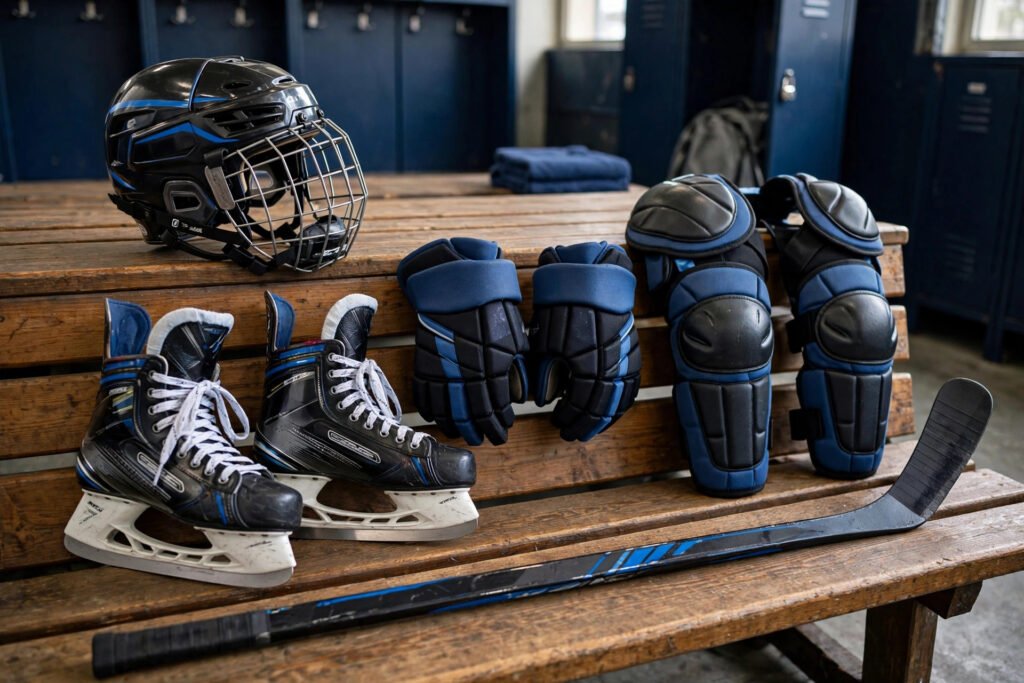
Required for virtually all youth leagues: helmet with full cage/shield (HECC-certified — check the expiration sticker), shoulder pads, elbow pads, hockey gloves, hockey pants (breezers), shin guards, skates, stick, mouthguard, athletic supporter/jill with cup, hockey socks, and a gear bag. Goalies need specialized (pricier) gear — usually provided or subsidized by leagues for young goalies, so do not buy goalie gear unprompted.
Neck guards are increasingly required or strongly recommended following high-profile injuries — check your league’s rules; many Chicago-area leagues now mandate them. Skate guards (for walking off-ice) and a water bottle complete the kit. That is everything — anyone selling you more is upselling.
Fit Guide: How Each Piece Should Feel
Helmet: Snug with no pressure points; shake the head — the helmet should not move independently. The cage should sit 1-2 finger-widths from the chin. This is the #1 fit priority — a loose helmet is dangerous. Replace after any significant impact, and note HECC certification expires (usually ~6.5 years).
Skates: The #2 priority and the most commonly botched. Youth skates should be 1-1.5 sizes smaller than shoe size — toes just brushing the toe cap when standing, pulling back slightly when knees bend. Bakeable skates (most mid-range+) mold to the foot with heat fitting — always do this at purchase. Ankle support matters more than stiffness for young skaters; overly stiff pro-level skates hinder development.
Shoulder pads: Shoulders sit in the caps; the pads should not ride up when arms raise. Youth pads are sized by chest measurement — measure, do not guess by age.
Elbow pads: Should cover from mid-bicep to mid-forearm with no gap when the arm bends; the donut should center on the elbow point. Gaps between elbow pads and gloves expose the wrist — check this specifically.
Shin guards: Knee sits centered in the knee cup; the guard should reach from just below the knee to the top of the skate. Too short exposes the knee; too long restricts skating.
Gloves: Fingertips should reach near the glove ends without jamming; the cuff should overlap the elbow pad. Pants: waist snug, length covering the top of the shin guards when skating. Stick: standing in skates, the stick should reach the chin (forwards) or nose (defensemen); flex should be roughly half the player’s weight in pounds — too stiff is the classic youth mistake.
Where to Save vs. Splurge
Splurge on: helmet and skates. These protect the head and determine skating development — the two things that matter most. Buy the best-fitting (not necessarily most expensive) helmet and skates you can afford. Mid-range skates ($150-$250 youth) with proper baking beat expensive skates that fit poorly.
Save on: everything soft. Shoulder pads, elbow pads, shin guards, pants, gloves — mid-tier protective gear protects youth players perfectly well. Kids outgrow gear yearly; premium protective equipment on a 10-year-old is money evaporating. Sticks: buy wood or low-end composite for young players (they break sticks constantly); upgrade to better composites only when the player’s shot mechanics warrant it.
The used-gear strategy: Play It Again Sports and league equipment swaps are goldmines — protective gear (not helmets) in good condition costs 40-60% less used. Never buy used helmets (invisible damage history, expiring certification). Many Chicago-area leagues run swap events each fall; the USA Hockey site lists local associations running them.
Realistic budgets: first-year mite/squirt player, buying smart (new helmet/skates, used rest): $400-$600. Buying all new mid-range: $700-$1,000. All premium: $1,500+ (unnecessary for most youth players). Budget for re-fitting yearly — growth spurts wait for no one.
Chicago-Area Buying and Program Notes
Chicago is a hockey town with excellent resources: dedicated hockey shops (Gunzo’s, Total Hockey/Center Ice experiences) offer expert fitting that big-box stores cannot — get fitted by hockey people, not general sporting-goods staff. Many shops offer skate sharpening subscriptions and summer fitting events.
League gear programs: check what your league provides before buying — many Chicago-area youth programs (especially in-house/learn-to-play) include jerseys, and some loan goalie gear. Learn-to-play programs (Blackhawks-affiliated “Little Blackhawks” and similar) often include a full gear set with registration — the single best value in youth hockey, sometimes under $200 all-in for first-timers.
Growth planning: buy protective gear with a little room (one size up is fine; two sizes is dangerous), but buy skates fitted correctly now — loose skates cause blisters, bad habits, and tears. Mark your calendar for a mid-season fit check; kids grow invisibly until the gear suddenly does not fit. For cold-weather layering under gear, smart cold-weather layering keeps young players comfortable, and injury-free conditioning habits help as they get older and the game gets faster.
For inspiration and technique, NHL.com’s youth hockey resources include drills and development guidance from professional coaches — great for parents who want to support practice at home. And remember the golden rule of youth sports equipment: the best gear is the gear that fits correctly and gets used. A well-fitted mid-range setup your child loves beats a premium setup they have outgrown by December.
Conclusion
Choosing youth hockey gear means: prioritizing helmet and skate fit above all, buying protective gear mid-tier (or used — never used helmets), sizing sticks by height and flex by weight, and exploiting learn-to-play programs and equipment swaps to control costs. Get fitted by hockey specialists, check fit yearly, and remember the gear serves the development — the $300 stick does not make the player, but the well-fitted $150 skates just might.
Frequently Asked Questions
How much does youth hockey gear cost?
$400-$600 buying smart (new helmet and skates, used protective gear), $700-$1,000 all new mid-range. Learn-to-play programs including gear can run under $200 for first-timers.
What size hockey skates does my child need?
Typically 1-1.5 sizes smaller than shoe size — toes brushing the toe cap standing, pulling back when knees bend. Always get fitted and heat-molded (baked) at purchase; never buy skates with “room to grow” beyond a half size.
Can I buy used hockey gear for my kid?
Yes for protective gear in good condition (40-60% savings at swaps and resellers). Never buy used helmets — invisible damage and expiring HECC certification make them unsafe.
How often should youth hockey gear be replaced?
Check fit at least yearly — kids outgrow gear fast. Replace helmets after significant impacts or when HECC certification expires. Skates typically last 1-2 seasons for growing players.
What is the most important piece of youth hockey equipment?
The helmet — proper fit is a safety imperative. Second is skates, which determine comfort and skating development. Everything else is important but more forgiving on fit and price.