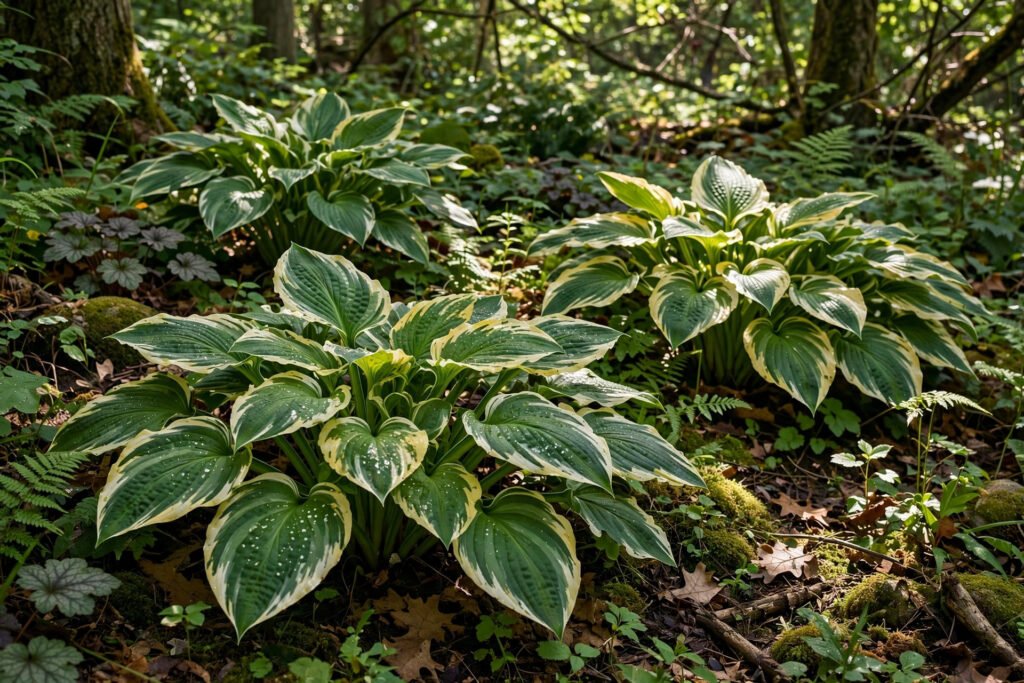
How to Grow Hostas in Shady Chicago Yards (2026)
Chicago yards have a shade problem. Mature maples, oaks, and ash trees blanket North Side and suburban lots in deep shade where grass gives up and most perennials sulk. But shade is not a gardening death sentence — it is a hosta invitation. Hostas are the undisputed monarchs of shade gardening: hundreds of varieties, virtually indestructible once established, and spectacularly beautiful from tiny blue miniatures to giant specimens with leaves like elephant ears.
This guide covers how to grow hostas in shady Chicago yards — choosing varieties for our climate, planting for success in root-competitive soil, watering and feeding, managing the slug and deer wars, and design ideas that turn problem shade into your yard’s best feature.
Choosing Hosta Varieties for Chicago (Zone 5b-6a)
Hostas are hardy to zone 3, so Chicago winters are no problem — they actually need winter dormancy. The variety choice is about light, size, and slug resistance:
For deep shade: Blue varieties (‘Halcyon’, ‘Blue Angel’, ‘Elegans’) hold their blue wax coating best in shade — sun melts it to green. Fragrant varieties (‘Guacamole’, ‘Fragrant Bouquet’, ‘Stained Glass’) thrive in shade and produce some of gardening’s best scents in late summer.
For slug resistance: Thick-leaved varieties (‘Sum and Substance’, ‘Big Daddy’, ‘Blue Angel’, ‘Krossa Regal’) resist slug damage far better than thin-leaved types. If slugs have shredded your hostas before, leaf thickness is the trait to shop for.
For small spaces: Miniatures (‘Blue Mouse Ears’, ‘Tiny Tears’) shine in containers and edging. For drama: Giants (‘Empress Wu’ — 4 feet tall, 6 feet wide; ‘Sum and Substance’) become landscape centerpieces.
Variegated varieties (‘Patriot’, ‘Francee’, ‘Minuteman’) brighten dark corners — the white and gold margins glow in shade. But note: heavily variegated types grow slower and need a bit more light than all-green varieties to maintain their patterns.
Planting for Success in Chicago Shade
Timing: Plant in spring (after last frost, typically late April-May) or early fall (September). Spring planting gives roots a full season to establish before winter.
The root competition problem: This is Chicago shade gardening’s central challenge — tree roots steal water and nutrients. Dig planting holes 1.5x wider than needed, amend generously with compost, and consider raised planting pockets or large containers sunk into the ground to give hostas their own root zone. Water deeply and regularly the first season; established hostas compete better.
Spacing: Check mature sizes — a ‘Blue Angel’ needs 3-4 feet, a ‘Blue Mouse Ears’ needs 1 foot. Crowded hostas compete and look messy; proper spacing looks intentional from day one. Depth: Plant with the crown at soil level, mulch 2-3 inches (keeping mulch off the crown), and water in thoroughly.
Soil: Hostas want rich, well-drained, slightly acidic soil (pH 6.0-7.0). Chicago’s clay is actually nutrient-rich — amend with compost for drainage and organic matter, and hostas will thrive. The University of Illinois Extension offers soil testing and shade-gardening guidance specific to our region.
Water, Food, and Seasonal Care
Water: Hostas are thirstier than their tough reputation suggests — especially under trees. Provide 1-1.5 inches per week, watering deeply at the base (overhead watering promotes slug and disease issues). Mulch conserves moisture enormously. Container hostas need daily watering in summer heat.
Feeding: Top-dress with compost in spring — usually sufficient. If growth is weak, a balanced slow-release fertilizer in spring helps. Avoid high-nitrogen fertilizers late in the season; they push soft growth vulnerable to early frosts.
Seasonal rhythm: Spring — watch for emerging “bullets” and protect from late frosts with a sheet if needed. Summer — water consistently, deadhead spent flower stalks (or leave them; hummingbirds visit hosta flowers). Fall — after the first hard frost blackens foliage, cut it back to the ground and compost it (do not leave it — it harbors slug eggs and disease). Winter — nothing needed; snow cover is the perfect blanket.
Dividing: Every 4-5 years, or when centers die out, divide in early spring as shoots emerge. Hostas divide brutally easily — a sharp spade through the crown, replant divisions immediately, water well. Free plants forever.
Winning the Slug and Deer Wars
Slugs: Chicago’s damp shade is slug paradise. Defenses in order of effectiveness: choose thick-leaved resistant varieties; water in the morning (dry surfaces at night deter slugs); apply iron-phosphate bait (Sluggo — pet/wildlife safe) around emerging shoots in spring; set beer traps; and hand-pick at night with a flashlight. Copper tape around containers works as a barrier.
Deer: Hostas are deer candy — in suburbs with deer pressure (North Shore, far west suburbs), unprotected hostas will be eaten to nubs. Realistic options: fencing (the only reliable defense), repellent sprays (reapply after rain; rotate brands as deer habituate), or planting in fenced side yards. Do not plant $200 of hostas in open deer territory and hope.
Voles: Occasionally eat hosta crowns in winter. Clean fall cutback removes their cover; hardware cloth under plantings in vole-prone areas helps.
Design: Making Shade Your Best Feature
Stop fighting shade and design for it. Layer heights: giant hostas as anchors, medium varieties mid-bed, miniatures edging paths. Contrast textures: hostas’ bold leaves pair beautifully with ferns’ delicacy, astilbe’s plumes, and heuchera’s colorful foliage. Lighten darkness: variegated and gold hostas (‘Stained Glass’, ‘Golden Tiara’) illuminate shade the way lamps light rooms.
Add hardscape for structure: a bench, stone path, or birdbath gives shade gardens focal points when flowers are scarce. And underplant trees with sweeps of a single variety for high-impact, low-maintenance drifts — twenty ‘Halcyon’ under a maple beats twenty different struggling perennials. Gardeners building their skills should also explore keeping houseplants alive in low light — the indoor shade challenge — and budget curb-appeal upgrades where shade beds play a starring role.
For design inspiration, the Chicago Botanic Garden’s plant trials evaluate hosta varieties for Midwest performance — their recommendations are gold for local gardeners. And once your shade beds are thriving, photograph them through the seasons; a shade garden that looks intentional in April, lush in July, and architectural in October is a year-round achievement worth documenting.
Conclusion
Growing hostas in shady Chicago yards comes down to: picking varieties matched to your light and slug pressure, planting in compost-amended soil with room to grow, watering deeply under competitive tree roots, defending against slugs with resistant varieties and iron-phosphate bait, and designing with layered heights and contrasting textures. Do that, and your problem shade becomes the part of the yard visitors photograph.
Frequently Asked Questions
Do hostas grow well in deep shade in Chicago?
Yes — hostas are ideal for Chicago shade (zones 5b-6a are well within their hardiness). Blue and fragrant varieties actually prefer deeper shade. They need winter dormancy, which Chicago provides naturally.
How do I keep slugs off my hostas?
Plant thick-leaved resistant varieties, water in the morning, apply iron-phosphate bait (Sluggo) around emerging shoots in spring, and hand-pick at night. Resistant varieties are the highest-impact step.
When should I plant hostas in Chicago?
Spring after last frost (late April-May) is best, giving roots a full season to establish. Early fall (September) also works. Avoid planting in summer heat or late fall.
Will deer eat my hostas?
Almost certainly, if deer visit your yard — hostas are among deer’s favorite foods. In deer-prone suburbs, use fencing, rotate repellent sprays, or plant hostas only in fenced areas.
How far apart should I plant hostas?
It depends on mature size: miniatures 12-18 inches, medium varieties 2-3 feet, giants 3-5 feet apart. Check the variety’s mature spread and space accordingly — crowded hostas look messy and compete poorly.