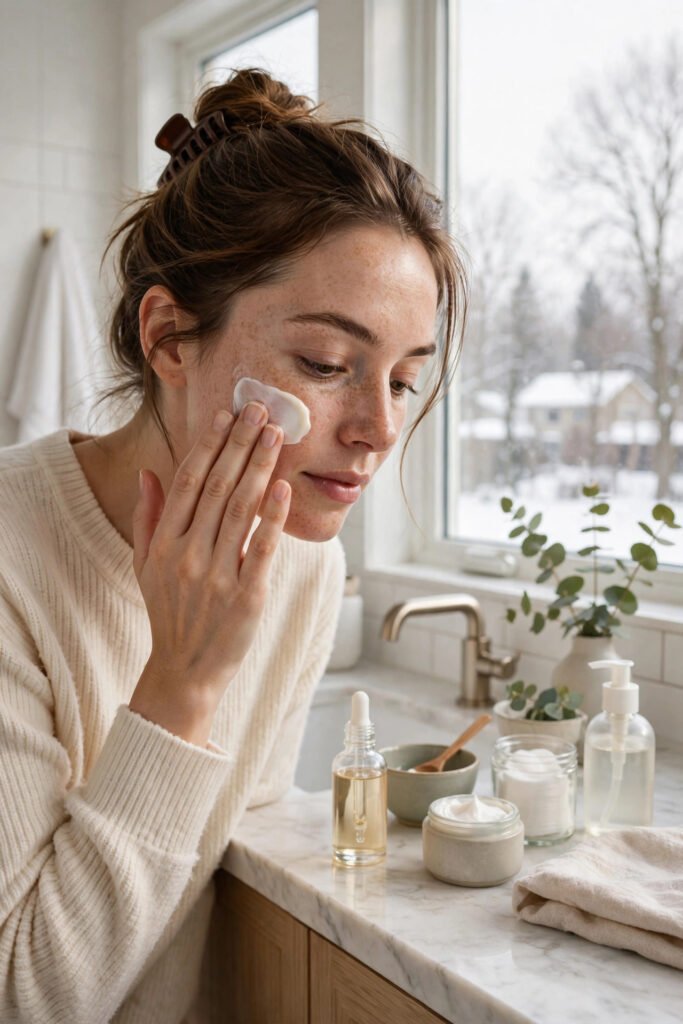
Best Moisturizer for Dry Chicago Winter Skin (2026)
Chicago winter is a special kind of assault on skin. Outdoor air at 10°F holds almost no moisture, indoor heating drops humidity to desert levels, and the wind off the lake strips whatever barrier your skin has left. The result: tight, flaky, itchy, sometimes cracked and bleeding skin — on your face, hands, and everywhere else. The moisturizer that worked fine in October is not surviving January.
This guide breaks down the best moisturizers for dry Chicago winter skin in 2026 — what ingredients actually work in extreme cold, the top picks by skin type and budget, the application mistakes that waste good products, and the supporting habits (humidifiers, shower temperature, diet) that matter as much as the cream. Your skin can survive a Chicago winter intact. Here is how.
What Makes a Winter Moisturizer Work: The Ingredients
Effective winter moisturizers combine three ingredient types. Humectants (hyaluronic acid, glycerin) draw water into skin. Emollients (ceramides, squalane, shea butter) fill cracks between skin cells. Occlusives (petrolatum, dimethicone, lanolin) seal everything in with a protective barrier. Chicago winter demands all three — a lightweight hyaluronic serum alone evaporates in dry heated air and can actually leave skin drier.
Key ingredients to look for: ceramides (rebuild the skin barrier; the CeraVe lineup is built on them), hyaluronic acid (best applied to damp skin, then sealed), niacinamide (strengthens barrier, calms redness), colloidal oatmeal (soothes winter itch), and petrolatum (the most effective occlusive known — unglamorous and unbeatable). Avoid heavy fragrances and high alcohol content in winter; both irritate compromised skin. The American Academy of Dermatology’s dry skin tips confirm this ingredient-first approach.
Best Overall Picks for 2026
CeraVe Moisturizing Cream (the tub): The dermatologist-recommended workhorse — ceramides, hyaluronic acid, petrolatum, under $20 for a giant tub. Fragrance-free, effective on face and body, and the price means you will actually use enough of it. For most Chicagoans, this is the answer.
La Roche-Posay Lipikar Balm AP+: A step up in elegance with shea butter, niacinamide, and prebiotic thermal water. Excellent for eczema-prone skin and faces that react to heavier creams. Around $20-25.
Vanicream Moisturizing Cream: The sensitive-skin champion — no fragrances, dyes, parabens, or common irritants. If everything stings your face in winter, start here.
Eucerin Advanced Repair Cream: Ceramide-enriched and deeply emollient at a drugstore price. Particularly good for very dry body skin, elbows, and knees.
Weleda Skin Food: The cult classic for extreme dryness — thick, plant-based, intensely occlusive. Best as a night treatment or for hands; too heavy for daytime under makeup for most.
Best by Skin Type and Concern
Oily but dehydrated: Winter confuses oily skin — it overproduces oil while feeling tight. Use a gel-cream with hyaluronic acid and niacinamide (CeraVe PM, Neutrogena Hydro Boost Gel-Cream), applied to damp skin. Do not skip moisturizer; skipping triggers more oil production.
Sensitive/rosacea-prone: Vanicream or La Roche-Posay Toleriane. Avoid fragrances, essential oils, and chemical exfoliants until spring. Patch-test everything — winter-compromised skin reacts to products it tolerated in summer.
Eczema-prone: Thick creams or ointments (not lotions — lotions are mostly water and evaporate). Look for colloidal oatmeal formulas (Aveeno Eczema Therapy), and seal with plain petrolatum on worst patches. See a dermatologist if cracking or weeping develops; prescription topicals exist for a reason.
Aging skin: Winter accelerates the look of fine lines through dehydration. Layer: hydrating serum on damp skin, then a ceramide cream, then facial oil or petrolatum at night (“slugging” — dermatologist-approved for very dry skin). The Skin Cancer Foundation reminds that winter sun still damages — keep SPF in your daytime routine even in January.
Hands: Chicago hands take the worst beating — cold air, hot water, constant washing. O’Keeffe’s Working Hands or a thick cream under cotton gloves at night repairs cracks fast. Keep a tube at every sink.
Application Mistakes That Waste Good Moisturizer
Applying to dry skin: The #1 mistake. Apply moisturizer within 3 minutes of washing, while skin is still damp — this traps the water. Applying to bone-dry skin just sits on top.
Using too little: Most people use a pea-sized amount for their whole face; you need roughly a nickel-sized amount. For body, be generous — winter skin is thirsty.
Hot showers: Scalding water strips natural oils catastrophically. Keep showers lukewarm and under 10 minutes, and moisturize immediately after. Your skin will thank you by March.
Skipping the humidifier: No moisturizer can fully compensate for 15% indoor humidity. A bedroom humidifier ($30-$60) raising humidity to 40-50% does as much for winter skin as any cream. Clean it weekly to prevent mold.
Forgetting lips and body: Faces get all the attention while lips crack and shins turn scaly. Lip balm with SPF, body cream after every shower — the full routine, not just the face.
Supporting Habits: Beyond the Jar
Hydrate from the inside — winter suppresses thirst, so drink water deliberately. Omega-3s (fish, walnuts, flaxseed) support the skin barrier; very low-fat diets worsen winter dryness. Wear gloves outdoors always (windburn on hands is real), silk or satin pillowcases reduce facial friction, and avoid harsh physical scrubs on winter-compromised skin — chemical exfoliants (lactic acid) used sparingly are gentler.
For overall winter wellness, layering strategies that work for cold-weather outfits protect skin by reducing exposure, and choosing the right sunscreen for sensitive skin keeps your daytime routine complete even in the deep-winter sun.
One often-overlooked factor: consistency beats intensity in winter skincare. A simple routine you follow every day — gentle cleanse, moisturize damp skin, SPF in the morning — outperforms an elaborate 10-step regimen you abandon by February. And patch-test any new product on your jawline for 48 hours before full-face application; winter-compromised skin reacts unpredictably, and a small test patch prevents a full-face disaster.
Conclusion
The best moisturizer for Chicago winter is a fragrance-free cream combining ceramides, hyaluronic acid, and an occlusive like petrolatum — CeraVe’s tub, La Roche-Posay Lipikar, or Vanicream cover nearly everyone at drugstore prices. Apply to damp skin within minutes of washing, use enough of it, run a humidifier, and stop taking scalding showers. Winter skin is not a cosmetic luxury issue — cracked, compromised skin is a health issue. Treat it accordingly.
Frequently Asked Questions
What is the best drugstore moisturizer for winter?
CeraVe Moisturizing Cream (the tub) is the dermatologist-recommended pick — ceramides, hyaluronic acid, and petrolatum for under $20. Vanicream is best for very sensitive skin; Eucerin Advanced Repair for very dry body skin.
Should I use oil or cream in winter?
Cream first, oil to seal. Oils alone are occlusive but not hydrating — layer a hydrating cream on damp skin, then seal with facial oil or petrolatum at night for maximum protection.
Why is my skin so dry in Chicago winter specifically?
Triple assault: frigid outdoor air holds minimal moisture, indoor heating drops humidity to 10-20%, and lake wind strips the skin barrier. The combination is harsher than winter in most US cities.
How often should I moisturize in winter?
At minimum twice daily (morning and night), plus after every hand wash for hands and after every shower for body. Reapply to exposed skin before going outdoors in extreme cold.
When should I see a dermatologist for dry skin?
If skin cracks and bleeds, develops weeping or infected patches, itches so badly it disrupts sleep, or does not improve after two weeks of diligent thick-cream care — see a dermatologist. Prescription treatments exist for a reason.