How to Pack a Lunch That Stays Fresh Until Noon
How to Pack a Lunch That Stays Fresh Until Noon
Figuring out how to pack a lunch that stays fresh until noon comes down to three battles: sogginess, temperature, and boredom. A sandwich that’s perfect at 7 AM can be a sad, soggy mess by noon — and a lunch you don’t want to eat is money wasted. I packed lunches for years of office life and cracked the code through plenty of disappointing midday meals. Here’s the system that keeps lunch fresh, safe, and actually appetizing.
Beat the Soggy Sandwich
The soggy sandwich is the #1 packed-lunch failure. Moisture migrates from wet fillings into bread over hours. Fix it:
- Barrier method: Spread butter, mayo, or cream cheese edge-to-edge on the bread — fat repels water and protects the bread.
- Pack wet ingredients separately: Tomatoes, pickles, and dressings go in small containers, added at lunchtime.
- Layer smart: Lettuce or cheese between the bread and wet fillings acts as a moisture shield.
- Choose sturdy bread: Bagels, ciabatta, and wraps survive better than soft sandwich bread.
- Toast the bread lightly — the crisped surface resists moisture longer.
Or skip sandwiches entirely: grain bowls, mason jar salads, wraps, and bento-style boxes with compartments all hold up better than sandwiches.
Temperature Rules (Food Safety Matters)
Cold foods need to stay below 40°F until you eat. An insulated lunch bag plus one frozen ice pack (or a frozen water bottle — it doubles as your drink) keeps things safe for 4-5 hours. Hot foods need to stay above 140°F — use a preheated thermos (fill with boiling water for 5 minutes, dump, add hot food). The danger zone between 40°F and 140°F is where bacteria multiply; the foodsafety.gov guidelines are clear that perishable food shouldn’t sit in that range more than two hours. When in doubt, keep it cold — it’s easier and safer than keeping it hot.
The Sunday Prep System (20 Minutes)
The people who actually pack lunch consistently all do some version of this:
- Cook one grain: A pot of rice, quinoa, or pasta — the base for bowls all week.
- Prep two proteins: Bake chicken breasts, hard-boil eggs, or cook a batch of chickpeas.
- Chop vegetables: Carrots, cucumbers, bell peppers — stored properly (see keeping produce fresh).
- Portion snacks: Nuts, fruit, cheese sticks, hummus cups.
Twenty minutes of Sunday prep turns weekday packing into a two-minute assembly job. Pair this with quick breakfast prep and your mornings get dramatically easier.
Lunch Ideas That Actually Stay Fresh
- Grain bowls: Rice/quinoa + protein + veggies + sauce on the side. The gold standard.
- Pasta salad: Holds perfectly; the flavors meld and improve.
- Wraps: Sturdier than sandwiches; the tortilla doesn’t get soggy the same way.
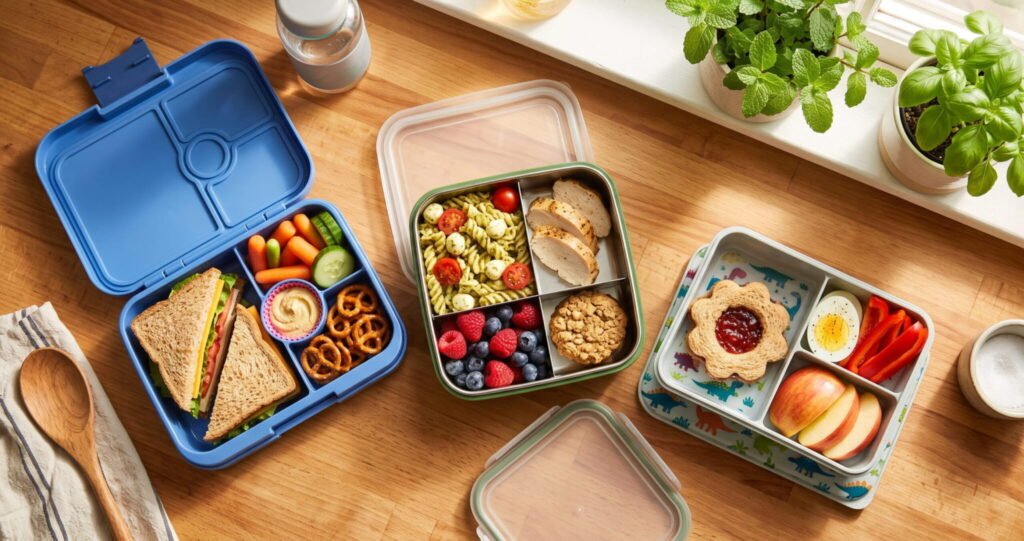
- Bento boxes: Compartments keep everything separate — crackers stay crisp, dips stay contained.
- Thermos meals: Soup, chili, mac and cheese, fried rice — comfort food that travels.
- Protein smoothies: Frozen in a bottle, thawed by noon — doubles as the ice pack.
The Takeaway
A lunch that stays fresh until noon needs moisture barriers, proper cold (or hot) holding, and pack-ahead-friendly formats. Twenty minutes of Sunday prep makes it nearly effortless. You’ll eat better, spend less than the $12-15 daily takeout habit, and never face another sad desk sandwich again.
Frequently Asked Questions
How long can a packed lunch sit at room temperature?
Two hours max for perishable foods (meat, dairy, eggs, cut fruit) — one hour if the room is above 90°F. This is the USDA’s firm guideline, not a suggestion. An insulated bag with an ice pack extends safe time to 4-5 hours by keeping contents below 40°F. Non-perishables (whole fruit, crackers, peanut butter sandwiches, granola bars) are fine all day. The practical rule: if your lunch contains anything that came from the fridge, use an ice pack. Every time.
What’s the best lunch bag or container for keeping food fresh?
An insulated lunch bag ($15-25) plus a slim ice pack is the baseline that works for everyone. For containers: bento-style boxes with compartments (like Bentgo, ~$20) keep foods separated and are the best all-around choice; glass containers with locking lids for grain bowls and salads (heavier but don’t stain or retain odors); a good thermos (Thermos or Hydro Flask food jars, ~$25) for hot foods. Avoid single-compartment plastic containers for mixed meals — everything migrates into everything else by noon.
How do I keep salad from getting soggy in a packed lunch?
Three rules: dressing always separate (a small leakproof container — never dressed in advance), wet ingredients (tomatoes, cucumbers) in their own compartment or container, and greens on top, packed last. Mason jar salads are purpose-built for this: dressing on the bottom, hard veggies next, protein and grains, greens on top — the layers only mix when you shake it at lunch. A paper towel in the greens container absorbs excess moisture. Follow these and your salad is as crisp at noon as at 7 AM.
Is packing lunch actually cheaper than buying?
Overwhelmingly yes. A packed lunch costs $3-5 in ingredients; buying lunch out runs $12-18 in most US cities. Packing 4 days a week saves roughly $40-60 weekly — that’s $2,000-3,000 a year. Even accounting for the occasional forgotten lunch or bought coffee, the savings are enormous. It’s one of the highest-ROI habits in personal finance: 20 minutes of Sunday prep for $200+ a month back in your pocket.
What are good high-protein packed lunch ideas?
Protein is what keeps you full until dinner, so build lunches around it: grilled chicken over quinoa with roasted vegetables, hard-boiled eggs with hummus and pita, Greek yogurt with nuts and berries, tuna or chicken salad lettuce wraps, or lentil soup in a thermos. Aim for 20-30 grams of protein — that’s roughly a palm-and-a-half of chicken, a cup of Greek yogurt, or a can of tuna plus an egg. For drinkable protein, a homemade protein smoothie (frozen in your bottle overnight) doubles as an ice pack and thaws by noon. The pattern is simple: protein plus fiber plus something you actually enjoy eating, with wet and dry components packed separately.