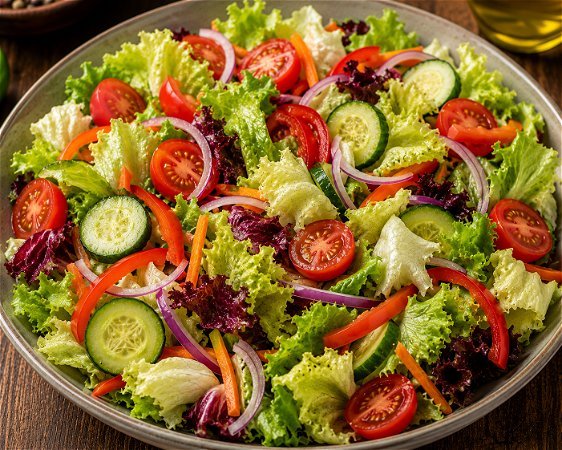
How to Keep Salad Fresh for the Whole Week
How to Keep Salad Fresh for the Whole Week
Learning how to keep salad fresh for the whole week is mostly about fighting one enemy: moisture. Soggy, slimy greens are the number one reason good intentions about eating salad die by Wednesday. I’ve tried every method — special containers, produce-saver gadgets, the works — and the truth is that the low-tech approach beats the expensive gear. Here’s the system that keeps my greens crisp for a full seven days.
The Paper Towel Method (The Foundation)
This is the technique everything else builds on. Wash and thoroughly dry your greens, then layer them in a container with paper towels: greens, paper towel, greens, paper towel. The towels wick away excess moisture — the thing that causes sliminess — while the sealed container keeps humidity in so leaves don’t wilt. Done right, delicate spring mix lasts 5-7 days, and hardy greens like kale and romaine last even longer. I do this every Sunday and eat fresh salads all week. It genuinely works.
Wash Now or Wash Later?
Wash now — but dry completely. Unwashed greens last slightly longer in theory, but gritty salad nobody wants to eat gets thrown out, which defeats the purpose. The key is the drying: a salad spinner is the best $25 you’ll spend if you eat salad regularly. Spun-dry greens last days longer than towel-patted ones because there’s simply less water to cause rot. No spinner? Roll greens in a clean kitchen towel and give them a good shake.
Container Strategy
- Hard-sided containers with lids beat bags — they protect delicate leaves from bruising, and bruised leaves rot first.
- Don’t pack too tight. Crammed greens trap moisture and bruise. Two half-full containers beat one stuffed one.
- Keep the container in the crisper drawer — it’s designed for higher humidity, which leafy greens like.
- Leave dressings and wet toppings separate until serving. Dressed salad dies within hours; undressed lasts days. This is non-negotiable for meal prep.
Mason Jar Salads: Meal Prep That Actually Works
Layer ingredients in a quart mason jar in this exact order: dressing on the bottom, then hard vegetables (carrots, cucumbers, bell peppers), then grains or protein (chicken, chickpeas, quinoa), then leafy greens on top. The greens never touch the dressing. Sealed jars keep 4-5 days in the fridge. When you’re ready, shake it into a bowl. Make five on Sunday and lunch is handled — pair with lunch-packing strategies for a full week of fresh midday meals.
Which Greens Last Longest?
- Longest (7-10 days): kale, romaine, cabbage, collard greens
- Medium (5-7 days): spinach, arugula, butter lettuce
- Shortest (3-5 days): spring mix, mesclun, delicate microgreens
If you want salad all week from one shopping trip, build around romaine and kale rather than spring mix. Heartier greens are more forgiving of imperfect storage.
Reviving Wilted Greens
Limp but not slimy? There’s hope. Soak wilted greens in ice water for 15-30 minutes — they’ll often crisp right back up as the cells rehydrate. This works shockingly well on romaine and even sad-looking herbs. Slimy, brown, or foul-smelling greens are done; compost them and move on.
Herbs Deserve the Same Treatment
Fresh herbs die fast because people store them wrong. Treat soft herbs (parsley, cilantro) like flowers: trim stems, stand in a jar with an inch of water, cover loosely with a bag, refrigerate. They’ll last two weeks. Woody herbs (rosemary, thyme) prefer the paper-towel-in-a-bag method. Fresh herbs improve everything from thirty-minute dinners to simple salads, so keeping them alive is worth the tiny effort. The USDA FoodKeeper app has storage timelines for every produce item if you want specifics. The takeaway: dry greens, paper towels, sealed container, dressing on the side. Four rules, fresh salad all week.
Frequently Asked Questions
Why does bagged salad go bad so fast?
Bagged salad is washed, cut, and sealed — and every cut edge is a place where decay starts. The sealed bag also traps ethylene gas and moisture in exactly the wrong balance. Once opened, the clock accelerates: you’ve introduced fresh oxygen and the modified atmosphere is gone. Transfer opened bagged salad to a hard container with paper towels immediately — it can double the remaining life. And check the date before buying: grab bags from the back of the display, which are usually newer stock.
Can you freeze lettuce or salad greens?
Not for salads — freezing ruptures the cell walls, so thawed lettuce turns to mush. But don’t throw surplus greens away: freeze them for smoothies (spinach and kale freeze perfectly for blending) or for cooked dishes (frozen greens work fine in soups, pastas, and sautés). Blanch heartier greens for 1-2 minutes before freezing for best texture. It’s a great rescue for the bag of spinach you won’t finish in time.
What’s the best way to store cut vegetables for salads?
Different vegetables, different rules. Cut carrots, celery, and bell peppers: submerged in water in sealed containers, refrigerated — they’ll stay crisp for a week (change the water every couple of days). Cucumbers: dry, in a container with a paper towel, 3-4 days max — they’re the first to go soggy. Tomatoes: never refrigerate whole (it kills flavor); cut tomatoes keep 2-3 days refrigerated in a sealed container. Onions: sealed container or bag, 7-10 days, but keep them away from other produce — the sulfur affects flavors.
How do restaurants keep salad bars fresh all day?
Cold, cold, cold — salad bars sit on refrigerated wells holding everything below 41°F, which dramatically slows decay. They also prep in small batches and refresh frequently rather than loading up once. You can borrow both principles: keep your prepped salad components as cold as possible (the back of the fridge, not the door), and prep toppings in 2-3 day batches rather than a full week. The restaurant secret isn’t chemicals — it’s temperature and turnover.
How do you keep cut avocados fresh in salads?
The same enemy as guacamole: oxidation. Toss cut avocado in lemon or lime juice immediately — the acid buys you several hours. For meal-prepped salads, add the avocado the morning of, not days ahead; it’s the one ingredient that doesn’t survive the week no matter what you do. Leave the pit in one half if you’re storing halves (it marginally helps the flesh underneath). And choose slightly firm avocados for salads — they hold their shape better than fully ripe ones and brown a touch slower. Honestly, avocado is a day-of addition; build the salad base for the week and add the avocado fresh daily.