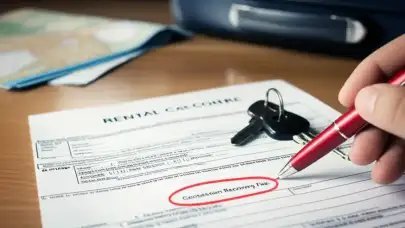
Avoid Extra Fees When Renting a Car Abroad (2026 Guide)
Avoid Extra Fees When Renting a Car Abroad (2026 Guide)
How do I avoid extra fees when renting a car abroad? Short answer: yes, with the right approach. Here’s the full breakdown.
My $200/week rental in Italy billed at $410. Insurance I didn't need, a young-driver fee I didn't expect, and a toll device I never used. Every fee was avoidable — I just didn't know how.
Here's the complete fee-avoidance playbook for international rentals.
Here’s what you need to know
Insurance: the biggest fee trap
Rental companies abroad push CDW/LDW at $20-40/day. Before you go: check if your credit card covers international rentals (many premium cards do — verify YOUR card's country exclusions), and whether your personal auto policy extends abroad (usually not, but check). If covered, decline firmly at the counter — they'll push hard. If not covered, third-party rental insurance (like Allianz) costs half the counter price. Never buy blind at the counter.
Book the right way: compare all-in, direct, early
Compare on aggregators, then book direct with the company for easier dispute resolution. Book 2-3 months ahead — international rates climb steeply last-minute. Choose 'pay later' refundable rates and re-shop if prices drop. And read the terms: mileage caps, fuel policies, and cross-border fees hide in the fine print. Full-to-full fuel policy only — prepay is never a deal.
Related reading: Cheapest Airport-to-Downtown Transport: Every Option Ranked
Know the country-specific gotchas
Italy: theft protection is mandatory-ish and pricey. UK: automatics cost double — learn manual or pay up. Many countries: under-25 surcharges ($25-40/day), one-way international drop fees ($500+ — avoid), winter tire mandates (Scandinavia/Germany, $10-15/day), vignette toll stickers (Switzerland/Austria — buy at the border, not from the rental company). Research YOUR country's quirks before booking.
At pickup: document everything
Photograph every scratch, dent, and the fuel gauge before leaving — timestamped. Check the spare, jack, and required safety gear (warning triangle, vest — legally required in many EU countries; fines if missing). Decline upsells politely but firmly. The pickup inspection is your defense against bogus damage claims later — 5 minutes now saves $500 disputes later.
Returning: fuel, timing, and tolls
Return full (keep the receipt from a nearby station — not the closest one, which gouges). Return on time: late returns can trigger a full extra day charge. Tolls: many countries are cashless — ask the rental company how tolls are handled (some charge $10/day 'convenience' fees for $2 in tolls; a local toll tag or app is cheaper). Settle any disputes before leaving the country — afterwards, you're powerless.
My honest take
My Italy disaster taught me the pre-trip insurance check. Now I verify my credit card's international coverage before every trip — 10 minutes on the phone — and I've declined $300+ in counter insurance since. The most expensive fee is the one you buy uninformed.
FAQs: How do I avoid extra fees when renting a car abroad?
Here are the questions I hear most often about this topic:
Do I need an International Driving Permit?
In many countries, yes — it's required by law (Italy, Spain, Japan, and others). It's $20 at AAA, valid for a year, and takes 10 minutes. Get one; fines for driving without it are real.
Will my US credit card cover rental insurance abroad?
Many premium travel cards do, but check country exclusions (Ireland, Israel, and Jamaica are commonly excluded) and whether you must decline the rental company's coverage and pay with that card.
Is it cheaper to rent manual or automatic abroad?
Manual is dramatically cheaper in Europe (often half the price) with far more availability. If you can drive stick, do it — the savings are enormous.
The bottom line
Verify insurance coverage before you go, book direct and early, research your country's quirks, document everything at pickup, and return full and on time. International rentals punish the unprepared and reward the informed — be the informed one.
For deeper background, check out AAA's international driving guides — both are solid, reputable resources worth bookmarking.
More from Daily Magazine 24
- Cheapest Airport-to-Downtown Transport: Every Option Ranked
- Solo Female Travel Safety: Honest Guide to a New Country
One more thing worth knowing
Money tip that applies everywhere: notify your bank of travel dates, carry two different cards (kept separately), and keep some emergency cash hidden apart from your wallet. Card blocks from 'suspicious foreign activity' have derailed more trips than pickpockets have. A five-minute call or app notification before departure prevents the dreaded declined-card moment abroad.
One more thing worth knowing
Finally, build buffer into your itinerary — the unplanned half-day, the slower morning, the margin around connections. Rushed travel is stressed travel, and the buffer is where the magic happens: the long lunch that becomes a memory, the wrong turn that finds the viewpoint. Some of my best travel stories come from the gaps in the plan, not the plan itself.
One more thing worth knowing
One more thing: document as you go, lightly. A few notes each evening — where you ate, what surprised you, what you'd do differently — takes five minutes and becomes priceless later. Photos capture sights; notes capture feelings. Future-you, planning the next trip or just reminiscing, will be grateful for the specifics your memory will absolutely lose.
One more thing worth knowing
And remember why you're going in the first place. It's easy to turn a trip into a checklist to optimize — sights seen, photos taken, boxes ticked. But the trips I treasure most are the ones where I slowed down enough to actually be somewhere: the unhurried coffee, the long walk with no destination, the conversation with a stranger. See the sights, yes — but also just be there.
One more thing worth knowing
One thing seasoned travelers learn fast: the best trip is rarely the most expensive one — it's the best planned one. An hour of research before you go routinely saves hundreds of dollars and multiple headaches. Read recent reviews (not just the glowing ones), check seasonal quirks, and learn three local customs. Preparation doesn't kill spontaneity; it funds it, by removing the preventable disasters that eat your time and budget.