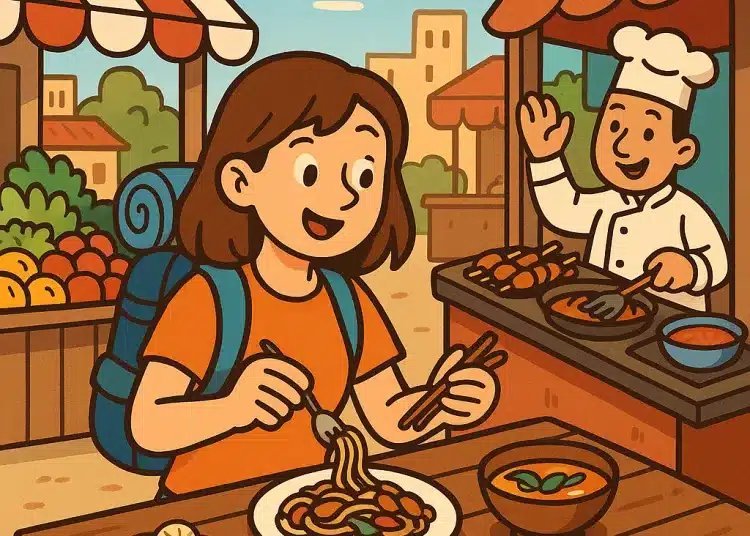
Find the Best Local Restaurants Abroad (Traveler’s Guide)
Find the Best Local Restaurants Abroad (Traveler's Guide)
How do I find the best local restaurants while traveling abroad? Good news: it’s more doable than it looks. Here’s what actually works.
The best meal of my life cost €11 at a place with no English menu, plastic chairs, and a line of office workers. I found it by ignoring every recommendation source I'd normally trust.
Finding great local restaurants abroad is a skill. Here's the method.
Breaking it down
Ask 'where do YOU eat?' — not 'where should I go?'
The question matters. 'Where should tourists eat?' gets the famous place. 'Where do you eat lunch on workdays?' gets the truth. Ask hotel staff, shopkeepers, taxi drivers — then follow the consensus when two people name the same spot. That consensus pick has never disappointed me.
Follow the lunch crowd
Between 12-2pm, follow office workers. The places packed with locals at lunch are almost always excellent and fairly priced — they survive on repeat customers, not foot traffic. Dinner crowds can be tourists; lunch crowds are residents. This is my most reliable single indicator in any country.
Related reading: Premium Economy: Worth the Upgrade on Long Flights? (2026)
Learn the local food words
Spend 15 minutes learning key food vocabulary: menu words, 'delicious,' 'the local specialty,' 'what do you recommend.' It unlocks menus, delights staff, and gets you recommendations instead of the tourist default. Google Translate's camera mode decodes menus in real time. Effort is the universal language of respect — and it gets rewarded with better food.
Use local platforms, not just TripAdvisor
TripAdvisor skews tourist; try: Google Maps reviews in the local language, country-specific apps (Tabelog in Japan, TheFork in Europe), and local food blogs. Markets and food halls are cheat codes — dozens of vendors, local prices, zero tourist markup. A city's main market hall is often its best single food destination.
Embrace the un-fancy
Plastic chairs, fluorescent lights, no decor — in most of the world, these signal 'spends money on food, not ambiance.' Some of the greatest meals on earth happen in places that look like nothing. Judge by the crowd and the smell, never the interior design. My rule: the uglier the restaurant, the better the food (with remarkable consistency).
My honest take
In Bangkok, I ate at a shophouse with six tables and no sign in English. The pad see ew cost $2 and rewired my understanding of what food could be. I'd walked past it twice — it looked like nothing. Now 'looks like nothing' is my favorite restaurant review.
FAQs: How do I find the best local restaurants while traveling abroad?
Here are the questions I hear most often about this topic:
How do I order if there's no English menu?
Point, smile, and use translation apps. 'What do you recommend?' (learn it in the local language) plus pointing at what others are eating works everywhere.
Is street food safe abroad?
Generally yes where turnover is high — busy stalls mean fresh food. Look for crowds of locals, cooked-to-order food, and clean water practices. Some of the world's best food is street food.
Should I tip at local restaurants abroad?
It varies wildly by country — research the local norm before you go. Much of Asia and Europe: minimal or no tipping; the US-style 20% is an outlier globally.
The bottom line
Ask locals where they personally eat, follow the lunch crowd, learn key food words, use local review platforms, and embrace the un-fancy. The best restaurant in any city is rarely the famous one — it's the one the office workers line up for at noon.
For deeper background, check out Lonely Planet's food travel guides — both are solid, reputable resources worth bookmarking.
More from Daily Magazine 24
- Premium Economy: Worth the Upgrade on Long Flights? (2026)
- What to Pack in Your Personal Item for a Long Flight
One more thing worth knowing
And remember why you're going in the first place. It's easy to turn a trip into a checklist to optimize — sights seen, photos taken, boxes ticked. But the trips I treasure most are the ones where I slowed down enough to actually be somewhere: the unhurried coffee, the long walk with no destination, the conversation with a stranger. See the sights, yes — but also just be there.
One more thing worth knowing
One thing seasoned travelers learn fast: the best trip is rarely the most expensive one — it's the best planned one. An hour of research before you go routinely saves hundreds of dollars and multiple headaches. Read recent reviews (not just the glowing ones), check seasonal quirks, and learn three local customs. Preparation doesn't kill spontaneity; it funds it, by removing the preventable disasters that eat your time and budget.
One more thing worth knowing
Here's my golden rule for any trip: plan the skeleton, leave the flesh loose. Book the non-negotiables (flights, first-night stay, must-do tickets) and leave deliberate gaps for discoveries — the restaurant you stumble into, the viewpoint a local mentions, the detour that becomes the highlight. Over-planned trips feel like work; under-planned ones waste precious days. The sweet spot is structure with breathing room.
One more thing worth knowing
A quick word on travel insurance, since it comes up constantly: for cheap, flexible domestic trips you can usually skip it, but for expensive or complicated itineraries it's the cheapest peace of mind in travel — typically 4-8% of trip cost. Check your credit card benefits first; many premium cards already include solid trip protection. Don't double-pay for coverage you already have.
One more thing worth knowing
Packing philosophy that changed my travel life: lay out everything you plan to bring, then remove a third. Almost everyone overpacks by 30-40%, and every extra item is weight you carry through airports, up stairs, and into taxis. The things you truly need on a trip fit in less space than you think — and anything you forget can usually be bought at your destination, often cheaper and as a fun souvenir.