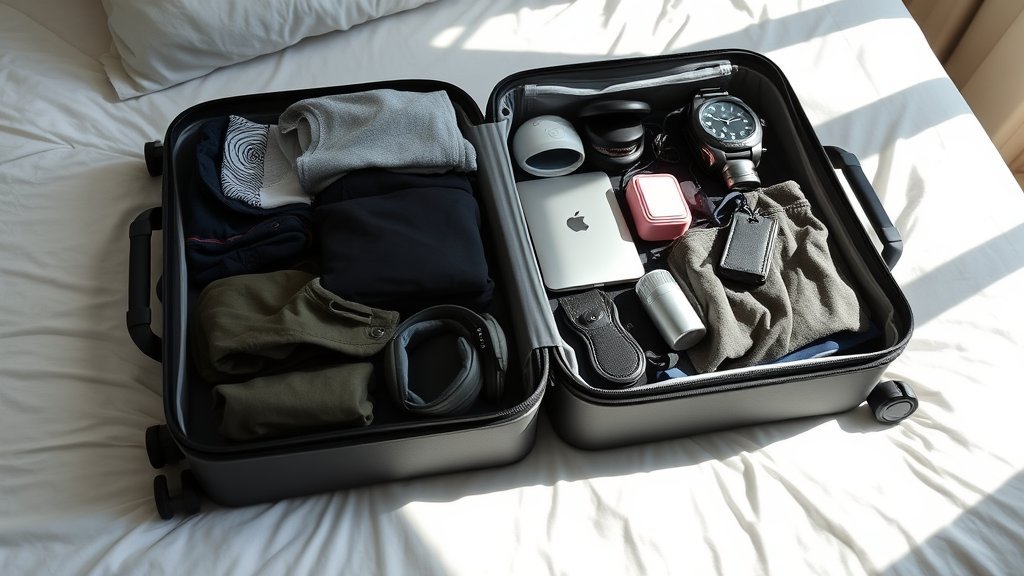
Two Weeks, One Carry-On: The Packing System That Works
Two Weeks, One Carry-On: The Packing System That Works
How can I travel with only a carry-on for two weeks? Good news: it’s more doable than it looks. Here’s what actually works.
I spent years hauling a 50-pound checked bag through airports, waiting at carousels, paying fees. Then I did two weeks in Europe with just a carry-on and never went back.
It's not about suffering with less — it's a system. Here's exactly how it works.
Breaking it down
The 5-4-3-2-1 capsule formula
5 tops, 4 bottoms, 3 layers/shoes/accessories, 2 of key items — adapt to your trip, but the principle is: everything matches everything. Stick to 2-3 colors max (navy, gray, white, for example) so every combination works. Merino wool tops can be worn 3-4 times without washing — they're the carry-on traveler's secret weapon. Two weeks of outfits from 12 items is very real.
Plan laundry, not outfits
The mental shift: you're packing for 5-7 days and doing laundry once mid-trip. Every Airbnb with a washer, every hotel laundry service, every laundromat is a reset button. Sink-washing delicates takes 10 minutes. Planning one laundry day removes the need to pack 14 days of clothes — that's the whole trick.
Related reading: How to Find Safe Neighborhoods for Your Airbnb Stay
Wear your bulkiest items on the plane
Boots, jeans, jacket, sweater — wear them, don't pack them. This single rule frees up 30-40% of bag space. I look slightly ridiculous boarding in layers, but my bag closes easily. Pack: packable down (compresses tiny), not the parka.
Roll, cube, and ruthlessly edit toiletries
Packing cubes compress and organize — roll clothes inside them. Toiletries: solid shampoo bars, contact-lens-case decanters, and only what you'll actually use (buy sunscreen locally if needed). The toiletry bag is where most people overpack by 200%. Full-size 'just in case' bottles are the enemy.
The 'will I wear it twice' test
Every item must earn its space: will you wear it at least twice? Does it match at least 3 other items? If not, it stays home. 'Just in case' items almost never get used — and if you truly need something, you can buy it there (often cheaper and a fun souvenir). My packing list shrank 40% when I applied this test honestly.
My honest take
The laundry realization was my breakthrough. I'd been packing like laundry didn't exist at my destination — but it does, everywhere. One mid-trip wash turned my 'impossible' carry-on goal into easy mode. Pack for a week, wash once, travel for two.
FAQs: How can I travel with only a carry-on for two weeks?
Here are the questions I hear most often about this topic:
What size carry-on for two weeks?
A 40-45L bag (standard carry-on, 22x14x9 inches) is plenty with the capsule system. Bigger bags just invite overpacking.
How do I handle different climates?
Layers, not bulk: a packable down layer plus a shell handles 30-60°F swings. Merino base layers regulate across temperatures. One versatile jacket beats three specialized ones.
What about souvenirs?
Pack a foldable tote or duffel (weighs nothing, packs flat) for the return trip. Or ship souvenirs home — often cheaper than checked-bag fees.
The bottom line
Capsule wardrobe in 2-3 colors, one mid-trip laundry day, bulkiest items worn on the plane, ruthless toiletry editing, and the wear-it-twice test. Two weeks, one bag, zero carousel waits. Once you travel like this, you'll never check a bag again.
For deeper background, check out SmarterTravel's packing guides — both are solid, reputable resources worth bookmarking.
More from Daily Magazine 24
- How to Find Safe Neighborhoods for Your Airbnb Stay
- Florida Rental Car Cost for a Week: 2026 Prices + Tips
One more thing worth knowing
Packing philosophy that changed my travel life: lay out everything you plan to bring, then remove a third. Almost everyone overpacks by 30-40%, and every extra item is weight you carry through airports, up stairs, and into taxis. The things you truly need on a trip fit in less space than you think — and anything you forget can usually be bought at your destination, often cheaper and as a fun souvenir.
One more thing worth knowing
Money tip that applies everywhere: notify your bank of travel dates, carry two different cards (kept separately), and keep some emergency cash hidden apart from your wallet. Card blocks from 'suspicious foreign activity' have derailed more trips than pickpockets have. A five-minute call or app notification before departure prevents the dreaded declined-card moment abroad.
One more thing worth knowing
Finally, build buffer into your itinerary — the unplanned half-day, the slower morning, the margin around connections. Rushed travel is stressed travel, and the buffer is where the magic happens: the long lunch that becomes a memory, the wrong turn that finds the viewpoint. Some of my best travel stories come from the gaps in the plan, not the plan itself.
One more thing worth knowing
One more thing: document as you go, lightly. A few notes each evening — where you ate, what surprised you, what you'd do differently — takes five minutes and becomes priceless later. Photos capture sights; notes capture feelings. Future-you, planning the next trip or just reminiscing, will be grateful for the specifics your memory will absolutely lose.
One more thing worth knowing
And remember why you're going in the first place. It's easy to turn a trip into a checklist to optimize — sights seen, photos taken, boxes ticked. But the trips I treasure most are the ones where I slowed down enough to actually be somewhere: the unhurried coffee, the long walk with no destination, the conversation with a stranger. See the sights, yes — but also just be there.
One more thing worth knowing
One thing seasoned travelers learn fast: the best trip is rarely the most expensive one — it's the best planned one. An hour of research before you go routinely saves hundreds of dollars and multiple headaches. Read recent reviews (not just the glowing ones), check seasonal quirks, and learn three local customs. Preparation doesn't kill spontaneity; it funds it, by removing the preventable disasters that eat your time and budget.