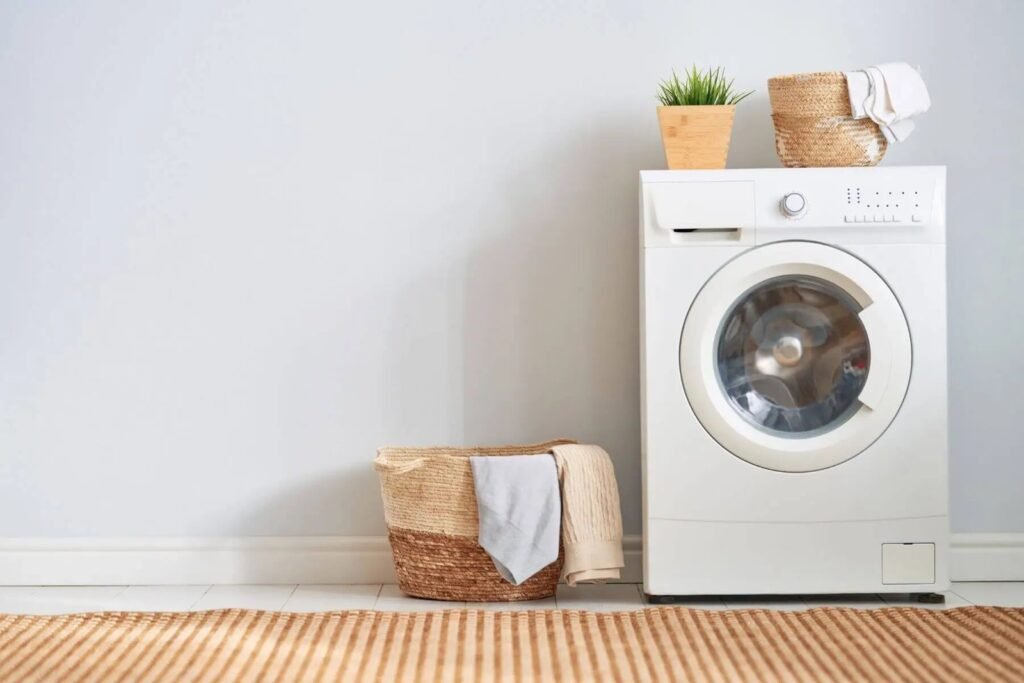
Make Laundry Day Faster (The System That Cut Mine in Half)
Make Laundry Day Faster (The System That Cut Mine in Half)
How can I make laundry day faster and less annoying? Good news: it’s more doable than it looks. Here’s what actually works.
Laundry used to eat my entire Saturday: sort, wash, forget, rewash, dry, leave in basket for three days, finally fold while resentful. The actual work was maybe 40 minutes; the elapsed time was a whole lost day.
Then I rebuilt the process. Now it's 90 minutes, start to folded, with most of that being machine time. Here's the system.
Breaking it down
Sort once, permanently: the multi-bag hamper
A $25 triple-sorter hamper (lights, darks, delicates) eliminates sorting day entirely — clothes are pre-sorted as you undress. This single change removed the most hated step. When a bag's full, that's a load; no decisions, no piles on the floor. It's stupidly simple and stupidly effective.
Run smaller loads more often, not marathon day
Two loads twice a week beats six loads on Saturday. Smaller loads wash and dry faster, wrinkle less, and never become the dreaded mountain. I do a load every Tuesday and Friday morning — it runs while I work from home, and folding a single load takes 10 minutes. Frequency is the whole secret.
Related reading: Never Forget a Birthday Again: The System That Works
Set timers and respect them
The forgotten-wet-load rewash is pure wasted time. Set a phone timer for wash and dry cycles — 35 and 45 minutes, done. Better: machines with delay-start run overnight so you wake to a finished load. I haven't rewound a musty load in a year since the timer habit. It's embarrassingly basic and completely transformative.
Fold (or hang) immediately — the 10-minute rule
Clothes left in the dryer wrinkle and migrate to the 'clean chair.' Fold straight from the dryer while things are warm: 10 minutes for a normal load, and hang shirts directly on hangers from the dryer. The rule is: the dryer door doesn't close on an unfolded load. Warm clothes fold in half the time — it's physics and motivation combined.
Systematize the supplies and the socks
Keep detergent, stain remover, and dryer balls at the machine — no hunting. For socks: a mesh bag per person (throw pairs in dirty, wash and dry in the bag, no sorting ever) or just buy identical socks. I switched to one sock type in bulk; the Great Sock Sort ended permanently. Life's too short for sock matching.
My honest take
The triple-sorter hamper was a $25 purchase that paid for itself in the first week. Sorting was the step I hated most, and now it doesn't exist — it happens automatically at the hamper. Remove the worst step and the whole chore transforms.
FAQs: How can I make laundry day faster and less annoying?
Here are the questions I hear most often about this topic:
How often should I do laundry?
Twice a week for most households prevents pile-ups. Daily small loads work for big families; weekly marathons work for no one.
Cold or hot water?
Cold for almost everything — modern detergents are designed for it, colors last longer, and it saves energy. Hot for bedding, towels, and sick-day laundry.
How do I stop clothes from shrinking?
Wash cold, dry on low or medium, and pull things out slightly damp. High heat is the shrinker — the dryer setting matters more than the wash.
The bottom line
Pre-sort at the hamper, wash smaller loads twice weekly, timer every cycle, fold warm immediately, and systematize socks and supplies. Laundry goes from a lost Saturday to a background task — 90 minutes, start to folded, most of it machine time.
For deeper background, check out Good Housekeeping's laundry experts — both are solid, reputable resources worth bookmarking.
More from Daily Magazine 24
- Never Forget a Birthday Again: The System That Works
- Is Thrift Store Furniture Worth It? Honest Pros and Cons
One more thing worth knowing
It's also worth saying: don't try to implement everything at once. Pick the one tip that resonated most and do just that for two weeks. I call it the 'one-thing rule,' and it's how I've built every lasting habit I have. Our brains rebel against overhauls but accept single tweaks gracefully. Two weeks from now, add tip number two. In three months you'll have transformed the whole area without ever feeling overwhelmed — slow change is the only change that sticks.
One more thing worth knowing
A quick word on perfectionism, because it derails more good intentions than laziness ever does. You don't need the perfect version of this — you need the done version. The slightly messy attempt beats the flawless plan that never leaves your head. I've seen people research the ideal approach for months while doing nothing; meanwhile the person who just started imperfectly is already reaping benefits. Start ugly, refine later.
One more thing worth knowing
If you live with other people, get them on board early — not with a lecture, but by making the new way easier than the old way. Systems that depend on everyone caring equally will fail; systems where the right choice is the lazy choice succeed. Put the thing where it belongs, remove friction from the good habit, add friction to the bad one. Design beats discipline, especially in shared spaces.
One more thing worth knowing
Budget-wise, remember that most of these improvements cost little or nothing — the expensive part is usually indecision, not implementation. I've spent more money 'thinking about' solutions than on the solutions themselves. Set a small budget, pick the highest-impact move, and do it this weekend. Future-you, enjoying the results, will wonder why you waited.
One more thing worth knowing
Finally, give any change a fair trial before judging it. Three weeks is my minimum — the first week you're fighting old habits, the second you're adjusting, and only in the third do you see the real payoff. I've almost abandoned routines on day five that became favorites by day twenty. Commit to the trial period upfront, evaluate honestly at the end, and keep what earns its place.