Best Mattress Firmness for Back Sleepers (2026 Buying Guide)
Best Mattress Firmness for Back Sleepers (2026 Buying Guide)
How do I choose the right mattress firmness for back sleepers? Good news: it’s more doable than it looks. Here’s what actually works.
I slept on a too-soft mattress for two years and woke up every morning feeling 80. Switching to the right firmness fixed my back pain in a week — I just wish someone had explained the actual logic sooner.
Back sleepers have specific needs, and 'firm' isn't automatically the answer. Here's how to get it right.
Breaking it down
Aim for medium-firm: 6-7 out of 10
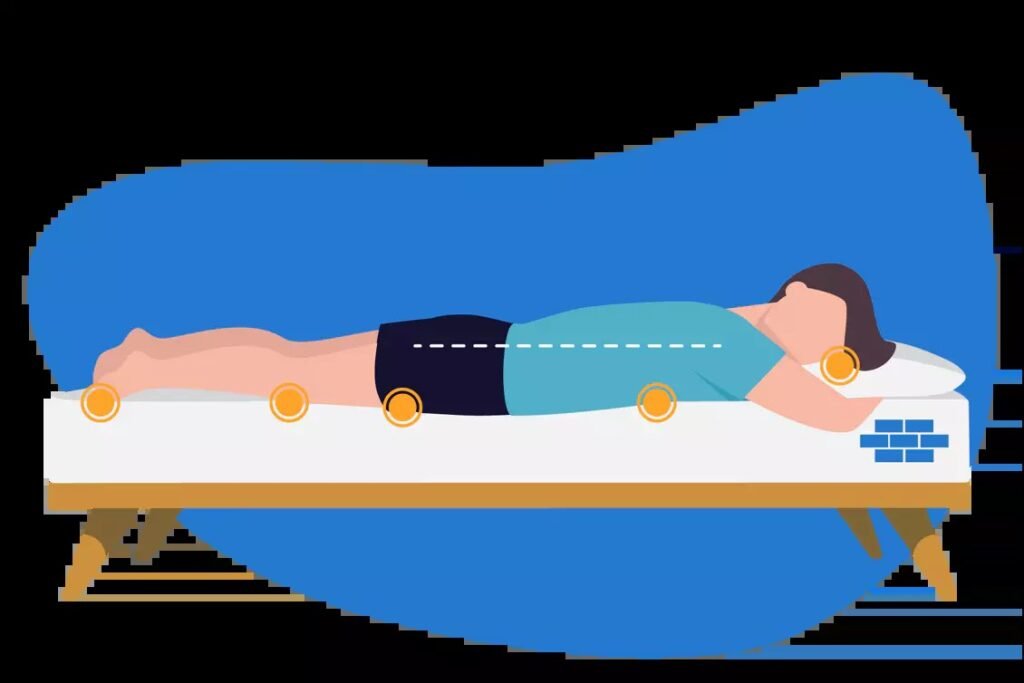
Back sleepers need a mattress that keeps the spine neutral — hips shouldn't sink, but the lower back needs slight contouring. Medium-firm (6-7/10) hits that balance for most people. True 'firm' (8+) often creates a gap under the lumbar curve, causing the exact back pain you're trying to avoid. Medium-firm is the consensus pick across sleep research.
Adjust for your weight
Firmness is relative to body weight: under 130 lbs, you won't compress a firm mattress enough — go medium (5-6). 130-230 lbs, medium-firm (6-7) is ideal. Over 230 lbs, you'll sink into medium — go firm (7-8) for proper support. My 150-lb frame on a 7/10 is perfect; my 240-lb brother needed an 8. Same label, different bodies, different needs.
Related reading: Hiring a Professional Organizer for One Room: Worth It?
Material matters as much as firmness
Memory foam contours well but can sleep hot and feel 'stuck.' Latex offers responsive support with better cooling. Hybrids (coils + foam top) give the best of both for back sleepers — support plus pressure relief. I landed on a medium-firm hybrid after testing all three; the coil base keeps my hips up while the foam top cushions my shoulders.
Use the 30-night rule, not the showroom test
Five minutes on a showroom bed tells you nothing. Your body needs 2-4 weeks to adjust to a new mattress. Buy from companies with 100+ night trials (most online brands offer them) and actually use the trial. My first pick felt wrong for 10 days, then perfect — showroom logic would have returned a great mattress.
Don't forget the pillow and foundation
A back sleeper's pillow should be thin to medium — thick pillows crane the neck forward. And a sagging box spring ruins even the best mattress; check your foundation's support. I fixed half my back pain with a $60 low-loft pillow before I even replaced the mattress. The sleep system matters, not just the mattress.
My honest take
I almost bought an extra-firm mattress because 'back sleepers need firm' — conventional wisdom that would have been wrong for me. The medium-firm hybrid I actually bought ended two years of morning backaches. Test your assumptions, not just mattresses.
FAQs: How do I choose the right mattress firmness for back sleepers?
Here are the questions I hear most often about this topic:
Is a firm or soft mattress better for back pain?
Medium-firm consistently outperforms both extremes for back pain in studies. Too soft misaligns the spine; too firm creates pressure points.
How often should I replace my mattress?
Every 7-10 years, or sooner if you wake with pain that fades during the day — that's the classic worn-mattress signature.
Do mattress toppers help?
A 2-3 inch topper can fine-tune firmness: a firm topper on a soft mattress (or vice versa). It's a $100-200 experiment before a $1,000 commitment.
The bottom line
Medium-firm (6-7/10), adjusted for your weight, in a hybrid or latex build, tested for 30 nights with the right pillow. Get those four things right and your mornings stop hurting — I wish I'd learned this two years and one bad mattress sooner.
For deeper background, check out the Sleep Foundation's mattress guides and Wikipedia's mattress overview — both are solid, reputable resources worth bookmarking.
More from Daily Magazine 24
- Hiring a Professional Organizer for One Room: Worth It?
- The Perfect Guest Bedroom Checklist: 15 Things Visitors Love
One more thing worth knowing
If you live with other people, get them on board early — not with a lecture, but by making the new way easier than the old way. Systems that depend on everyone caring equally will fail; systems where the right choice is the lazy choice succeed. Put the thing where it belongs, remove friction from the good habit, add friction to the bad one. Design beats discipline, especially in shared spaces.
One more thing worth knowing
Budget-wise, remember that most of these improvements cost little or nothing — the expensive part is usually indecision, not implementation. I've spent more money 'thinking about' solutions than on the solutions themselves. Set a small budget, pick the highest-impact move, and do it this weekend. Future-you, enjoying the results, will wonder why you waited.
One more thing worth knowing
Finally, give any change a fair trial before judging it. Three weeks is my minimum — the first week you're fighting old habits, the second you're adjusting, and only in the third do you see the real payoff. I've almost abandoned routines on day five that became favorites by day twenty. Commit to the trial period upfront, evaluate honestly at the end, and keep what earns its place.
One more thing worth knowing
One more practical note: take a 'before' snapshot — a photo, a quick note about how things feel now. We adapt to improvements fast and forget how far we've come, which makes it tempting to abandon systems that are quietly working. Six months from now, that before-photo will remind you why you started. Progress you can see is progress you'll protect.
One more thing worth knowing
And if you take one mindset shift from all of this, let it be this: small, consistent beats big and occasional in every domain I've ever tested it. Ten minutes daily outperforms a monthly marathon. One habit at a time outperforms twelve resolutions. The tortoise doesn't just win the race — the tortoise is the only one still running in year two.