Create a Cozy Reading Corner in Any Small Room (Under $150)
Create a Cozy Reading Corner in Any Small Room (Under $150)
How can I create a cozy reading corner in a small room? Good news: it’s more doable than it looks. Here’s what actually works.
I always wanted a reading nook — you know, the window seat from every movie. But I had a small bedroom and no window seat. So I built the feeling instead of the architecture, and honestly? It's better.
A reading corner needs five things, none of them expensive. Here's the formula.
Breaking it down
Claim an underused corner — even 3×3 feet works
The dead corner by the window, the awkward nook beside the dresser, the end of the hallway — small rooms always have one underperforming spot. You need roughly 3×3 feet: chair space plus a little breathing room. Measure yours; I bet you have it. The corner's 'wasted' status is exactly why it works — you're not sacrificing functional space.
The chair is everything: comfort over style
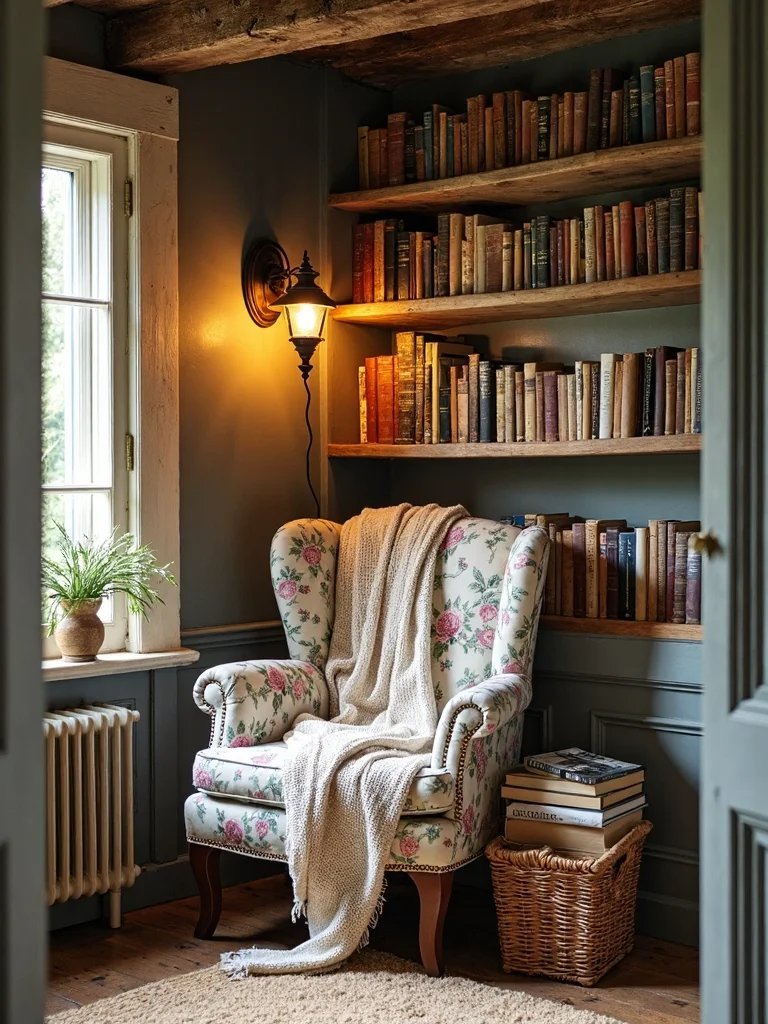
This is where to spend your budget. A $80-120 armchair, a cushioned accent chair, or even a pile of large floor pillows with back support — the test is whether you'd sit for two hours happily. Thrift stores are goldmines for solid armchairs ($30-60). Sit-test before buying; a beautiful-but-uncomfortable chair kills the whole concept.
Related reading: Locked Out of Your Apartment? Do This (In This Order)
Light it like you mean it
Overhead lighting ruins coziness. A $25 floor lamp or clip-on reading light with warm bulbs (2700K) creates the pool of light that defines the nook. Position it over your shoulder, not in your eyes. Good lighting is the difference between 'corner with a chair' and 'sanctuary' — it's the highest-ROI element after the chair itself.
Layer textures: the cozy multiplier
A throw blanket, one good pillow, a small rug underfoot — texture is what makes a space feel enveloping rather than empty. These are thrift-store and clearance-rack items; $30 total transforms the feel. The rule: if you want to touch it, it belongs in the nook. Soft things invite lingering.
Add the ritual elements: side table, drink, books
A small side table (or sturdy stool) for tea and your current book completes it. Keep a tiny stack of 'next reads' nearby — choosing from the stack is part of the pleasure. Optional upgrades: a candle or diffuser, a soft playlist, a blanket basket. The nook should be 'ready' at all times, so sitting down takes zero setup.
My honest take
My nook is a $45 thrifted armchair, a $20 lamp, and a blanket my grandmother made. Total investment: under $100. I've read 30 books there this year — more than the previous five years combined. The corner didn't give me time; it gave me a place that made reading the easiest choice.
FAQs: How can I create a cozy reading corner in a small room?
Here are the questions I hear most often about this topic:
What if I have zero free corners?
Reclaim one: move the plant, shrink the desk setup, or put the nook in a closet (remove the doors, add a cushion — the 'book closet' is a beloved classic).
What's the minimum budget?
Under $50 is doable: floor pillows instead of a chair, a clip light, thrifted throw. Comfort matters more than furniture categories.
How do I keep it from becoming a clutter corner?
One rule: only current reads and the blanket live there. Everything else gets relocated immediately. A nook full of random stuff stops being a nook.
The bottom line
Claim 3×3 feet, get a genuinely comfortable seat, light it warm, layer soft textures, and keep it ritual-ready. Under $150 and one afternoon, you'll have the spot where your reading life finally happens.
For deeper background, check out Good Housekeeping's cozy home ideas — both are solid, reputable resources worth bookmarking.
More from Daily Magazine 24
- Locked Out of Your Apartment? Do This (In This Order)
- Storage Unit Costs in 2026: Prices by Size + Money Traps
One more thing worth knowing
Finally, give any change a fair trial before judging it. Three weeks is my minimum — the first week you're fighting old habits, the second you're adjusting, and only in the third do you see the real payoff. I've almost abandoned routines on day five that became favorites by day twenty. Commit to the trial period upfront, evaluate honestly at the end, and keep what earns its place.
One more thing worth knowing
One more practical note: take a 'before' snapshot — a photo, a quick note about how things feel now. We adapt to improvements fast and forget how far we've come, which makes it tempting to abandon systems that are quietly working. Six months from now, that before-photo will remind you why you started. Progress you can see is progress you'll protect.
One more thing worth knowing
And if you take one mindset shift from all of this, let it be this: small, consistent beats big and occasional in every domain I've ever tested it. Ten minutes daily outperforms a monthly marathon. One habit at a time outperforms twelve resolutions. The tortoise doesn't just win the race — the tortoise is the only one still running in year two.
One more thing worth knowing
One thing I've noticed after years of tweaking my own routines: the best system is the one you'll actually maintain on your worst week, not your best one. Grand plans collapse under real life — kids get sick, work explodes, motivation evaporates. So whatever you take from this guide, shrink it down to the smallest version you could do exhausted on a Tuesday night. If that tiny version still helps, you've found your keeper. You can always scale up later; you can't scale up from quitting.
One more thing worth knowing
It's also worth saying: don't try to implement everything at once. Pick the one tip that resonated most and do just that for two weeks. I call it the 'one-thing rule,' and it's how I've built every lasting habit I have. Our brains rebel against overhauls but accept single tweaks gracefully. Two weeks from now, add tip number two. In three months you'll have transformed the whole area without ever feeling overwhelmed — slow change is the only change that sticks.