How to Store Seasonal Decorations So They Last for Years
How to Store Seasonal Decorations So They Last for Years
What is the best way to store seasonal decorations? It’s one of the most common questions I hear — and the honest answer is simpler than you’d think.
Every January I used to shove decorations into random bags, swear I'd organize them 'next year,' and then spend next December untangling lights and finding broken ornaments. The cycle cost me money and joy.
Then I spent one afternoon setting up a real system. Three years later, decorating takes half the time and nothing's broken. Here's the method.
What actually works
Use clear bins with labels — opaque is the enemy
Clear plastic bins let you see contents without opening six boxes. Label each with contents AND the room it decorates ('Living room tree ornaments,' 'Outdoor lights'). Uniform bin sizes stack neatly; random boxes don't. I switched to all clear 27-gallon bins and my storage area went from chaos to library.
Wrap lights around cardboard, never in a ball
The ball-of-lights is how strands go to die. Wrap each strand around a piece of cardboard or a dedicated reel, secure with a twist tie, and store flat. Test every strand before storing (replace dead bulbs now, not next December at 9pm). This one habit saves the most annual frustration of anything on this list.
Related reading: Noisy Neighbors? A Diplomat's Guide to Getting Quiet Back
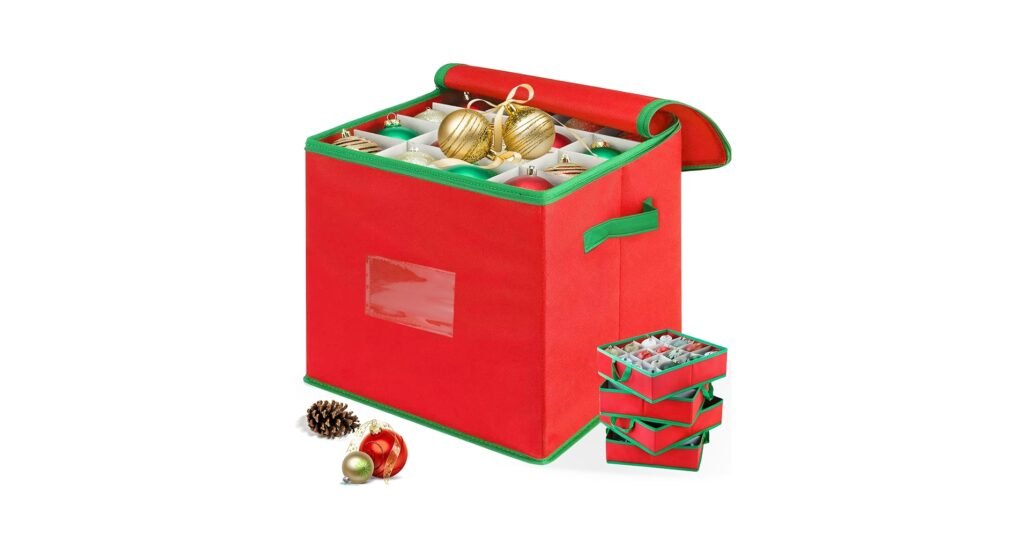
Ornament storage: dividers or cups, not piles
Piled ornaments chip and shatter. Use divided ornament boxes ($10-15), or DIY with plastic cups hot-glued into a bin. Wrap heirlooms individually in tissue. Sort by color or tree zone while packing — future-you will thank present-you when decorating takes 30 minutes instead of two hours of sorting.
Climate matters: avoid attics and damp basements
Extreme heat warps candles and melts adhesives; dampness grows mold on fabric items. A climate-stable closet, under-bed space, or interior storage room beats the attic every time. If the attic is your only option, use sealed bins with silica gel packets and keep candles and delicate items inside the house.
Photograph your setups before taking them down
Snap a few photos of your mantel, tree, and table arrangements before disassembling. Next year, you won't stand there wondering where that garland went. I keep a 'decorations' album on my phone — it's like leaving instructions for my future self, and it makes decorating genuinely fun instead of a puzzle.
My honest take
The photo trick is my favorite. I used to redecorate from scratch every year, which sounds creative but was actually just inefficient. Now I pull up last year's photos, replicate the good stuff in 20 minutes, and spend the saved time actually enjoying the season.
FAQs: What is the best way to store seasonal decorations?
Here are the questions I hear most often about this topic:
How many bins do I need for Christmas decorations?
Most households fit in 4-6 large bins: ornaments, lights, tree skirt/tree items, indoor decor, outdoor decor, and wrapping supplies. Purge before you buy bins.
Should I keep the original boxes?
For expensive items (artificial tree, village sets), yes — they're custom-fit. For everything else, uniform clear bins are better.
When's the best time to buy storage supplies?
January, when holiday storage goes 50-75% off. Buy next year's system with this year's clearance prices.
The bottom line
Clear labeled bins, lights on cardboard reels, ornaments in dividers, climate-stable storage, and photos of your setups. One organized afternoon ends the annual decoration chaos forever — and next December will feel like opening presents, not solving problems.
For deeper background, check out Good Housekeeping's storage guides — both are solid, reputable resources worth bookmarking.
More from Daily Magazine 24
- Noisy Neighbors? A Diplomat's Guide to Getting Quiet Back
- Create a Cozy Reading Corner in Any Small Room (Under $150)
One more thing worth knowing
A quick word on perfectionism, because it derails more good intentions than laziness ever does. You don't need the perfect version of this — you need the done version. The slightly messy attempt beats the flawless plan that never leaves your head. I've seen people research the ideal approach for months while doing nothing; meanwhile the person who just started imperfectly is already reaping benefits. Start ugly, refine later.
One more thing worth knowing
If you live with other people, get them on board early — not with a lecture, but by making the new way easier than the old way. Systems that depend on everyone caring equally will fail; systems where the right choice is the lazy choice succeed. Put the thing where it belongs, remove friction from the good habit, add friction to the bad one. Design beats discipline, especially in shared spaces.
One more thing worth knowing
Budget-wise, remember that most of these improvements cost little or nothing — the expensive part is usually indecision, not implementation. I've spent more money 'thinking about' solutions than on the solutions themselves. Set a small budget, pick the highest-impact move, and do it this weekend. Future-you, enjoying the results, will wonder why you waited.
One more thing worth knowing
Finally, give any change a fair trial before judging it. Three weeks is my minimum — the first week you're fighting old habits, the second you're adjusting, and only in the third do you see the real payoff. I've almost abandoned routines on day five that became favorites by day twenty. Commit to the trial period upfront, evaluate honestly at the end, and keep what earns its place.
One more thing worth knowing
One more practical note: take a 'before' snapshot — a photo, a quick note about how things feel now. We adapt to improvements fast and forget how far we've come, which makes it tempting to abandon systems that are quietly working. Six months from now, that before-photo will remind you why you started. Progress you can see is progress you'll protect.
One more thing worth knowing
And if you take one mindset shift from all of this, let it be this: small, consistent beats big and occasional in every domain I've ever tested it. Ten minutes daily outperforms a monthly marathon. One habit at a time outperforms twelve resolutions. The tortoise doesn't just win the race — the tortoise is the only one still running in year two.