How to Plan a Staycation That Feels Like a Real Vacation
How to Plan a Staycation That Feels Like a Real Vacation
How do I plan a relaxing staycation at home? Here’s the real deal, based on what actually works rather than what sounds good.
My first staycation was a disaster: I 'took the week off' and spent it doing laundry, answering work Slacks, and scrolling. I returned to work more tired than I left. A staycation without a plan is just unemployment with chores.
The next one, I planned like a real trip — and it was genuinely restorative. Here's the playbook.
What really matters
Set an itinerary, even a loose one
Real vacations have structure; staycations need it too. Plan one anchor activity per day: Monday museum, Tuesday spa day, Wednesday day trip. The structure creates the psychological separation from 'normal life at home.' Without it, days blur into errands. I use a simple notes app list — nothing fancy, just enough to give each day a shape.
Establish a hard 'no work, no chores' rule
This is the rule that makes or breaks it. No email, no Slack, no 'quick' work tasks, and no catching up on chores beyond basic tidiness. Tell coworkers you're unreachable — actually unreachable, not 'kinda checking.' A staycation where you work half-days is just remote work with better snacks. Protect the boundary like your rest depends on it, because it does.
Related reading: Should a Busy Single Person Get a Pet? An Honest Answer
Tourist your own city
You've been meaning to visit that museum, try that restaurant, walk that trail. Do it now, with tourist energy: take photos, buy the silly souvenir, eat at the place with the line. I lived in my city for six years before my first staycation sent me to its famous botanical garden. It felt like traveling — 20 minutes from home.
Create the hotel experience at home
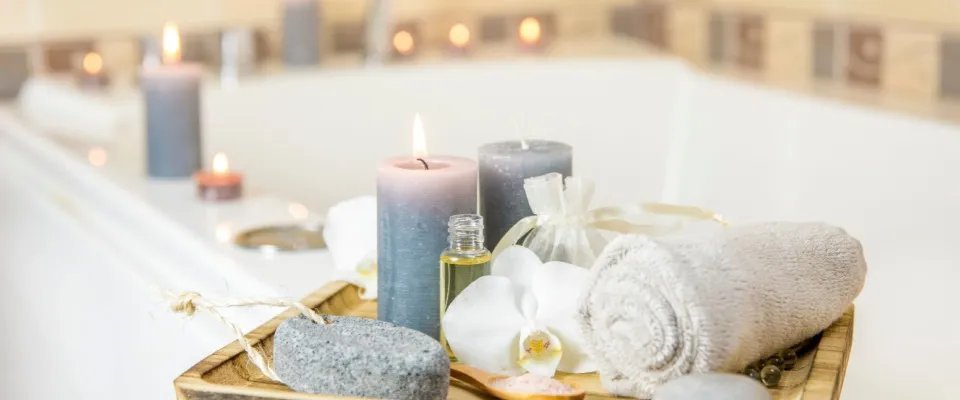
Fresh sheets, fluffy towels, a stocked fridge with treats, no alarm (or a gentle one). Light the candles, run the bath, order the good takeout. Hotels feel luxurious because of small details, and you can replicate most of them for $30. The mindset shift from 'my apartment' to 'my suite' is surprisingly powerful.
Plan one splurge and one free day
Book one genuinely special thing — a massage, a fancy dinner, a day-trip experience — to anchor the week as 'vacation.' Then balance with a completely free day: park, library, beach, long walk. The splurge makes it feel real; the free day keeps it sustainable. My best staycation memory is a $120 spa afternoon followed by a free sunset picnic.
My honest take
The 'no chores' rule was my revelation. My first staycation failed because I treated it as catch-up time. The second one, I banned chores entirely — dishes and laundry only — and it felt like an actual break. Rest is the product; protect it.
FAQs: How do I plan a relaxing staycation at home?
Here are the questions I hear most often about this topic:
How long should a staycation be?
3-5 days is the sweet spot. Long enough to decompress, short enough that you don't run out of ideas or start deep-cleaning the garage.
Should I tell people I'm on staycation?
Yes — set the out-of-office, tell friends you're 'away.' Social permission to be unreachable is half the battle.
What if I get bored at home?
Boredom usually means under-planning. Keep a backup list: 5 movies, 2 day trips, 1 project. Boredom is a planning failure, not a staycation failure.
The bottom line
A great staycation is a planned staycation: daily anchors, a hard no-work rule, tourist energy in your own city, hotel touches at home, and one good splurge. Do that, and you'll come back genuinely rested — no airport required.
For deeper background, check out Good Housekeeping's staycation ideas — both are solid, reputable resources worth bookmarking.
More from Daily Magazine 24
- Should a Busy Single Person Get a Pet? An Honest Answer
- Car Emergency Kit Checklist: What to Pack in 2026
One more thing worth knowing
If you live with other people, get them on board early — not with a lecture, but by making the new way easier than the old way. Systems that depend on everyone caring equally will fail; systems where the right choice is the lazy choice succeed. Put the thing where it belongs, remove friction from the good habit, add friction to the bad one. Design beats discipline, especially in shared spaces.
One more thing worth knowing
Budget-wise, remember that most of these improvements cost little or nothing — the expensive part is usually indecision, not implementation. I've spent more money 'thinking about' solutions than on the solutions themselves. Set a small budget, pick the highest-impact move, and do it this weekend. Future-you, enjoying the results, will wonder why you waited.
One more thing worth knowing
Finally, give any change a fair trial before judging it. Three weeks is my minimum — the first week you're fighting old habits, the second you're adjusting, and only in the third do you see the real payoff. I've almost abandoned routines on day five that became favorites by day twenty. Commit to the trial period upfront, evaluate honestly at the end, and keep what earns its place.
One more thing worth knowing
One more practical note: take a 'before' snapshot — a photo, a quick note about how things feel now. We adapt to improvements fast and forget how far we've come, which makes it tempting to abandon systems that are quietly working. Six months from now, that before-photo will remind you why you started. Progress you can see is progress you'll protect.
One more thing worth knowing
And if you take one mindset shift from all of this, let it be this: small, consistent beats big and occasional in every domain I've ever tested it. Ten minutes daily outperforms a monthly marathon. One habit at a time outperforms twelve resolutions. The tortoise doesn't just win the race — the tortoise is the only one still running in year two.