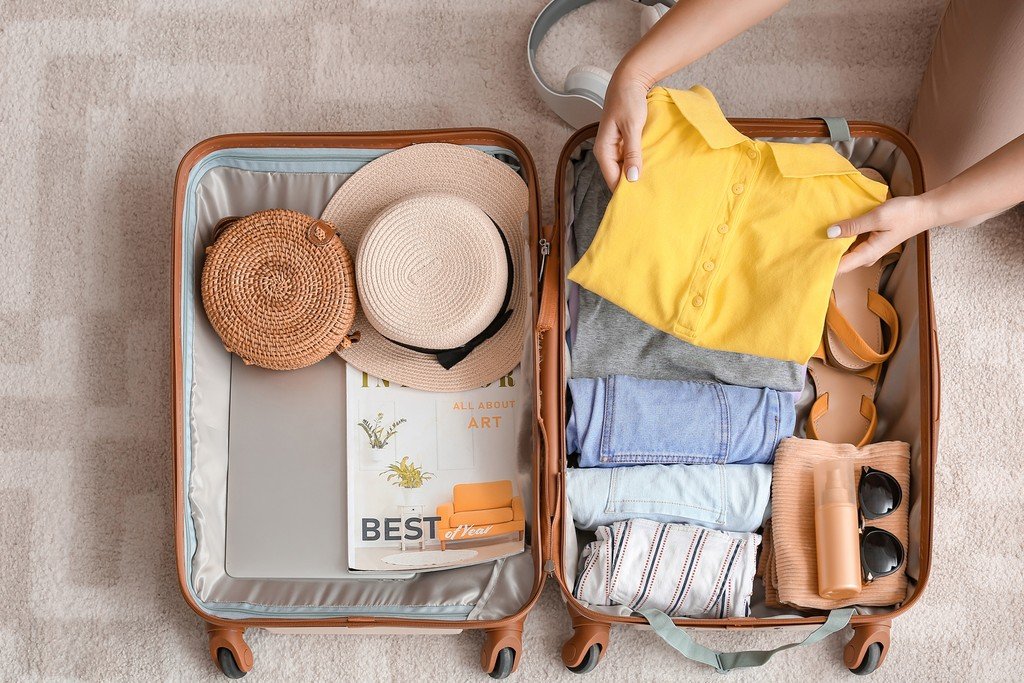
How to Pack a Week of Clothes in a Carry-On
How to Pack a Week of Clothes in a Carry-On
Checking bags is the enemy of smooth travel — the fees, the waits, the lost-luggage roulette. Packing a full week into a carry-on sounds impossible until you learn the system. Then it becomes routine, even enjoyable.
I’ve done two-week trips in a carry-on, and the week-long version is genuinely easy once you internalize the principles. Here’s the exact method.
The 5-4-3-2-1 Rule: Your Packing Formula
For a week: 5 tops, 4 bottoms, 3 pairs of shoes (wear the bulkiest), 2 layers (a sweater/blazer and a jacket), 1 hat/optional accessory — plus undergarments for each day and sleepwear. Every top must match every bottom; that’s the non-negotiable rule that makes 9 pieces create 20 outfits.
The color palette is the engine: pick 2 neutrals (navy, black, gray, khaki) + 1 accent color. Everything coordinates automatically, accessories add variety, and you never face the ‘nothing matches’ crisis. Photograph the combinations before you go if you’re nervous — the camera confirms what the mirror suggests.
Shoes are the space hogs: limit to three — the pair you wear (bulkiest: boots or sneakers), one dressier option, one casual/flip-flop. Shoes go heel-to-toe along the suitcase edges; stuff socks and small items inside them (dead space is the enemy). Wear the bulkiest shoes on travel days, always.
How Do I Pack Clothes for a Week-Long Trip in a Carry-On? Techniques That Work
Rolling vs. folding: roll casual knits and tees (saves space, minimizes wrinkles for soft fabrics); fold structured items (button-downs, blazers) with tissue or dry-cleaner bags between layers (reduces friction wrinkles). The hybrid approach beats either method alone. Bundle wrapping (wrapping clothes around a central core) maximizes space for wrinkle-prone wardrobes.
Packing cubes are the organization breakthrough: one cube per category (tops, bottoms, undergarments), and they compress contents while keeping the suitcase civilized. Compression cubes or vacuum bags squeeze another 20–30% for bulky items — just remember compressed clothes wrinkle more, so use them for knits, not linens.
The order: shoes along the edges, heavy items (jeans, sweaters) at the wheel end (weight distribution keeps the case stable upright), then cubes, then the ‘first night’ outfit and essentials on top (so you’re not excavating at midnight). Liquids bag and documents stay accessible — top pocket or personal item, never buried.
Fabric and Laundry: The Force Multipliers
Fabric choice determines feasibility: merino wool (doesn’t smell for days — the pack-light superpower), synthetic blends (light, quick-dry, wrinkle-resistant), and wrinkle-resistant cotton. Avoid: heavy denim (multiple pairs eat half the bag), linen (wrinkles if you breathe near it), and anything ‘dry clean only’ (you can’t maintain it on the road).
The laundry option changes everything: if your trip includes one laundry session (hotel sink with travel soap, or a laundromat afternoon), you can pack for 4 days and wear for 7+. Quick-dry fabrics wash in the sink and dry overnight. This single option halves most packing lists — plan for it deliberately rather than as an emergency.
Wear your bulkiest layers on travel days: the jacket, the boots, the heavy sweater — your body is free cargo space the airlines can’t charge for. (Within reason — the ‘wear six jackets’ trick is a meme, not a strategy.) And do a trial pack 2–3 days before departure, not the night before — discovering it doesn’t fit at 11 p.m. is how checked bags happen.
The Carry-On Itself and Final Checks
Know your airline’s limits: domestic US carry-ons are typically 22″ x 14″ x 9″ (45 linear inches), but budget airlines shrink this and enforce it ruthlessly — check your specific airline, not the general rule. Soft-sided bags squeeze into sizers better than hardshells; hardshells protect better. For a week, 35–45 liters is the sweet spot.
The personal item is free extra space: a backpack or tote under the seat holds electronics, documents, liquids, snacks, and a change of clothes (the lost-luggage insurance if you’re forced to gate-check). Pack it as if the carry-on might vanish — because occasionally it does.
Final checklist before zipping: documents and money (personal item), medications (personal item, never checked), chargers, one complete outfit accessible, layers for the plane (cabins run cold), and an empty tote folded flat (for souvenirs and the trip home — the return always has more stuff). Weigh it if your airline enforces weight limits (common internationally). Then walk around the block with it — if it’s miserable for ten minutes, repack. Your shoulders are voting on this decision.
The Personal Item: Packing It Like a Pro
The personal item (backpack or tote under the seat) is free extra space most travelers waste. Pack it strategically: electronics and chargers (accessible for the flight), documents and medications (never in checked or overhead — the personal item stays with you always), liquids bag (TSA-accessible), snacks and water bottle (airport prices are a tax on the unprepared), and a complete change of clothes (the insurance policy — if your carry-on gets gate-checked and lost, you’re covered).
The comfort kit: neck pillow (the compressible kind, not the bulky U-shape), eye mask and earplugs (cabin sleep essentials), hand sanitizer and wipes, lip balm and moisturizer (cabin air is desert-dry), and entertainment loaded offline (never trust airplane wifi). These small items determine whether the flight is tolerable or miserable — pack them deliberately, not as afterthoughts.
Choose the bag wisely: a backpack distributes weight and keeps hands free (best for connections and stairs), a tote looks sharper for business travel. Either way, it should fit under the seat easily — measure against your airline’s personal-item dimensions (they’re smaller than you think, especially on budget carriers). The personal item is the difference between traveling and traveling well.
The Takeaway
5 tops, 4 bottoms, 3 shoes, 2 layers — all coordinating, wrinkle-resistant fabrics, cubes for organization, bulkiest items worn. One laundry session halves the list.
Trial-pack days early, know your airline’s exact limits, and treat your body as free cargo space. A week in a carry-on isn’t minimalism — it’s just good systems.