Accessories That Make Simple Outfits Look Expensive
Accessories That Make Simple Outfits Look Expensive
The best-dressed people I know share a secret: their clothes are often simple — jeans, tees, basic dresses — but their accessories are deliberate. Accessories are where ‘expensive-looking’ actually lives, because they’re the details the eye reads as intention and quality.
And here’s the beautiful part: accessories are the cheapest way to look expensive. A $30 belt transforms a $40 outfit. Here’s the eight-piece arsenal.
The Big Three: Watch, Belt, Bag
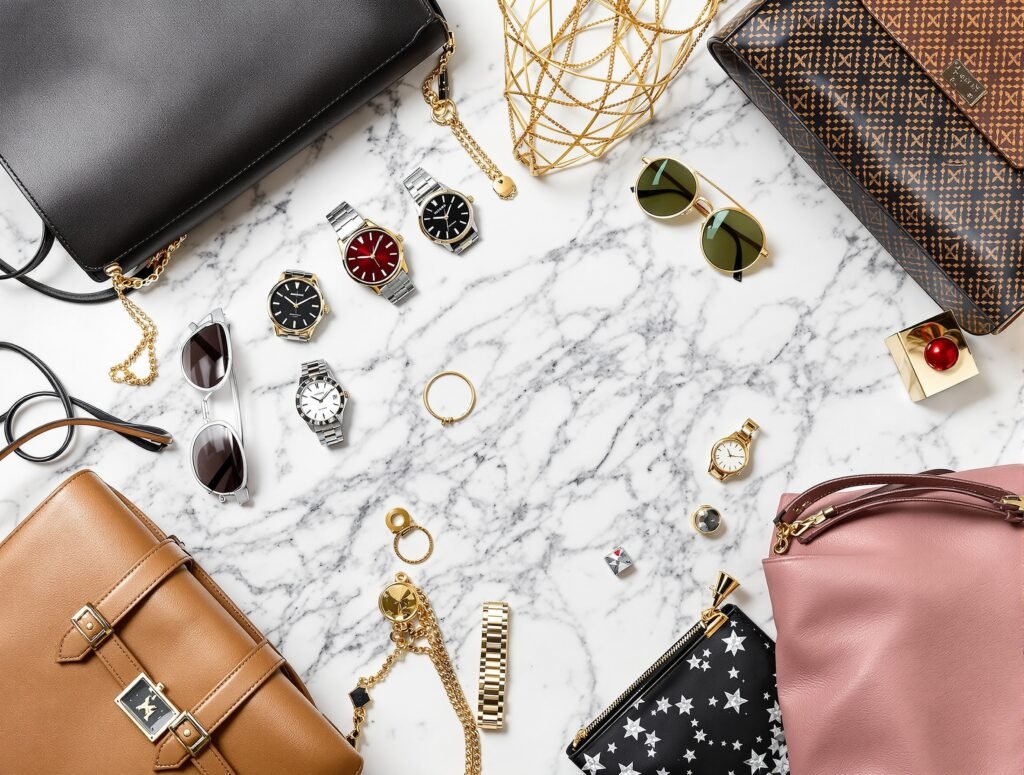
A watch is the single most powerful ‘expensive’ signal — it suggests punctuality, tradition, and attention to detail. It doesn’t need to be luxury: a clean minimal watch ($50–$150 from Timex, Seiko, or MVMT-style brands) on a leather strap reads refined. Fit matters — the watch should sit snugly, not slide around. For women, a delicate gold watch or a classic leather-strap piece works the same magic.
A belt defines and finishes: a simple leather belt in black or brown ($25–$50) with a clean buckle transforms jeans-and-tee from basic to styled. The belt should match your shoes’ general tone (not necessarily exact) and fit properly — the buckle centered, minimal extra length flapping. Braided or textured belts add interest; avoid giant logo buckles, which read as trying too hard.
The bag question: structured beats slouchy for expensive-looking, and clean beats embellished. A structured leather (or quality vegan leather) tote or satchel in a neutral — even at $60–$100 from well-chosen brands — outclasses a $300 slouchy logo bag in perceived polish. Keep it clean, conditioned, and unstuffed; a sagging, scratched bag drags everything down regardless of price.
What Accessories Make a Simple Outfit Look Expensive? Jewelry and the Details
Jewelry: less but better. One quality-feeling piece beats five cheap ones — a pair of simple gold hoops, a delicate layered necklace, or a clean cuff. The ‘expensive’ jewelry look is about finish (smooth, polished, weighty-feeling) not size or bling. Avoid: tarnished metals, plastic-feeling pieces, and everything-at-once stacking that reads cluttered rather than curated.
Sunglasses: a classic frame (wayfarer, aviator, round) in good condition instantly adds polish — and hides tired eyes, the enemy of looking expensive. Keep lenses clean and frames straight; scratched, crooked sunglasses do the opposite. You don’t need designer; you need classic shape and good condition.
The overlooked details: a silk scarf (tied on a bag, at the neck, or as a headband — instant European polish for $20), quality hosiery without runs, a sleek phone case (your phone is your most-carried accessory — a cracked screen or grubby case undermines everything), and well-kept nails (clean and shaped beats elaborate; chipped polish is worse than bare nails).
The Grooming Multiplier
Here’s the truth the fashion industry won’t sell you: grooming does more for ‘expensive-looking’ than any accessory. Clean, styled hair; neat brows; moisturized skin; wrinkle-free clothes; clean shoes. These cost almost nothing and outperform a $500 bag worn with scuffed shoes and wrinkled clothes.
The shoe rule, repeated because it’s that important: people read shoes as a wealth signal reflexively. Clean, polished, good-condition shoes upgrade everything; worn-out shoes cap the outfit’s perceived value regardless of everything else. Ten minutes with a brush and polish is the highest-ROI styling move available.
Scent as accessory: a subtle, quality fragrance (one or two sprays, not a cloud) completes the expensive impression — it’s the invisible detail people remember. And posture: stand tall, move deliberately. Confidence is the ultimate accessory, and unlike the others, it’s genuinely free. The Who What Wear on luxe-looking accessories regularly breaks down these high-low styling mechanics.
Building the Collection Strategically
Don’t buy all eight at once. Prioritize by impact-per-dollar: first the belt and watch (daily wear, maximum visibility), then the structured bag, then sunglasses and the silk scarf, then jewelry pieces one at a time. Each addition multiplies every simple outfit you own — that’s the economics that make accessories unbeatable value.
Choose a metal family and stick with it: all gold-tone or all silver-tone across watch, jewelry, and hardware. Mixed metals can work, but coordinated metals look intentional and expensive with zero effort. Same for leather tones — black belt, black shoes, black bag hardware tell a coherent story.
Maintain everything: polish the shoes, condition the bag, clean the jewelry, replace worn laces and scuffed heel caps. Expensive-looking is 50% selection and 50% maintenance — a $30 belt kept pristine outclasses a $200 belt left to crack. For building the simple outfits these accessories finish, see our guide to The Cut's accessories coverage.
The Minimalist's 5-Piece Kit
If the eight-piece arsenal feels like too much, here’s the distilled version — five accessories that cover 90% of situations. One: a simple watch (the credibility signal — leather strap, clean dial, fits snugly). Two: a quality belt (black or brown leather, clean buckle — transforms every tucked or belted outfit). Three: classic sunglasses (wayfarer or aviator shape — instant polish, hides everything).
Four: one good bag (structured, neutral, well-maintained — the daily workhorse). Five: a silk scarf or simple necklace (the personality piece — the one item that says something about you specifically). That’s it. Five pieces, worn consistently, create a signature more powerful than a drawer of random accessories.
The minimalist rules: everything coordinates (one metal family, complementary leather tones), everything is maintained (the five pieces get more wear, so they need more care), and nothing is trendy (classics only — the kit should work in five years). Add pieces only when a genuine gap appears, not when something shiny appears. Constraint is the point — five perfect pieces beat fifty pretty good ones.
The Takeaway
Watch, belt, structured bag, simple jewelry, classic sunglasses, silk scarf, clean shoes, grooming — eight levers that make basics look expensive.
Buy them gradually, coordinate metals, and maintain everything. Expensive-looking is a system of details, not a price tag.