Leather Boot Care: Make Them Last for Years
Leather Boot Care: Make Them Last for Years
Quality leather boots are one of the few fashion purchases that can genuinely last decades — I own pairs older than some of my friendships. But ‘can last’ and ‘will last’ are separated by about twenty minutes of care per month. Neglect kills boots that craftsmanship built to survive.
Boot care looks intimidating from the outside; from the inside it’s a simple routine. Here’s everything your boots need, and nothing they don’t.
The Core Routine: Clean, Condition, Protect
Clean first, always: brush off dirt with a horsehair brush ($10, lasts forever) after each wear — dirt dries leather out and abrades it with every step. For deeper cleaning, wipe with a damp cloth and saddle soap (or diluted mild soap), working in circles, then dry at room temperature away from heat. Never use direct heat to dry boots — it cracks leather permanently.
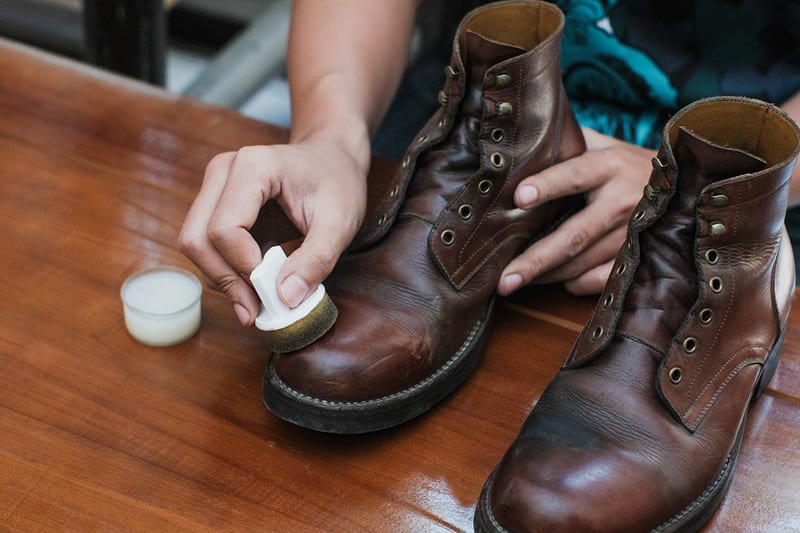
Condition every 3–6 months (more for dry climates, less for humid): leather conditioner (Bick 4, Lexol, or mink oil for work boots) replenishes the oils leather loses to wear and weather. Apply thinly, let absorb 15–30 minutes, buff off excess. The leather should look nourished, not greasy — if it’s sticky, you used too much. This single step prevents 90% of cracking.
Protect seasonally: waterproofing spray or wax (Sno-Seal, Obenauf’s for work boots; silicone spray for dress boots) before wet seasons. Understand the tradeoff — heavy waxes darken leather and change its character (fine for work boots, not for dress boots). Match the protection to the boot’s purpose.
How Do I Care for Leather Boots So They Last for Years? Rotation and Rest
Never wear the same boots two days in a row. Leather absorbs foot moisture (about a tablespoon daily per foot), and it needs 24–48 hours to dry fully. Wearing damp boots daily breaks down leather from the inside and breeds odor. Two pairs in rotation each last more than twice as long as one pair worn daily — the math strongly favors a second pair.
Use boot trees or stuff with newspaper/cedar shoe trees after every wear: they absorb moisture, hold the shape, and prevent the toe-box collapse and ankle wrinkling that ages boots prematurely. Cedar trees additionally deodorize. This is the highest-ROI boot habit — $20 trees protecting $300 boots.
Unlace fully when removing (don’t kick them off — it destroys heel counters), and lace fully when wearing (loose boots crease abnormally and wear unevenly). These tiny habits compound over thousands of wears into visibly better-aging boots.
Soles, Heels, and the Cobbler's Role
Soles wear out before uppers — that’s by design, and it’s fixable. Add toe taps or sole protectors early on dress boots; resole when the tread thins ($60–$120 for quality resoles, far cheaper than new boots). Goodyear-welted boots are built for multiple resoles — this construction detail is why quality boots can last decades. Check for it when buying.
Heel caps wear fastest: replace them at the first sign of uneven wear ($15–$25) before the stacked heel itself gets damaged. Find a good cobbler before you need one — ask for recommendations, check reviews, and start with a small job. A skilled cobbler also handles stretching (tight spots), restitching, and refinishing.
The resole economics: a $350 boot resoled twice ($200 total) over 15 years costs $37/year. A $120 boot replaced every 2 years costs $60/year — and looks worse the whole time. Quality boots aren’t expensive; cheap boots are. This is the purest cost-per-wear argument in footwear.
Storage and Seasonal Care
Store clean, conditioned, and treed — never dirty or damp. Long-term storage (summer for winter boots): clean thoroughly, condition, stuff with paper or trees, and store in breathable cotton bags (not plastic — leather needs air circulation; plastic traps moisture and breeds mildew). Keep away from direct sunlight and heat sources.
Seasonal transitions are maintenance moments: before winter, waterproof and check soles; after winter, deep clean off road salt immediately (salt is leather’s mortal enemy — wipe it off the same day with diluted vinegar, then condition, because salt desiccates leather brutally). White salt lines left for weeks can permanently damage the finish.
For suede boots (the higher-maintenance cousin): suede brush and eraser for cleaning, dedicated suede protectant (not regular waterproofing), and accept that suede shows wear more — it’s the price of the texture. Rotate suede out of the worst weather; they’re fair-weather friends. With this routine, quality leather boots don’t just last years — they look better at year five than year one.
Traveling With Boots: Packing and Care
Boots are the hardest footwear to travel with — bulky, heavy, and miserable if they get damaged. The strategies: wear them on travel days (your feet are free cargo space; the bulkiest footwear always travels on your body, not in your bag), stuff them with socks and small items (dead space is the enemy — boots hold a surprising amount), and wrap them in a laundry bag or shoe bags (protects other clothes from soles).
If you must pack them: place them heel-to-toe along the suitcase edges, stuff thoroughly to hold shape (collapsed boots crease permanently under luggage pressure), and put them in last or first depending on weight distribution (heavy items at the wheel end). One pair of boots plus one pair of lighter shoes is the practical travel maximum — more is a packing failure.
On the road: brush off dirt daily (five seconds prevents buildup), let them dry fully between wears (rotate with the lighter pair — the rotation rule doesn’t take vacations), and stuff with newspaper overnight in damp climates. A travel-size conditioner wipe handles emergencies. Boots that travel well are boots that were maintained well before the trip — the pre-trip conditioning is what protects them.
The Takeaway
Brush after wear, condition every 3–6 months, waterproof seasonally, rotate pairs, use cedar trees, resole instead of replacing. Twenty minutes a month.
Buy Goodyear-welted quality once, maintain it simply, and own boots for decades. Neglect is the only thing that kills good boots early.