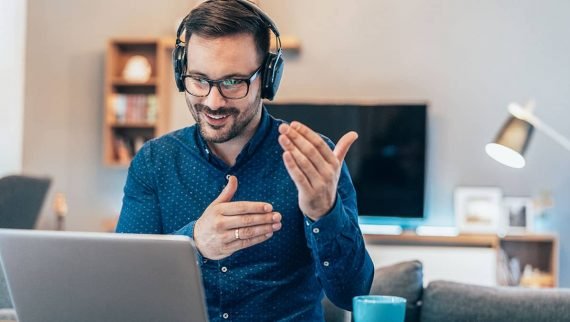
What to Wear to a Video Job Interview: Complete Guide
What to Wear to a Video Job Interview: Complete Guide
Video interviews added a new dimension to interview dressing: you’re styling for a webcam, not a conference room. The camera changes how colors, patterns, and fit read — and it tempts everyone into the business mullet (blazer up top, pajamas below).
I’ve coached people through video interviews and conducted plenty. The candidates who look sharp on screen aren’t overdressed — they’re camera-aware. Here’s the complete guide.
The Camera Changes Everything: Technical Dressing
Webcams are low-fidelity: fine details vanish, and certain choices actively malfunction. Avoid thin stripes, small checks, and herringbone (they create moiré shimmer on video), pure white (blows out and makes your face look dark by contrast), and neon or super-saturated colors (they bleed and distract). Solid, mid-tone colors are the camera’s best friend.
Lighting interacts with clothing: if your lighting is dim, dark clothes make you a floating head — go mid-tone. If brightly lit, very light colors wash out. Jewel tones (emerald, sapphire, burgundy) and classic blues flatter most skin tones on camera and read as confident and polished. When in doubt: solid blue button-down or blouse — the universal video-interview safe choice.
Fit reads differently on camera: the webcam adds visual weight and flattens shape, so structured shoulders and defined necklines (collars, blazers, v-necks) counteract the mush factor. Avoid oversized or slouchy tops — on video they read as sloppy rather than relaxed. Crisp and fitted wins.
What Should I Wear to a Job Interview Over Video Call? The Formulas
The universal formula: solid mid-tone top (button-down, blouse, sweater, or knit top) + blazer or structured layer + groomed hair + minimal jewelry. This reads professional across industries, from tech to finance. The blazer is the video-interview cheat code — it signals effort instantly on a small tile.
Industry calibration still applies: finance/law/consulting — full traditional interview attire (suit and tie / suit), because the camera doesn’t relax those industries’ standards. Tech/startups — smart casual: quality button-down or blouse, blazer optional but safe. Creative fields — show personality through color or an interesting (camera-safe) piece, but keep the polish.
The bottom half rule: wear full interview attire anyway. Not for the camera — for you. Candidates in full outfits perform better (enclothed cognition is real), and the day you need to stand up unexpectedly is inevitable. Real pants, real shoes. The ‘what if I have to stand’ insurance costs you nothing and the psychological edge is free.
Grooming and Setup: The Other Half of the Outfit
Your background is part of your outfit on video: clean, uncluttered, neutral — a plain wall, bookshelf, or tidy room. Virtual backgrounds glitch and distract; real tidy backgrounds win. Position the camera at eye level (stack books under the laptop) — the up-the-nose angle undermines every outfit choice.
Lighting is wardrobe’s partner: face a window or put a lamp behind the camera, never behind you (backlighting turns you into a silhouette regardless of clothing). Test the full look on camera before the interview — phone a friend or record yourself. Colors and fit that look great in the mirror can surprise you on screen.
Grooming specifics: hair neat and off the face (the camera magnifies straggliness), makeup slightly more defined than usual if you wear it (cameras wash out features — a bit more contrast helps), jewelry minimal and non-noisy (dangly bracelets clack against desks and microphones pick it up), and fragrance irrelevant but deodorant still mandatory — nerves are real.
The Pre-Interview Checklist
Thirty minutes before: test tech (camera, mic, connection, platform), frame the shot (head and shoulders, some headroom, no ceiling fan), check lighting on camera (not just in the mirror), silence notifications (phone, computer, smartwatch — all of them), close other tabs and apps, and have water nearby (nerves dry mouths; sipping is fine).
Five minutes before: final mirror check (teeth, hair, collar), stand up and sit down once (does the outfit behave?), take three slow breaths (calms the voice measurably), and smile at the camera when you join (first impressions form in seconds, and warmth reads through video). Keep a notepad and pen visible — taking notes signals engagement.
During: look at the camera, not the screen, when speaking (it simulates eye contact — put a sticky note arrow next to the lens as a reminder), sit upright (posture reads as confidence on video), and keep gestures in frame. Your outfit got you in the door visually; your presence closes it. For in-person interview dressing, see our guide to Indeed's video interview tips.
The Follow-Up: After the Call
The interview doesn’t end when the video ends. Within 24 hours, send a thank-you email to each interviewer — brief, specific, and genuine. Reference something concrete from the conversation (‘I enjoyed discussing your migration to the new platform’) rather than generic thanks. This isn’t old-fashioned formality; it’s the professional standard, and interviewers notice its absence more than its presence.
The thank-you is also a second chance: address anything you fumbled (‘Reflecting on your question about X, I’d add…’) concisely. Keep it short — three to four sentences plus the specific reference. If you promised to send something (a portfolio link, a reference), include it. Then stop — one thank-you, not a campaign.
While waiting: don’t pause your search (the best negotiating position is another offer), don’t overanalyze every micro-expression on the call (video makes everyone look slightly awkward — it’s the medium, not you), and prepare for next rounds (research deeper, prepare questions). If they gave a timeline, follow up once after it passes — politely, briefly. The follow-up game is patience plus professionalism.
The Takeaway
Solid mid-tone top + blazer, camera-safe colors (no thin stripes, no pure white), full outfit including real pants, tidy background, eye-level camera, front lighting.
Test everything on camera beforehand. The best-dressed video candidate is the one who looks deliberately, technically prepared — because they were.