How Much Should Everyday Sneakers Cost? Price Guide
How Much Should Everyday Sneakers Cost? Price Guide
Sneakers range from $30 to $300+ for shoes that look nearly identical in photos. Are the expensive ones actually better, or are you paying for a logo and a limited drop? Having bought across the whole spectrum, I can tell you the price-quality curve has a clear shape — and a clear sweet spot.
Here’s what each price tier really buys, and where the smart money goes for everyday wear.
The Price Tiers, Decoded
$30–$60: budget basics. Expect glued construction, basic EVA foam that compresses within months, and uppers that crease and wear fast. Fine for occasional wear or beaters, but daily use kills them in 3–6 months. The per-month cost often exceeds pricier shoes.
$60–$120: the value sweet spot for most people. This buys legitimately good sneakers — proper cushioning compounds, durable rubber outsoles, quality leather or knit uppers, and construction that survives a year+ of daily wear. Adidas Sambas, Nike Court lines, New Balance 550s, Converse Chuck 70s (the premium line, notably better than basic Chucks), and Vans’ better models all live here.
$120–$180: premium everyday — full-grain leather, advanced cushioning (or heritage construction), better finishing, and designs that age gracefully. Common Projects-style minimal sneakers, quality New Balance Made lines, designer-adjacent minimal brands. Noticeably nicer materials and longer life.
$180–$300+: you’re paying for brand prestige, designer names, or hype collaboration — the quality delta over $150 shoes is small. Buy here for love of the design, not value. Anything above $300 is fashion or collecting, not footwear economics.
How Much Should a Quality Pair of Everyday Sneakers Cost? The Answer
For most people: $80–$130. That’s where durability, comfort, and style converge without paying for hype. A $100 sneaker worn daily for 14 months costs about 24 cents a day — cheaper than the $50 pair replaced twice a year, and your feet feel the difference every single one of those days.
Runners and all-day standers should nudge up: $130–$170 buys the cushioning tech (and the podiatrist-approved support) that protects joints over thousands of steps. This is health spending disguised as fashion — cheap shoes on hard floors all day is a false economy that bills you later in foot, knee, and back pain.
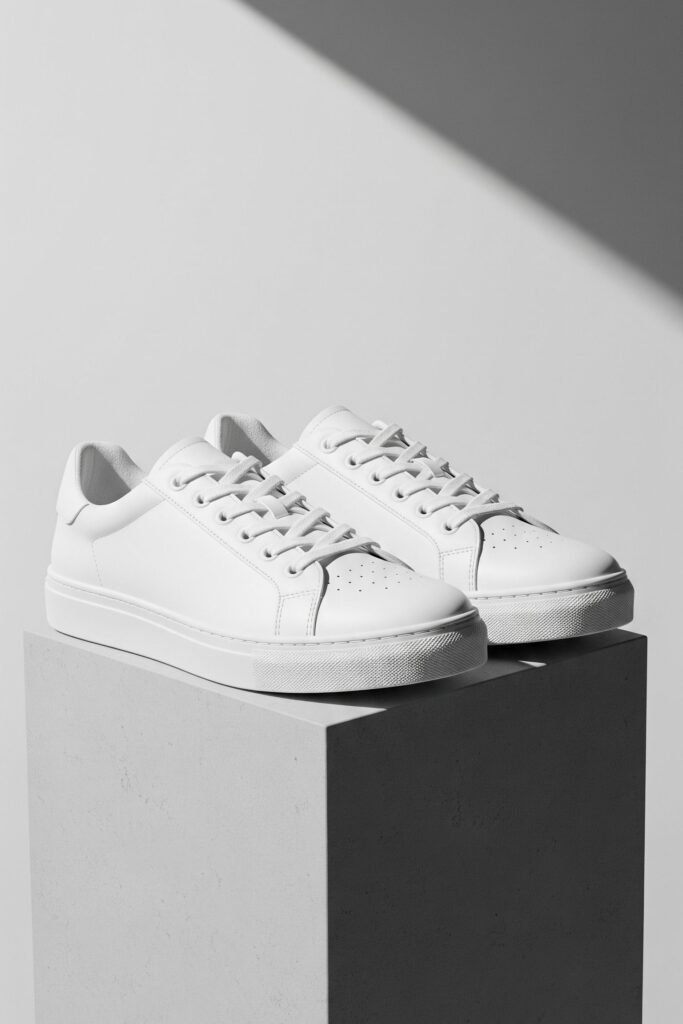
Minimalists can spend less strategically: one quality white leather sneaker ($90–$130) covers 80% of casual outfits and lasts years with care. It’s the highest-ROI shoe purchase in existence. Buy the best version of the simple shoe rather than three mediocre trendy ones.
What Quality Actually Looks Like
Check the sole: quality sneakers use real rubber outsoles (grippy, durable) rather than painted foam that wears smooth in months. Flex the shoe — it should bend at the ball of the foot, not in the middle (midfoot flex means no shank support). Press the cushioning: premium foam rebounds; cheap foam stays dented.
Examine construction: stitched or vulcanized soles outlast purely glued ones. Leather uppers (even corrected grain) age better than synthetic — they develop character instead of just looking worn. Check inside: a removable insole signals quality construction and lets you add orthotics. Smell the glue — overwhelming chemical smell suggests cheap manufacturing.
Fit is non-negotiable at any price: thumb’s width at the toe, no heel slip, no pressure points. Sneakers don’t ‘break in’ meaningfully anymore — modern materials fit correctly from the first wear or they never will. Try on in the afternoon (feet swell through the day) and walk the store. An $80 shoe that fits perfectly beats a $200 shoe that doesn’t.
Making Them Last
Rotation is the longevity cheat code: two pairs alternated last more than twice as long as one pair worn daily, because cushioning foam needs ~24 hours to fully rebound. If you wear sneakers daily, a second pair is an investment, not an indulgence.
Care basics: clean regularly (magic eraser on midsoles, soft brush on uppers), never machine-wash leather sneakers, stuff with paper to hold shape while drying, and keep them out of the dryer (heat destroys adhesives and foam). White leather + leather conditioner occasionally = years of crisp looks.
Know when they’re done: compressed midsoles (the shoe looks deflated), worn-smooth tread, or new foot/knee pain are retirement signals — even if the uppers look fine. Worn-out cushioning injures quietly. For everyday sneakers, 500–800 miles or 12–18 months of daily wear is a typical lifespan. And for keeping white sneakers bright specifically, see our guide to GQ's sneaker guides.
The Travel Sneaker: One Pair for the Trip
Packing light means one sneaker must do everything: city walking all day, decent restaurants at night, and possibly light activity. The travel-sneaker criteria: neutral color (white, black, or gray goes with everything), comfortable for 15,000+ steps (cushioning matters more than style on travel days), packable or wearable (wear the bulkiest pair on travel days, always), and easy on/off for airport security (slip-ons or quick laces save real time).
The winners: knit runners in dark neutrals (Allbirds-style wool runners, Nike/Adidas knit lines in black or gray) — comfortable, lightweight, and passable at nice dinners with dark jeans. Minimal leather sneakers (the white-leather category) dress up better but weigh more and need the cleaning kit. Avoid: brand-new shoes (break them in for two weeks first — travel is the worst place for blisters), heavy boots-as-sneakers, and anything that can’t handle rain.
The care kit for travel: sneaker wipes, a magic eraser, and protectant spray applied before departure. Ten minutes of prep keeps one pair presentable for a whole trip. And the rotation trick for longer trips: if you’re gone 10+ days, the two-pair rule applies — feet need rest days even on vacation.
The Takeaway
$80–$130 is the sweet spot for quality everyday sneakers — durable, comfortable, stylish, without hype tax. All-day wearers: stretch to $130–$170 for joint-saving cushioning.
Buy fit first, rotate two pairs, and maintain them. The cheapest sneaker is the one you don’t replace twice a year.