
How Long Do Bees Live? Complete Lifespan Guide (2026)
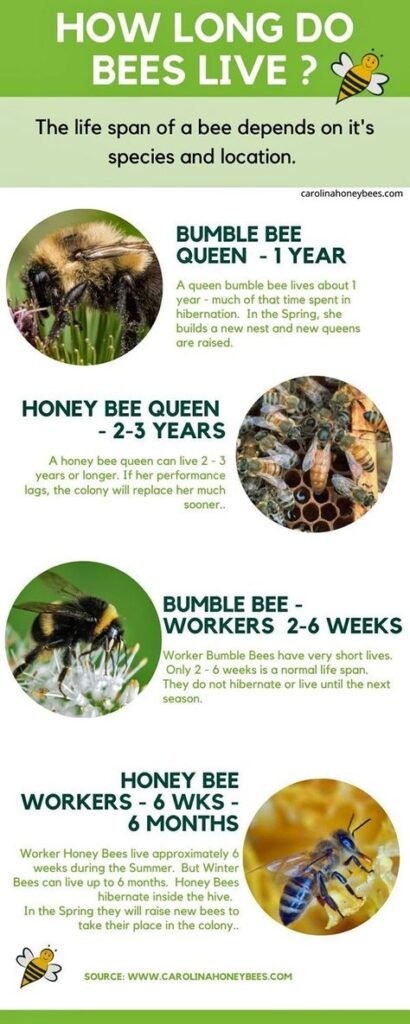
Quick Answer: A worker honeybee lives about 5-6 weeks during the busy summer season, while a queen bee can live for 2-5 years. Drone bees typically live around 8 weeks. The lifespan varies dramatically based on the bee’s role in the colony and the time of year.
Honeybee Lifespan by Role
Worker Bees: 5-6 Weeks (Summer) to 4-6 Months (Winter)
Worker bees are the backbone of the hive. During summer, when they’re actively foraging, collecting nectar, and caring for the young, they literally work themselves to death in about 5-6 weeks. Their wings wear out from constant flying – a worker bee may fly the equivalent of one and a half times around the world in her short life!
Winter worker bees, called “diutinus” bees, live much longer – 4 to 6 months. They’re born in autumn and don’t forage. Instead, they cluster together to keep the hive warm through winter, conserving energy.
Queen Bees: 2-5 Years
The queen is the longest-lived bee in the colony. She can live for 2 to 5 years, though most beekeepers replace queens every 1-2 years for optimal hive productivity. The queen spends her life laying eggs – up to 2,000 per day during peak season!
Queens live longer because:
– They’re fed royal jelly throughout their entire lives
– They don’t perform dangerous foraging work
– Worker bees constantly groom and protect them
Drone Bees: ~8 Weeks
Drones are the male bees. Their only job is to mate with a virgin queen. They live about 8 weeks during spring and summer. Interestingly, drones that successfully mate die immediately afterward. Those that don’t mate are kicked out of the hive before winter to conserve resources.
What Affects a Bee’s Lifespan?
Several factors determine how long a bee lives:
- Season: Summer bees work harder and die faster
- Role: Queens outlive workers by years
- Pesticides: Exposure to chemicals shortens lives dramatically
- Parasites: Varroa mites are the #1 killer of honeybees
- Nutrition: Access to diverse pollen sources improves longevity
- Disease: American foulbrood and other diseases devastate colonies
How Long Do Other Bee Species Live?
Not all bees are honeybees! Here’s how other species compare:
- Bumblebees: Workers live 2-6 weeks; queens live about 1 year
- Carpenter bees: About 1 year
- Mason bees: 4-8 weeks as adults
- Leafcutter bees: 6-8 weeks
Why Do Bees Die After Stinging?
You’ve probably heard that honeybees die after stinging. This is true – but only for honeybees, and only when they sting mammals with thick skin (like humans). Their stinger is barbed and gets stuck, tearing away part of their abdomen when they pull away. This fatal injury kills them within minutes.
Bees can sting other insects repeatedly without dying because the stinger doesn’t get stuck in thin insect exoskeletons.
The Fascinating Life Cycle
A bee’s life follows four stages:
1. Egg (3 days)
2. Larva (6 days) – fed royal jelly, then pollen and honey
3. Pupa (12 days) – metamorphosis inside a capped cell
4. Adult – emerges ready to work
From egg to adult takes about 21 days for workers, 24 for drones, and just 16 for queens!
How You Can Help Bees Live Longer
Bee populations are declining worldwide. Here’s how to help:
– Plant bee-friendly flowers (lavender, sunflowers, wildflowers)
– Avoid pesticides in your garden
– Provide a shallow water source with landing spots
– Leave some bare ground for ground-nesting bees
– Support local beekeepers by buying local honey
Frequently Asked Questions
Do bees sleep? Yes! Bees sleep 5-8 hours a day, often inside flowers or the hive.
How far do bees fly? Worker bees typically forage within 2-3 miles of the hive but can fly up to 5 miles.
How many bees are in a hive? A healthy hive has 50,000-80,000 bees in summer.
Conclusion
While individual worker bees live tragically short lives, the colony itself can survive for many years. Understanding bee lifespans helps us appreciate these incredible pollinators that are responsible for one out of every three bites of food we eat. By creating bee-friendly environments, we can help ensure these amazing creatures thrive for generations to come.