Best Fabrics for Hot, Humid Weather (What to Wear)
Best Fabrics for Hot, Humid Weather (What to Wear)
There’s a special misery to humid heat — the kind where cotton t-shirts plaster to your back by 9 a.m. and you feel damp until October. In dry heat, almost anything works. In humidity, fabric choice is the difference between comfort and suffering.
I spent summers in the Gulf Coast humidity before learning this properly, and the education changed my wardrobe completely. Here’s the fabric science, translated into shopping decisions.
The Champions: Linen, Seersucker, and Chambray
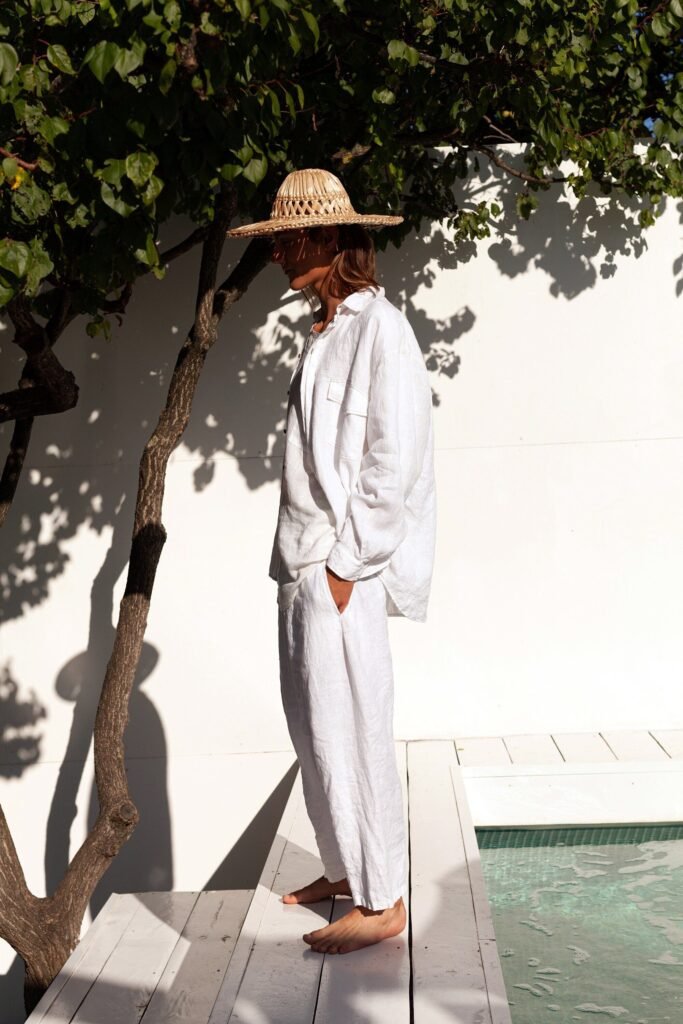
Linen is the undisputed king of hot-weather fabric. Made from flax fibers, it’s naturally breathable, moisture-absorbent, and dries fast — and its characteristic wrinkles are a feature, signaling intentional summer dressing rather than sloppiness. A linen shirt in humid weather outperforms cotton by a wide margin; the airflow through the loose weave is the mechanism.
Seersucker is linen’s preppy American cousin — the puckered weave holds fabric away from skin, creating air channels. That’s not decorative; it’s engineering. A seersucker suit or shirt is genuinely cooler than flat weaves of the same weight. Chambray looks like denim but weaves like a plain-weave lightweight — all the visual appeal of jeans with a fraction of the heat.
Hemp deserves mention: similar breathability to linen, more durable, softens beautifully with washing, and increasingly available. It wrinkles like linen and wears like iron — the sustainable workhorse of hot climates.
Which Fabrics Are Best for Hot and Humid Weather? The Full Ranking
Top tier: linen, hemp, seersucker, lightweight chambray, and open-weave cotton (voile, gauze, eyelet). These breathe, absorb moisture, and dry reasonably fast. Performance synthetics engineered for heat — moisture-wicking polyester blends, nylon trekking fabrics — belong here too for active use; they don’t absorb moisture but move it off skin fast.
Acceptable: regular cotton (breathable but absorbs moisture and stays wet — fine for dry heat, mediocre in humidity), rayon/viscose and Tencel/lyocell (plant-derived, drapey, breathable, and Tencel manages moisture exceptionally well — the sleeper hit of humid dressing), and lightweight merino wool (sounds insane, regulates temperature brilliantly, resists odor for days).
Avoid: polyester and nylon in non-performance weaves (they trap heat and breed odor — the classic ‘why do I smell by noon’ fabric), silk (shows every drop of sweat and waterspots), leather and faux leather (saunas you wear), and anything lined or with fused interfacings that block airflow. When checking labels, ‘100% polyester’ on a fashion blouse in August is a hard pass.
Weave and Fit Matter as Much as Fiber
An open weave in a mediocre fiber beats a tight weave in a great fiber — airflow is the primary cooling mechanism. Hold fabric up to light: if you can see through it slightly, air passes through. Gauze, voile, and loose plain weaves are hot-weather architecture; sateen and twill are heat traps regardless of fiber content.
Fit for airflow: looser cuts cool dramatically better than slim fits in humidity. The air gap between fabric and skin is insulation working in your favor — a breezy wide-leg linen pant cools while skinny jeans swelter. This is physics, not fashion preference. Flowy dresses, relaxed camp-collar shirts, and wide-leg trousers are hot-weather uniforms for a reason.
Color helps at the margins: light colors reflect radiant heat, dark colors absorb it. In direct sun the difference is noticeable; in humid overcast it’s minor. Don’t overthink color — prioritize fiber, weave, and fit first. And unlined everything: linings, even in summer suits, add a full layer of heat. Half-lined or unlined construction is worth seeking out. The Wikipedia on linen's properties textile guides explain weave structures if you want the deeper science.
Building the Humid-Weather Wardrobe
The starter kit: 3–4 linen or linen-blend shirts/tops, lightweight chambray or Tencel bottoms, one seersucker or unlined cotton blazer for dressed-up needs, breathable underwear (this matters more than people admit — cotton or moisture-wicking, never synthetic fashion briefs), and sandals or breathable shoes (feet sweat too; leather-lined or mesh beats plastic).
Care notes: linen softens with every wash and wants no ironing perfection — embrace the wrinkle. Wash synthetics promptly (bacteria love them); add vinegar to the rinse to kill odor. Rotate shoes to dry fully between wears — humid climates destroy perpetually-damp footwear.
And the lifestyle hacks around the clothes: shower before bed so you start cool, keep a hand fan (seriously — evaporative cooling on damp skin works), and accept that in real humidity, ‘fresh all day’ is a myth. Dress for the climate you have, not the one in the catalog photos. For keeping summer clothes looking good despite the sweat, see our guide to Wikipedia on seersucker's cooling weave.
The Underwear Factor: Base Layers for Heat
The most overlooked hot-weather clothing is what touches your skin first. Cotton underwear in humidity becomes a damp compress by noon; moisture-wicking synthetic or merino underwear stays dry and comfortable all day. This single swap improves hot-weather comfort more than most outer-layer changes — the base layer sets the moisture equation for everything above it.
The same logic applies to undershirts: a moisture-wicking undershirt under a dress shirt keeps the outer shirt drier and more presentable (no visible sweat through the dress shirt — the professional hot-weather win). For women, breathable bralettes or moisture-wicking sports bras beat padded fashion bras in heat by miles. Sweat-wicking socks prevent the swamp-foot that ruins summer days.
And the nuclear option for extreme humidity: bamboo-derived fabrics. Bamboo viscose is exceptionally soft, breathable, and moisture-absorbent — many hot-climate dwellers swear by bamboo underwear and tees as the ultimate heat underwear. Whatever the fiber, the principle holds: the layer against your skin determines comfort more than the layer everyone sees. Dress from the skin out in summer.
The Takeaway
Linen, seersucker, chambray, open weaves, and Tencel for humid heat. Loose fit, light colors, unlined construction. Avoid non-performance polyester and silk.
Check the label before the price tag in summer — fiber content predicts comfort more honestly than any marketing copy.