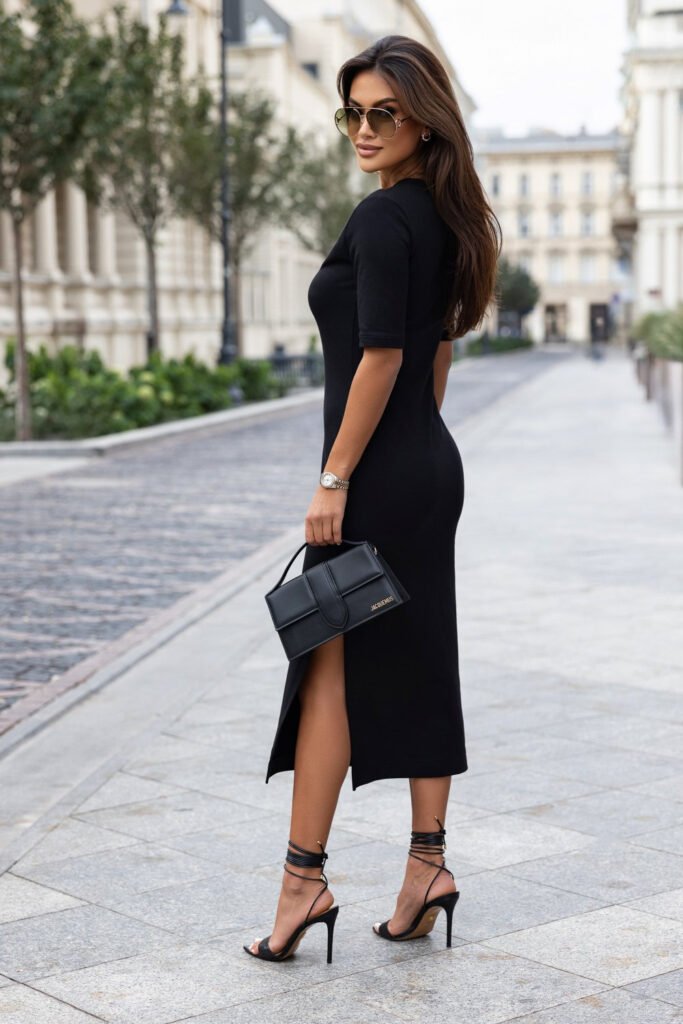
What Shoes to Wear With a Midi Dress: Every Occasion
What Shoes to Wear With a Midi Dress: Every Occasion
The midi dress is the hardest-working dress length — office to wedding to weekend — but it creates a specific shoe puzzle. The hem hits mid-calf, which means your shoes are fully visible and doing real visual work. Wrong shoes can chop your leg line; right ones make the whole outfit sing.
I’ve tested basically every shoe with every midi I own, and the pairings follow clear rules once you see them. Here’s the complete matching guide.
The Proportion Rule: Why Shoes Matter More With Midis
Here’s the physics: a midi hem cuts the leg at its widest visual point (mid-calf), so the shoe determines whether your legs read long or stubby. Shoes that extend the leg line — nude-to-you tones, pointed toes, low vamps that show foot — lengthen. Shoes that cut the ankle — ankle straps, high-top sneakers, boots hitting right at the hem — shorten.
This doesn’t mean short-looking is always bad — a chunky boot with a flowy midi is a deliberate, fashionable contrast. It means choose intentionally: elongating shoes for dressy/polished goals, contrasting shoes for casual/edge. The mistake is accidental chopping, not chopping itself.
Hem placement within ‘midi’ matters too: tea-length (just below knee) is the most forgiving; true mid-calf is the trickiest; longer ‘midaxi’ (near ankle) behaves almost like a maxi. Know where your hem actually falls — it changes the shoe math.
What Shoes Should I Wear With a Midi Dress? The Pairings
Sneakers: clean white minimal sneakers (think Common Projects style, or affordable lookalikes) with a casual midi — jersey, shirt-dress, or sweater midi. The formula is everywhere because it works: feminine dress + sporty shoe = effortless. Keep the sneakers pristine; beat-up ones drag the whole outfit down.
Sandals: strappy flat or heeled sandals are the warm-weather default — the bare foot continues the leg line beautifully. Block-heel sandals dress it up; flat leather sandals keep it daytime. Avoid ankle-strap flats with mid-calf midis unless you’re tall; the double horizontal cut (strap + hem) is leg-shortening squared.
Heels: pointed-toe pumps (nude or matching the dress) are the leg-lengthening champions for dressy midis. Slingbacks show more foot = more length. Mules are the modern elegant choice — easy, chic, and the low vamp flatters. Stilettos work for evening; block heels for events involving grass or cobblestones.
Boots: ankle boots with a midi need a gap of skin (or tights) between boot top and hem — the sliver of separation is what keeps it chic instead of stumpy. Knee-high boots under a midi that covers the boot top create a sleek long line (very fall). Chelsea boots + sweater midi + tights is the cold-weather uniform.
Occasion Cheat Sheet
Office: pointed flats, loafers, or low block heels — polished, walkable, professional. The midi’s modesty does the formal work; shoes just need to look intentional. Nude flats are the can’t-miss choice.
Wedding guest: heeled sandals, dressy mules, or pointed pumps — match formality to the venue (block heels for outdoor). Metallics act as neutrals and add festivity. Break them in beforehand; weddings are marathons.
Weekend casual: white sneakers, flat sandals, or espadrilles. The midi keeps it pulled-together while the shoes keep it relaxed. This is the pairing that makes midis feel effortless rather than fussy.
Evening/date night: strappy heels, sleek mules, or pointed pumps — go slightly bolder here (a metallic, an interesting heel shape) since the dress length is inherently modest. The shoe carries the after-dark energy.
Color and Material Matching
The foolproof approach: match shoes to your skin tone (nude = longest leg) or to the dress (monochrome = longest line). Black shoes with a black midi is sleek; black shoes with a light midi is high-contrast — stylish but leg-shortening, so prefer it with longer midaxis or when wearing tights.
Metallics (gold, silver, bronze) function as neutrals and dress up any midi — a metallic sandal rescues a plain dress for evening. White shoes with white/light midis in summer: fresh and intentional. Colored shoes can be the outfit’s exclamation point — red heels with a black midi is a classic for a reason — just keep the rest simple.
Material weight should match the dress: delicate sandal with a floaty dress, sturdier boot with a heavy knit midi. A chunky shoe on a wispy dress (or vice versa) creates visual discord. When in doubt, simpler shoes let the dress lead — the midi is the statement; the shoe is the supporting actor. For more on building outfits around key pieces, see our guide to InStyle's shoe guides.
Tights and Layers: Midis for Cold Weather
Midis don’t hibernate in winter — they just need the cold-weather system. The formula: midi dress or skirt + opaque tights (60+ denier for real warmth; fleece-lined for serious cold) + knee-high or ankle boots + a coat that covers the hem (or deliberately doesn’t — a shorter coat over a longer midi is a chic proportion play). The tights are doing the thermal work invisibly.
Layering on top: turtlenecks under slip-style midis (the ’90s revival that actually works for warmth), chunky cropped sweaters over midi skirts (the crop shows the waistline, the midi provides the length), and blazers or long coats completing the column. The key is the visible leg equation: with tights, the shoe-hem relationship matters less thermally, so choose boots for style.
Fabric weights shift seasonally: summer’s floaty midi becomes winter’s wool, corduroy, or heavy-knit midi. The silhouette knowledge transfers directly — the same proportion rules apply, just in warmer textiles. A winter midi wardrobe (2–3 pieces) multiplies a cold-weather closet enormously, because every sweater and boot you own suddenly has new partners. The midi is a four-season asset, not a summer fling.
The Takeaway
Elongate with nude tones, pointed toes, and low vamps; contrast intentionally with boots and sneakers. Match shoe formality to the occasion and weight to the dress fabric.
When stuck: nude pointed flats for day, strappy heels for night. The midi does the work — the shoes just need to not fight it.