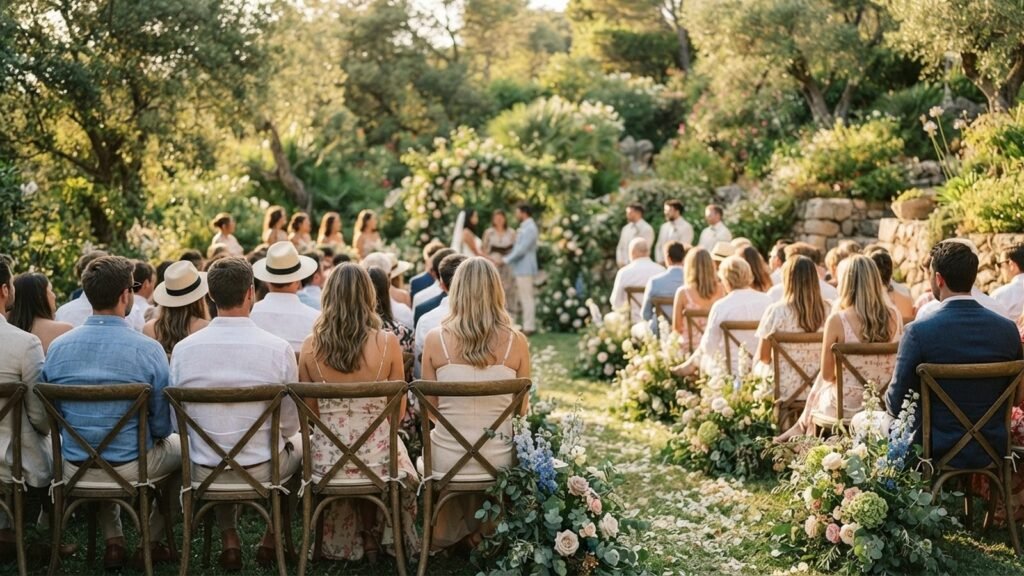
What to Wear to an Outdoor Summer Wedding (Guest Guide)
What to Wear to an Outdoor Summer Wedding (Guest Guide)
An outdoor summer wedding sounds romantic until you’re sinking into grass in stilettos, sweating through silk, at a ceremony where the dress code said ‘garden formal’ — which means what, exactly? Summer wedding guest dressing is a special kind of puzzle: festive, weather-proof, and photograph-ready all at once.
I’ve attended my share of barn, beach, and garden weddings, and made most of the mistakes so you don’t have to. Here’s the complete guest guide.
Decoding the Dress Code
‘Garden formal’ or ‘dressy casual’: a sundress or jumpsuit in a nice fabric (not jersey), or chinos with a blazer and no tie for men. ‘Semi-formal’: cocktail dress or dressy midi; suit without tie or with an open collar. ‘Formal’ outdoors: still formal — long dress or cocktail attire, suit and tie — just in summer fabrics and colors. ‘Casual’: nice sundress or linen separates; still no shorts, still no flip-flops.
When the invitation is vague, match the venue’s formality: vineyard and garden weddings skew dressier than backyard and beach ones, even with identical wording. Check the wedding website — couples increasingly spell out exactly what they mean, including shoe guidance for grass. When truly unsure, slightly overdressed beats underdressed; nobody ever regretted being the best-dressed guest.
The couple’s culture matters too. Some families dress to the nines for any wedding; others are genuinely casual. If you know the crowd, calibrate. A quick text to a fellow guest (‘what are you wearing?’) is the oldest and best dress-code decoder in existence.
What Should I Wear to an Outdoor Summer Wedding? Fabrics and Fits That Survive Heat
Fabric is the whole game in summer. Linen, cotton, seersucker, chambray, and light crepe breathe and look appropriate; silk shows every drop of sweat and clings when humid — beautiful in photos, miserable in person. For men, an unlined or half-lined blazer in cotton or linen over a breathable shirt beats a full wool suit by miles.
Fit for airflow: slightly looser cuts, midi and maxi lengths that move, wide-leg trousers instead of slim. A-line and fit-and-flare dresses are heat-friendly and photogenic. Dark colors show sweat more; mid-tone prints and patterns hide it best — a floral midi is practically engineered for this assignment.
Bring the layer: outdoor evenings cool down, and venues get breezy. A light shawl, pashmina, or unstructured blazer handles the temperature swing without a bulky coat ruining photos. And pack the emergency kit: blotting papers, a mini deodorant, fashion tape, and band-aids for shoe rubs. Veterans bring all four.
The Shoe Rules (Grass Changes Everything)
Stilettos and grass are natural enemies — heels sink, you wobble, and the photos show it. The outdoor-wedding shoe hierarchy: block heels and wedges (wide base distributes weight), dressy flat sandals, elegant mules, or loafers for men. If you must wear stilettos, heel protectors (little plastic caps that widen the base) genuinely work and cost a few dollars.
Beach weddings have their own rules: formal flat sandals or dressy barefoot sandals, and accept sandy feet gracefully. Barn and farm venues: closed-toe is wise — uneven ground, hay, and (let’s be honest) the occasional terrain surprise. Break in any wedding shoe before the day; new shoes plus a whole day of standing, dancing, and grass is a blister guarantee.
Men: loafers or clean minimal sneakers only if the dress code is truly casual; otherwise leather shoes with breathable socks (or no-show socks with loafers). Skip the brand-new stiff dress shoes — same blister rule applies.
What Never to Wear (the Real List)
White, ivory, champagne, or anything photographable as white — the oldest rule, still the rule. Black is fine at most modern weddings (especially evening), but head-to-toe black at a sunny garden wedding can read funereal; add color somewhere. Red is debated — some circles consider it attention-grabbing, others don’t care; know your crowd.
Anything you’d wear to the club: bodycon minis, cutouts, sheer without lining. Anything too casual: shorts, flip-flops, jersey sundresses better suited to brunch, cargo anything. And the meta-rule: don’t outshine the couple. If your outfit would draw gasps at the ceremony, scale it back — the photos last forever and so do people’s opinions.
When in doubt, the safest excellent choice: a midi dress in a joyful color or print (women) or chinos, breathable button-down, and blazer (men). It suits every outdoor venue, photographs beautifully, and keeps you comfortable. For finding affordable versions, see our guide to The Knot's wedding dress code guide.
The Emergency Kit: What to Pack
Veteran wedding guests pack a small emergency kit, and it has saved more days than any outfit choice. The essentials: blotting papers or powder (humid-day shine control), mini deodorant, fashion tape (neckline and strap insurance), band-aids and blister pads (new-shoe protection), a mini sewing kit (one loose button shouldn’t end your day), pain reliever, and heel protectors if there’s any chance of grass.
The comfort layer: a pashmina or light wrap (outdoor evenings cool fast, and air-conditioned venues overcompensate), flat backup shoes in your bag if you’re wearing heels (the walk from parking to venue, the dancing later — your feet will thank you), and sunscreen if there’s a pre-ceremony outdoor window. A small crossbody that fits the kit beats a tiny clutch that doesn’t.
Pack it the night before, not the morning of — wedding days run on adrenaline and forgotten details. And the meta-tip: bring confidence in your outfit choice. Second-guessing the dress all day photographs worse than any fashion choice. You chose well (you read the guide); now enjoy the celebration.
The Takeaway
Breathable fabrics, block heels or flats for grass, a layer for evening, and nothing white. Decode the dress code from the venue, not just the wording.
Comfort is the secret to looking good in wedding photos — the comfortable guests are the ones laughing naturally in every picture.