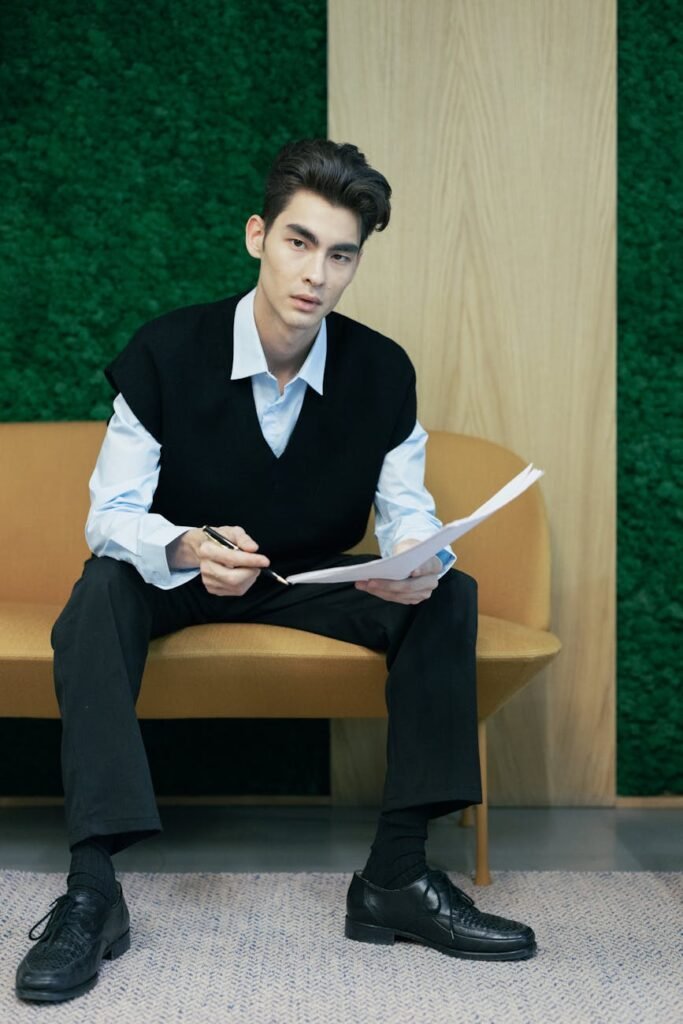
What to Wear to a Job Interview at a Casual Startup
What to Wear to a Job Interview at a Casual Startup
You got the interview at the cool startup — and then the panic sets in. Their team page shows everyone in hoodies and sneakers. Do you wear the suit and risk looking like you don’t get it, or dress down and risk looking like you don’t care?
I’ve interviewed at startups on both sides of the table, and the answer is a specific middle ground most candidates miss. Here’s how to nail the casual-startup interview look.
The Golden Rule: One Step Up
The timeless interview principle still applies at startups, just recalibrated: dress one step above the company’s daily norm. If the team wears hoodies and jeans, you wear a crisp button-down or a polished sweater with dark jeans or chinos. If they wear button-downs, you add a blazer. You’re signaling ‘I belong here, and I take this seriously’ simultaneously.
The full suit is almost always wrong at a casual startup — it reads as not having researched the culture, which is itself a red flag to founders. But there’s a floor too: shorts, flip-flops, gym clothes, or anything wrinkled signals you couldn’t be bothered. The target zone is ‘smart casual with intention.’
When in doubt, ask. Emailing the recruiter ‘what’s the dress code for the interview?’ is completely normal and shows social awareness, not insecurity. If you can’t ask, check their social media and team photos — dress for the nicest version of what you see there.
What Should I Wear to a Job Interview at a Casual Startup? The Formulas
For men: dark jeans or chinos (no rips, no fading), a well-fitting button-down shirt or a quality crew-neck sweater, and clean minimal sneakers or casual leather shoes. Add an unstructured blazer if you want extra polish — it sharpens the whole thing without screaming ‘corporate.’ Skip the tie entirely; at most startups it reads as costume.
For women: dark jeans or tailored trousers, a blouse or a refined knit top, and flats, loafers, or low block heels. A blazer or a sharp cardigan works as the polish layer. Keep jewelry simple and makeup natural — the goal is competent and approachable, not boardroom.
For everyone: fit is the whole game at this dress level. A $40 shirt that fits perfectly outshines a $200 shirt swimming on you. Clothes should skim, not squeeze or billow. And everything clean, pressed, and lint-rolled — casual never means sloppy. The GQ's style section style section regularly covers modern interview dressing if you want visual inspiration.
Grooming and Details That Actually Get Noticed
Interviewers notice details more than outfits. Nails clean and trimmed. Hair neat — doesn’t need a fresh cut, just intentional. Go easy on fragrance; in small startup offices, strong cologne or perfume is genuinely unpleasant and memorable for the wrong reasons. One spray max, or none.
Bring a decent bag — a clean backpack is perfectly fine at a startup (better than a briefcase, honestly), just not the battered gym bag. Your phone goes away the moment you arrive; checking it in the waiting area is the modern equivalent of reading a newspaper, except it looks disengaged.
Shoes matter disproportionately. People glance at shoes reflexively, and scuffed, dirty sneakers undermine an otherwise sharp outfit. Clean them the night before — ten minutes with a magic eraser or damp cloth. It’s the highest-ROI grooming move on this list.
Role-Specific Adjustments
Engineering and product roles: lean into the team’s actual aesthetic, just the polished version. Dark jeans, quality tee or henley under an overshirt or sweater, clean sneakers. Looking like a slightly sharper version of the team signals cultural fit, which engineering managers weight heavily.
Sales, marketing, and customer-facing roles: nudge dressier. These roles are judged partly on polish, so the blazer becomes more important and the jeans should be dark and crisp. You’re demonstrating you can represent the company to clients.
Executive and leadership roles: even at casual startups, leadership interviews warrant stepping up — blazer, tailored trousers, polished shoes. Founders hiring a VP want to see someone who can walk into a boardroom or a big client meeting without a wardrobe crisis. Match the role’s external demands, not just the office vibe. For building a versatile work wardrobe on any budget, see our guide to The Muse on interview outfits.
The Virtual Startup Interview: Extra Tips
Startup interviews increasingly happen over video, which adds a technical layer to the style equation. The camera-safe rules: solid colors (no thin stripes or busy patterns — they shimmer on video), mid-tones over pure white or black (webcams handle them better), and structured shoulders or collars (the camera flattens shape, so definition helps). Test your outfit on camera the day before — mirror-approved and webcam-approved are different things.
Your background is part of the outfit: clean, uncluttered, with decent lighting on your face (window or lamp in front, never behind). A chaotic background undermines a sharp outfit instantly. And the bottom half still counts — wear the full outfit. Candidates in complete outfits perform more confidently (the psychology is documented), and the ‘stand up unexpectedly’ scenario is a rite of passage you don’t need.
One startup-specific note: research the company’s actual vibe, not the industry stereotype. A fintech startup may dress sharper than a gaming startup; the team page and social media tell the truth. Match the specific company one step up, not the generic ‘startup’ costume. When the team wears hoodies, your crisp button-down and dark jeans says ‘I get the culture and I take this seriously’ — which is exactly the message.
The Takeaway
Dress one step above the team’s daily norm: polished smart-casual, great fit, clean shoes, minimal fragrance. Never the full suit, never the hoodie.
When unsure, ask the recruiter. It shows awareness — and it’s the only interview question with zero downside.