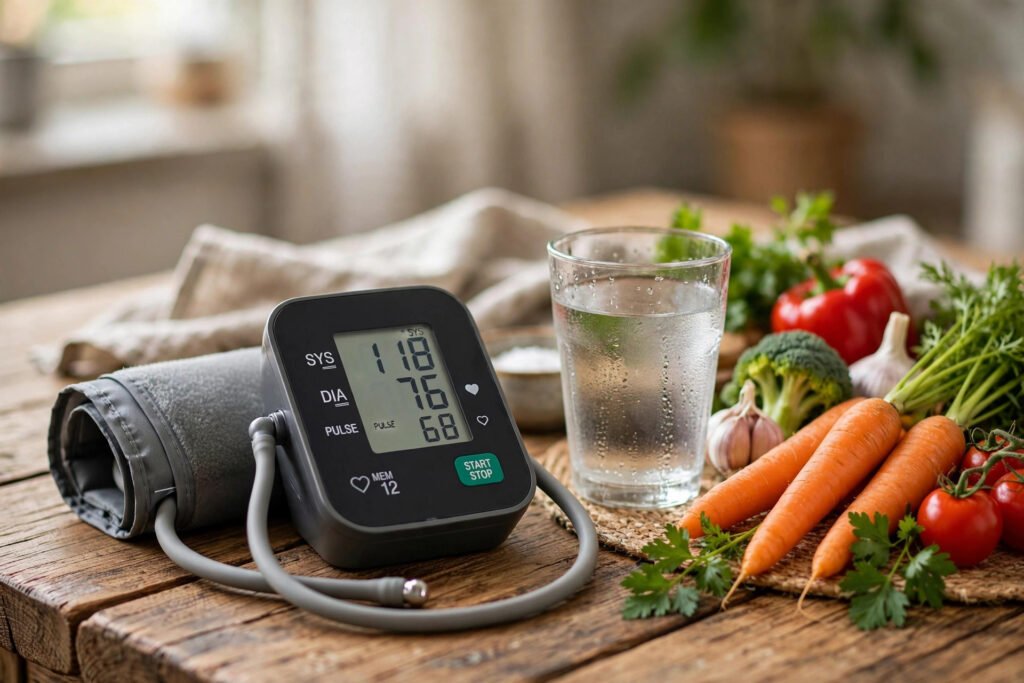
How can I lower my blood pressure naturally at home
Your doctor mentioned your blood pressure was “a little high.” You nodded, forgot about it, and moved on. Here’s why you shouldn’t: high blood pressure is called the silent killer because it damages your arteries, heart, brain, and kidneys for years without a single symptom — until the heart attack or stroke. So let’s talk plainly about what counts as high blood pressure and what to do about it.
What Counts as High Blood Pressure? The Numbers
Blood pressure is measured as systolic (top number, pressure when the heart beats) over diastolic (bottom number, pressure between beats). Current American Heart Association guidelines:
- Normal: less than 120/80
- Elevated: 120–129 systolic AND less than 80 diastolic
- Stage 1 hypertension: 130–139 systolic OR 80–89 diastolic
- Stage 2 hypertension: 140+ systolic OR 90+ diastolic
- Hypertensive crisis: 180+/120+ — seek immediate medical attention
Note the 2017 change: the threshold dropped from 140/90 to 130/80. That “little high” reading your doctor mentioned? Under current guidelines, it may already be Stage 1.
One Reading Isn’t a Diagnosis
Blood pressure fluctuates constantly — stress, caffeine, exercise, even talking during measurement raise it. White coat hypertension (high readings at the doctor’s office, normal at home) is common. Diagnosis requires multiple elevated readings on separate occasions, or ambulatory/home monitoring averages. Don’t panic over one number; do follow up.
Why It Matters: What High Blood Pressure Does
- Heart: forces the heart to work harder → enlarged heart, heart failure risk.
- Arteries: damages vessel walls → atherosclerosis → heart attack and stroke.
- Brain: major stroke risk factor; also linked to cognitive decline and dementia.
- Kidneys: damages the filtering system → chronic kidney disease.
- Eyes: can damage retinal blood vessels.
The American Heart Association notes that nearly half of American adults have hypertension — and many don’t know it. This is genuinely one of the highest-impact health numbers you can control.
How to Lower Blood Pressure Naturally
Lifestyle changes are first-line treatment — and they work:
- Lose excess weight: the single most impactful change. Even 5–10 pounds makes a measurable difference.
- Reduce sodium: aim under 2,300mg daily (ideally 1,500mg). The average American eats 3,400mg+. Restaurant food and processed food are the main culprits.
- Exercise regularly: 150 minutes/week of moderate activity can lower systolic pressure 5–8 points. (See exercise timing and our workout planning guide.)
- DASH diet: fruits, vegetables, whole grains, lean protein — specifically designed for blood pressure.
- Limit alcohol: more than moderate drinking raises blood pressure.
- Quit smoking: every cigarette spikes blood pressure temporarily; long-term, smoking damages vessels.
- Manage stress: chronic stress contributes; sleep 7–9 hours.
- Monitor at home: a $30–$50 validated upper-arm cuff, used correctly (seated, rested 5 min, arm at heart level), gives better data than occasional office readings.
When Medication Is Needed
There’s no shame in blood pressure medication — it’s among the most effective, well-studied, and inexpensive drugs in medicine. If your doctor recommends it, take it. Lifestyle changes and medication aren’t either/or; they work together. Never stop BP medication without medical guidance — rebound hypertension is dangerous. (Anxious about appointments? See our doctor-anxiety guide.)
Home Blood Pressure Monitoring Done Right
Home readings beat office readings for tracking — if you do them correctly:
- Get a validated upper-arm cuff ($30–$60). Wrist cuffs are convenient and inaccurate. Check validated device lists from the American Heart Association.
- Cuff size matters enormously. Too small = falsely high readings. Measure your arm and buy accordingly.
- The protocol: sit quietly 5 minutes, back supported, feet flat, arm at heart level, no talking. Empty your bladder first. No caffeine, exercise, or smoking for 30 minutes prior.
- Take 2–3 readings one minute apart; average the last two.
- Measure at consistent times: morning (before meds/breakfast) and evening. Log everything — apps or a notebook.
- Bring your log to appointments. A month of home readings tells your doctor more than any single office measurement.
- Calibrate yearly: bring your cuff to an appointment and compare against the office device.
Foods and Habits That Help Lower Blood Pressure
- Leafy greens and beets: dietary nitrates convert to nitric oxide, relaxing blood vessels. Beet juice has genuine trial evidence.
- Berries: anthocyanins linked to modest BP reductions in studies.
- Oats and whole grains: fiber helps; the DASH diet’s foundation.
- Fatty fish: omega-3s support vascular health.
- Bananas and potatoes: potassium blunts sodium’s effect — unless your doctor has restricted potassium (kidney issues), eat plenty.
- Garlic: modest evidence for small reductions. Tasty regardless.
- Dark chocolate (70%+): flavanols, small effect, excellent excuse.
- Cut the big sodium sources: bread, processed meats, canned soups, restaurant meals, and condiments. Cooking at home is the single biggest sodium lever.
- Limit alcohol: regular drinking above moderate levels raises BP reliably. Cutting back often drops readings within weeks.
- Don’t smoke: every cigarette spikes BP and damages vessels long-term. Quitting is the highest-impact single change for vascular health.
Quick Answers: Blood Pressure FAQs
Can anxiety cause high blood pressure readings?
Temporarily, yes — stress and anxiety spike readings in the moment (including “white coat hypertension” at the doctor’s office). But chronic anxiety’s relationship with sustained hypertension is more complex; the bigger risk is that anxious people avoid checkups and treatment. Don’t dismiss high readings as “just anxiety” without home monitoring to confirm — a month of calm home readings tells the true story. If medical visits themselves spike your anxiety, our doctor-anxiety guide can help you get accurate readings and proper care.
How quickly can lifestyle changes lower blood pressure?
Faster than most people expect: sodium reduction and regular exercise can move readings within 2–4 weeks; meaningful weight loss shows effects over 2–3 months. Don’t stop prescribed medication while making lifestyle changes — work with your doctor to adjust treatment as your numbers improve. The goal is the lowest effective intervention, determined with professional guidance, not DIY experimentation.
The Bottom Line on Blood Pressure
What counts as high blood pressure? 130/80 or above (Stage 1), 140/90+ (Stage 2) — and it’s worth taking seriously because it’s symptomless, extremely common, and a major driver of heart attack, stroke, and kidney disease. Get a home cuff, track your numbers, make the lifestyle changes (weight, sodium, exercise, alcohol), and take medication if prescribed. Of all the health numbers you could optimize, this one gives you the most life per unit of effort. Don’t be the person who ignored “a little high” for a decade.