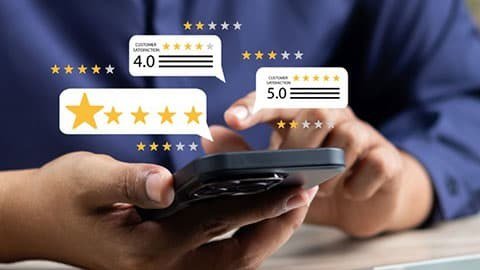
How do I check if an AI-generated review is fake
“This changed my life! Five stars!” — posted by someone who’s never existed, about a product they’ve never used. AI-generated fake reviews are flooding Amazon, Google, Yelp, and every marketplace in between. Learning how to check if an AI-generated review is fake isn’t paranoia anymore — it’s basic consumer self-defense.
The scale is staggering: a significant and growing share of online reviews are fake or AI-assisted, and they’re getting harder to spot as language models improve. But they’re not undetectable. Here’s how to tell.
How to Check If an AI-Generated Review Is Fake: The Warning Signs
1. Suspiciously Generic Language
Real reviews are specific: “the zipper broke after two weeks,” “runs small in the shoulders.” AI reviews are vague: “great quality,” “highly recommend,” “exceeded my expectations.” If a review could describe literally any product, it’s worthless at best and fake at worst. Specificity is the #1 authenticity signal.
2. The Uncanny Tone
AI reviews have a recognizable polish: perfect grammar, balanced structure, marketing-adjacent vocabulary. Real humans write messily — typos, fragments, ALL CAPS enthusiasm, weird tangents. Paradoxically, imperfection is credibility. A wall of flawless five-star prose is a red flag.
3. Reviewer Profile Red Flags
- One-review accounts: profile created this month, single glowing review, never heard from again.
- Review bursts: dozens of five-star reviews in a short window, then silence — classic paid-review pattern.
- Generic names and no photos: “John S.” with no profile history. (A clue, not proof.)
- Only 5-star or only 1-star: real reviewers have range. Extremes-only histories suggest an agenda.
- Reviewing unrelated products: baby formula, power tools, and romance novels in the same week = likely paid reviewer.
4. Pattern Analysis Across Reviews
- Identical phrasing across multiple reviews — copy-paste farms.
- Suspicious rating distribution: all 5-stars with no 3–4 star reviews is unnatural. Real products have a bell curve with complaints.
- Reviews predating the product or clustered before launch.
- Vague reviews drowning out specific ones: when detailed critical reviews say “broke in a month” and 200 vague five-stars say “great!” — trust the specifics.
- Reviewer overlap: the same accounts reviewing the same seller’s entire catalog.
5. AI Detection Tools (Limited Help)
AI text detectors are unreliable for short texts like reviews — high false-positive rates. Don’t rely on them. Your pattern-recognition brain, trained on the signals above, outperforms the detectors for this task.
Tools and Habits for Smarter Shopping
- Read the 3-star reviews first. They’re the most honest — balanced enough to be real, critical enough to be useful. This single habit improves purchase decisions more than any tool.
- Sort by “most recent.” Fake review campaigns often target launch windows.
- Check third-party review analyzers like Fakespot or ReviewMeta — imperfect, but a useful second opinion.
- Look for verified purchase badges — not foolproof, but better than nothing.
- Cross-reference: check Reddit, YouTube reviews, and forums. A product with 4.8 stars on Amazon and horror stories on Reddit tells you everything.
- Use AI yourself: paste suspicious reviews into a chatbot: “Do these reviews show patterns suggesting they’re fake or AI-generated?”
The Bigger Picture
Fake reviews are illegal — the FTC has explicitly banned fake testimonials and fines offenders. But enforcement lags the problem. Platforms profit from the transactions fake reviews drive, creating weak incentives to fix it. Until regulation catches up, consumer vigilance is the defense.
This connects to the broader AI-deception landscape: fake AI photos in listings, manipulative recommendation algorithms.
How Fake Reviews Are Made (The Supply Side)
Understanding the business of fakery sharpens your detection. The ecosystem:
- Review farms: operations (often overseas) employing people to write fake reviews at scale — $1–$5 per review. The good farms vary writing styles; the cheap ones don’t, which is why identical phrasing is such a tell.
- AI generation: sellers now generate hundreds of “unique” reviews with chatbots. They’re grammatically perfect, vaguely positive, and eerily similar in structure — which is exactly what to look for.
- Brushers: sellers ship cheap products to real addresses (using stolen address data) to create “verified purchase” reviews. If you receive packages you didn’t order, you’re a brushing victim — report it.
- Review brokers on social media: Facebook groups and Telegram channels where sellers buy 5-star reviews in exchange for free products or PayPal refunds. Thousands of members, operating openly.
- Extortion reviews: the flip side — competitors or scammers posting fake 1-star reviews, then demanding payment to remove them.
- Incentivized “honest” reviews: “Get a $20 gift card for your honest review!” — technically disclosed sometimes, but the incentive skews positive regardless.
What Platforms Are Doing About It
- Amazon: sues review brokers, uses machine learning to detect fake review patterns, and has removed millions of fake reviews. Yet the problem persists — the economics favor the fakers.
- Google: fake business reviews are rampant (reputation sabotage and inflation). Google removes policy-violating reviews but struggles with scale.
- FTC enforcement: the FTC’s rule against fake reviews enables real penalties — including against companies buying them, not just sellers.
- What you can do: report suspicious reviews (every platform has a report button — use it), never buy reviews for your own business (the short-term boost isn’t worth the account ban), and support businesses with authentic review profiles.
The uncomfortable truth: platforms profit from the transactions that fake reviews drive, which limits their incentive to fully solve it. Consumer vigilance remains the primary defense — which is why the detection skills in this article matter.
One More Thing: Become a Review Detective
Make this a habit: before any purchase over $50, spend 3 minutes on review forensics — read the 3-star reviews, sort by most recent, check one off-platform source. Three minutes of skepticism beats three weeks of buyer’s remorse. The fakes are getting better, but so are you — you read this whole guide, after all.
The Bottom Line on Fake AI Reviews
How do you check if an AI-generated review is fake? Look for generic language, uncanny polish, suspicious reviewer profiles, and unnatural patterns — and anchor on the specific, imperfect, 3-star reviews that AI can’t convincingly fake. Read recent reviews first, cross-reference off-platform, and use review analyzers as a second opinion. The fakes are getting better, but they’re still selling to your brain’s pattern-matching — and now yours is trained to spot them.