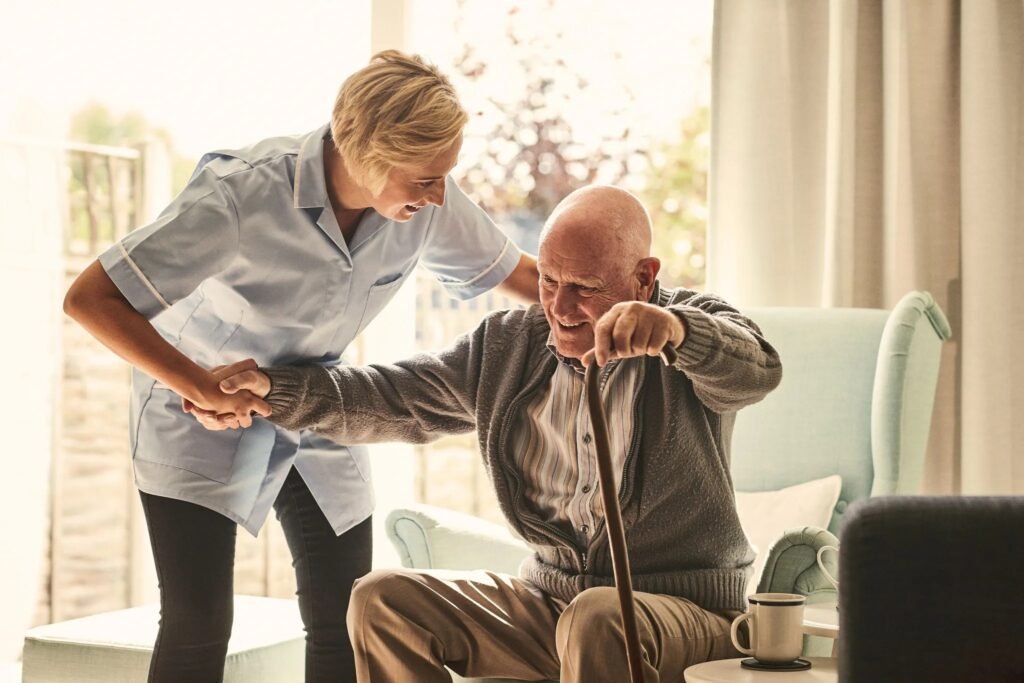
How can AI help seniors with daily tasks at home
Your mom lives alone. She’s sharp, but the pill bottles are multiplying, the thermostat wars with her, and you worry about falls. You can’t be there daily. Here’s a comforting thought: AI can help seniors with daily tasks at home — not as a replacement for human care, but as a safety net and independence extender that helps older adults live safely at home longer.
How AI Can Help Seniors With Daily Tasks: The Practical Applications
Safety First
- Fall detection: Apple Watch and similar wearables detect hard falls and auto-call emergency services if the wearer doesn’t respond. This single feature has saved lives. If your parent wears a smartwatch, set it up.
- Smart home monitoring: motion sensors that learn daily patterns and alert family if something’s off (no morning kitchen activity by 10 AM). Non-camera options preserve dignity.
- Voice-activated emergency: “Alexa, call for help” — simpler than finding a phone during a crisis.
- Medication reminders: smart pill dispensers that dispense the right dose at the right time and alert family if doses are missed. Medication errors are a leading cause of senior hospitalization — this matters enormously.
Daily Living
- Voice assistants for everything: setting timers, making calls, reading the news, controlling lights and thermostat. For arthritic hands or failing eyesight, voice control is transformative. Our guide to explaining AI to grandparents helps with the introduction.
- Video calls simplified: smart displays (Echo Show, Google Nest Hub) with “drop in” features let family video-call without the senior operating anything.
- Hearing and vision assistance: AI-powered hearing aids that isolate speech from noise; apps that read labels and describe scenes aloud.
- Transportation: voice-activated rideshare booking (“Alexa, call me a Lyft”) preserves mobility independence.
Health Management
- Remote monitoring: blood pressure cuffs and glucose meters that automatically share readings with family and doctors.
- Appointment help: AI that summarizes doctor visits (with permission) and tracks follow-ups.
- Cognitive engagement: brain games, conversation companions, and structured routines that support mental sharpness.
Companionship
Loneliness is a health crisis for seniors — as damaging as smoking, per some research. AI companions (carefully chosen) provide conversation and routine. They supplement human contact; they must never replace it. The best setup: AI handles the 3 AM restlessness; family handles Sunday dinner.
Setting It Up Right
- Start with ONE thing: the fall-detection watch or the voice assistant. Don’t overwhelm with a smart-home overhaul.
- Set it up for them: configure everything, write a one-page cheat sheet in large print, and practice together twice.
- Respect autonomy: frame it as their tool for independence, not surveillance. “This helps you stay in your home” beats “this lets me watch you.”
- Privacy conversation: explain what data is collected in plain terms. See our AI privacy guide.
- Plan for failure: what happens when the internet goes down? Keep analog backups (landline, neighbor check-ins).
What AI Can’t Do
- Replace human care: for advanced needs (dementia care, mobility assistance), human caregivers are irreplaceable.
- Make medical decisions: AI assists; doctors and family decide.
- Overcome resistance: if your parent hates the technology, forcing it creates conflict. Start where they’re willing.
AI for Seniors: Frequently Asked Questions
What’s the single best AI device for an elderly parent?
A smartwatch with fall detection (Apple Watch or equivalent) — it’s the highest-impact safety device available. Falls are the leading cause of injury for older adults, and automatic emergency calling when the wearer can’t respond has saved lives. Second place: a smart display (Echo Show or Nest Hub) for simplified video calls — family can “drop in” without the senior operating anything. Start with safety, then add convenience. The National Institutes of Health offers evidence-based resources on aging, fall prevention, and assistive technology.
How do I get a tech-resistant parent to actually use this?
Don’t sell the technology — sell the outcome. “This watch calls for help if you fall” beats “this is an AI-powered wearable.” Set everything up yourself, write a large-print one-page cheat sheet, and practice together twice. Start with ONE device, not a smart-home overhaul. And respect a genuine no — some resistance is about autonomy, not ability. Frame every tool as their independence aid, not your surveillance system.
Are voice assistants always listening? Should I worry?
Smart speakers listen locally for their wake word; only after hearing it do they transmit audio to the cloud. That’s the design — and the privacy trade-off. You can review and delete voice recordings in the app settings, mute the microphone when not needed, and choose devices with physical mute buttons. For most families, the safety and convenience benefits outweigh the privacy cost, but it’s an informed decision to make together, not a default to accept blindly.
Can AI help with dementia or Alzheimer’s care?
As a supplement to human care, yes: medication reminders, structured daily routines, simplified communication tools, and monitoring for safety (wandering alerts, stove sensors). AI companions can provide engagement, though they must never replace human contact. For advancing dementia, human caregivers are irreplaceable — AI handles safety nets and routine support while people handle the care that requires a heart. Discuss options with the care team; needs change as conditions progress.
What if the internet goes down?
Plan for it — because it will happen. Keep analog backups: a landline or charged basic cell phone for emergencies, a neighbor with a key who checks in, medications organized in a physical pillbox (not solely app-dependent), and written emergency numbers by the phone. Smart home tech is a layer on top of basic safety, not a replacement for it. The best system works when the Wi-Fi doesn’t.
The Bottom Line on AI for Seniors
How can AI help seniors with daily tasks at home? Fall detection, medication management, voice-controlled homes, simplified video calls, health monitoring, and companionship — a safety net that extends independent living. Start with one high-impact tool (the smartwatch or voice assistant), set it up patiently, frame it as independence rather than surveillance, and keep humans at the center. The goal was never a smart home — it’s Mom safe in her home, on her terms, for as long as possible.