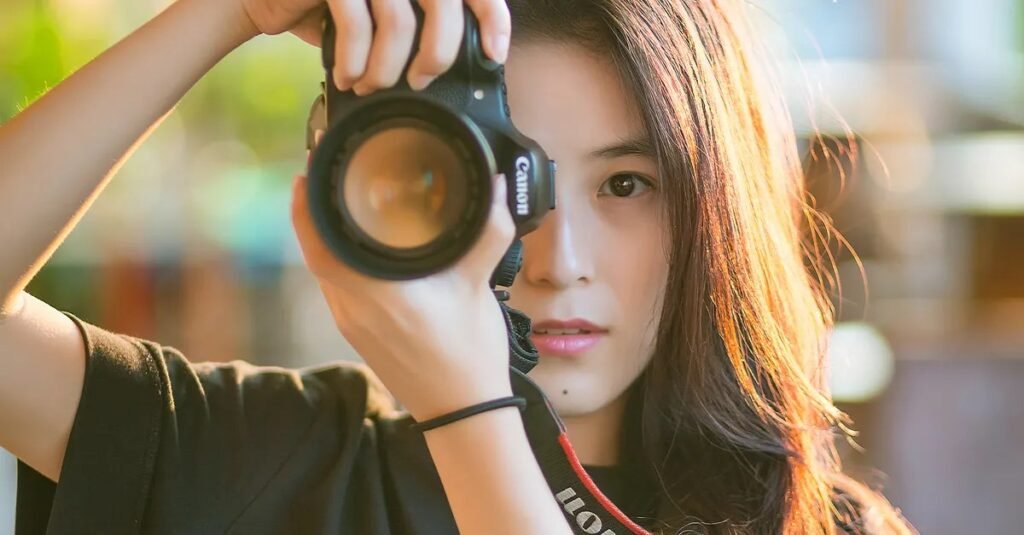
How do I know if a photo was made with AI
That photo looks almost real. The lighting’s a little too perfect. The hands… wait, how many fingers? As AI-generated images flood social media, dating profiles, and marketplaces, knowing how to tell if a photo was made with AI is becoming basic digital literacy — the 2026 version of “don’t believe everything you read.”
How to Tell If a Photo Was Made With AI: The Visual Clues
1. Hands, Teeth, and Ears
The classic tells. AI still struggles with: hands (extra fingers, fused digits, impossible joints), teeth (too many, too uniform, melting into lips), ears (asymmetric, misplaced earrings, melting into hair), and glasses (warped frames, asymmetric arms). Always zoom in on extremities.
2. The Uncanny Smoothness
AI images have a distinctive over-polished quality: skin without pores, hair with impossible flow, backgrounds with a dreamy uniformity. Real photos have noise, imperfections, and chaotic detail. Perfection is suspicious.
3. Background Anomalies
The AI focuses on the subject and improvises the rest: text on signs that’s gibberish, architectural impossibilities (stairs to nowhere, windows that don’t align), objects melting into each other, crowds where faces blur into mannequin-like sameness. Scan the background — that’s where the mask slips.
4. Lighting and Physics Errors
Shadows falling in inconsistent directions, reflections that don’t match (mirrors showing wrong scenes), water reflections that defy the subject. Real light obeys physics; AI approximates it.
5. The Vibe Check
After you’ve seen enough AI images, you develop an instinct — a certain glossy, generic quality. Trust it as a prompt to investigate, not as proof.
Technical Verification Methods
- Reverse image search: Google Images or TinEye — if the “photo” appears in AI galleries or stock AI sites, there’s your answer.
- Metadata check: AI generators often embed metadata (or strip it entirely — a photo with zero EXIF data from a “camera” is suspicious). Some now include C2PA content credentials disclosing AI generation.
- AI detectors: tools like Hive Moderation claim to detect AI images. They’re decent but not definitive — use as one signal among many.
- Ask AI itself: upload the image to a vision-capable chatbot: “Does this photo show signs of AI generation?” It’s often surprisingly perceptive about its own kind’s tells.
Why It Matters: The Stakes
- Marketplaces: AI-generated product photos misrepresent what you’re buying. Our fake review guide covers the companion problem.
- Dating profiles: fake photos are now trivially easy. Reverse-search profile photos before meeting anyone.
- News and politics: fabricated “photos” of events that never happened spread faster than corrections. Verify before sharing — sharing a fake is participating in the deception.
- Scams: fake profile photos power romance scams and fraud. See how banks fight AI fraud.
The Responsible Flip Side
AI image generation itself is a wonderful creative tool — see our beginner’s guide to free AI image generators. The ethics are about disclosure: label AI images as AI, especially in commercial, journalistic, or dating contexts. The technology isn’t the problem; passing it off as reality is.
Spotting AI Photos: Frequently Asked Questions
Are AI image detectors reliable?
Somewhat — they’re one signal, not a verdict. Tools like Hive Moderation analyze images for AI-generation patterns and are decent at catching current-generation fakes, but they produce false positives (flagging real photos) and false negatives (missing sophisticated fakes). Never rely on a detector alone. Stack signals: visual inspection (hands, backgrounds, lighting), reverse image search, metadata checks, and detector results together. The FTC has warned consumers about AI-generated deceptive imagery as the technology makes fakery trivially easy.
Can AI-generated photos be used as evidence of anything?
No — and that’s precisely the problem. A photo used to be rough evidence that something happened; now it’s evidence that someone generated pixels. This is eroding visual trust across news, courts, insurance claims, and marketplaces. The emerging defense is provenance technology (like C2PA content credentials) that cryptographically records an image’s origin — but adoption is early. Until then: extraordinary photos require extraordinary verification.
How do I check if a dating profile photo is AI-generated?
Reverse-image search every photo (Google Images, TinEye) — stolen or AI-generated photos often appear elsewhere. Video-chat before meeting in person; scammers using fake photos will dodge live video with excuses. Look for the tells: overly perfect skin, inconsistent backgrounds across photos, and glamour-shot uniformity. And never send money to someone you haven’t met, regardless of how real their photos look.
Should I label my own AI-generated images?
Yes — whenever context implies they’re real. Social media art project? Labeling is courtesy. Product listing, news context, dating profile, or anywhere someone might make decisions based on the image? Labeling is an ethical obligation, and in some contexts (advertising, political content) increasingly a legal one. Disclosure costs you nothing and protects everyone’s ability to trust what they see.
Will AI photos become undetectable?
The visual tells are already fading with each model generation — hands are mostly fixed, text is improving, physics is getting better. Detection is shifting from visual inspection to technical provenance (watermarks, metadata, cryptographic signatures). The long-term answer isn’t sharper human eyes; it’s verified image pipelines. Until those are universal, stay skeptical and verify before sharing.
More AI Photo Detection Questions
Can AI-generated videos be detected the same way?
Partially — deepfake videos share some tells (unnatural blinking, inconsistent lighting, lip-sync mismatches), but video detection is harder and the technology is advancing fast. Treat viral videos with the same skepticism as photos: check the source, look for corroboration from reputable outlets, and remember that emotional content (outrage, amazement) is engineered to bypass your critical thinking. Pause before sharing.
What should I teach my kids about fake images?
Three habits: (1) Photos can lie now — just like words always could. (2) Check before sharing — reverse image search takes 10 seconds. (3) If an image makes you feel strong emotions, that’s exactly when to verify. Kids who learn “pixels aren’t proof” early will navigate the AI era far better than adults still catching up. Make it a game, not a lecture: “real or AI?” quizzes are genuinely fun.
The Bottom Line on Spotting AI Photos
How do you know if a photo was made with AI? Zoom in on hands, teeth, and ears; scan backgrounds for impossible details; check lighting physics; reverse-image search; and inspect metadata. No single test is definitive — stack the signals. And apply the golden rule of the AI image era: extraordinary photos require extraordinary verification before you believe or share them. Your new habit: pause, zoom, verify — then decide.
Pingback: How do I check if an AI-generated review is fake