How John Mayer Made His Money: Net Worth, Age, Songs, Albums and the Watch Collection
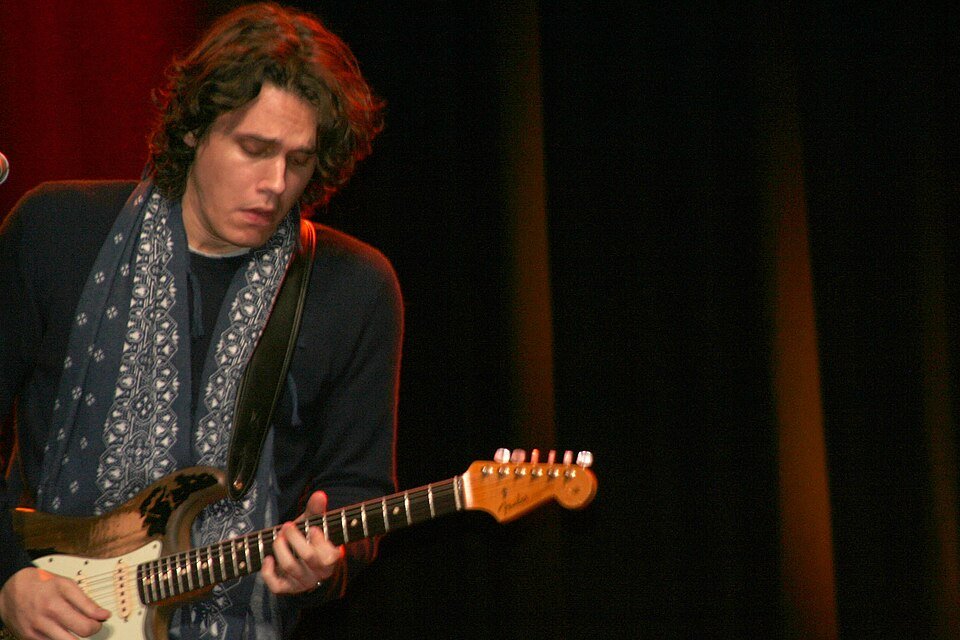
How John Mayer Made His Money: Net Worth, Age, Songs, Albums and the Watch Collection
John Mayer at a Glance
| John Mayer at a Glance | Details |
|---|---|
| Born | 16 October 1977, Bridgeport, Connecticut |
| Age | 49 |
| Height | 6 ft 3 in |
| Net Worth | $100 million (Celebrity Net Worth) |
| Weight | No reliable published figure |
| Girlfriend | No current girlfriend publicly confirmed |
| @johnmayer |
A Bridgeport Boy, Middle of Three Sons
John Clayton Mayer arrived on 16 October 1977 in Bridgeport, Connecticut, the middle of three sons in a family of educators. His father, Richard Mayer, worked as a high school principal, and his mother, Margaret Mayer, née Hoffman, taught English at a middle school. The family settled in Fairfield, Connecticut, and the household ran on school calendars, books and the expectation that the boys would find respectable professions. The guitar ruined that plan politely and completely.
Mayer fell for the instrument in his early teens after hearing Stevie Ray Vaughan’s playing on a cassette, and he practised with the total focus that teachers recognise and parents find faintly alarming. He played in local blues bars while still at school, studied the records of Vaughan, B.B. King and Buddy Guy note by note, and talked his way into a short-lived blues band before deciding that his own songs mattered more than covers. A health scare in his teens — a hospital stay for a heart arrhythmia — sharpened the urgency he brought to the instrument.
His parents backed a compromise: one shot at music school. He enrolled at Berklee College of Music in Boston in 1997 and left after two semesters, concluding that the classroom slowed the education the stage offered. He moved to Atlanta, played the club circuit relentlessly, built a following in the Southeast, and recorded an independent album that carried him to the South by Southwest festival and, from there, to a major-label deal. The Fairfield principal’s son had his profession after all — it just involved a Stratocaster.
How Room for Squares Launched John Mayer
2001–2003 — Room for Squares and the Grammy Arrival
Columbia Records released his major-label debut, Room for Squares, in 2001, and the singles Your Body Is a Wonderland, No Such Thing and Why Georgia built him an audience that crossed from college radio to the mainstream. Wonderland won him the Grammy for Best Male Pop Vocal Performance, and his second album, Heavier Things, arrived in 2003 with Daughters, which took the Song of the Year Grammy. By his late twenties Mayer held a rare double position: a pop star whose guitar playing other guitarists studied.
2005–2009 — The Trio, Continuum and Battle Studies
He formed the John Mayer Trio in 2005 and released the live album Try!, a deliberate dive into the blues-rock he had grown up worshipping. Continuum followed in 2006 and stands as his defining record — Waiting on the World to Change, Gravity and Slow Dancing in a Burning Room come from it — and it sold in the millions while critics placed it among the decade’s best. Battle Studies closed the decade in 2009, and it included Who Says and a duet that pointed toward a later chapter of his career: his collaborations with Katy Perry, including the duet Who You Love, grew from a professional admiration that readers can follow from the other side in Katy Perry’s net worth profile.
2010–2013 — The Throat, the Silence and the Return
A vocal granuloma, diagnosed in 2011, stopped the machine. Two operations followed, doctors ordered long periods of silence, and Mayer cancelled the tour for Born and Raised, the folk-leaning album he released in 2012 from the sidelines. He moved to Montana, stepped out of the interview circuit that had damaged his reputation, and returned to performing in 2013 with Paradise Valley and a voice he had learned to protect. The episode changed his working life permanently: fewer shows, chosen carefully, at prices that reflected scarcity.
2015–2026 — Dead & Company, Sobriety and the Long Game
In 2015 Mayer joined surviving members of the Grateful Dead to form Dead & Company, and the band became one of the most successful live acts in America, grossing more than $120 million in 2023 alone per Celebrity Net Worth — a band figure, not a personal receipt, and this profile records it as such. The Search for Everything arrived in 2017 and Sob Rock in 2021, the latter a loving pastiche of 1980s soft rock. Mayer stopped drinking in 2016 and disclosed his sobriety publicly in 2018. He launched his SiriusXM programme, Life with John Mayer, in November 2023, and Dead & Company’s Sphere residency from 2024 kept him at the top of the live business through 2026, where he remains: a heritage-level live draw who releases records at his own pace.
The Dead & Company chapter also rewrote his musicianship in public. Mayer learned hundreds of songs from the Grateful Dead catalogue, absorbed a improvisational discipline that studio pop never demands, and earned the respect of an audience famously protective of its inheritance. Players who had dismissed him as a pop act revised their view in those long two-set nights, and Mayer himself describes the band as the education he skipped at Berklee, delivered twenty years late by masters of a different tradition. The residency years at the Sphere added a technological stagecraft to the same lesson: a sixty-year-old songbook, a guitarist in his late forties, and audiences spanning three generations, all meeting in the most advanced room in live entertainment.
Never Married and a Private Love Life
Mayer has never married, and no current girlfriend stands publicly confirmed; the table records the position in exactly those terms. His reliably documented past relationships belong to the record and carry dates rather than labels: Jennifer Love Hewitt in 2002, Jessica Simpson across 2006 and 2007, Jennifer Aniston across 2008 and 2009, and Katy Perry across 2012 to 2015. Reports linking him with Kat Stickler in the autumn of 2025 appeared in outlets such as Us Weekly and remain unconfirmed, and this profile leaves them at that status.
His parents shaped the man in ways his lyrics keep acknowledging. Richard Mayer’s principal’s office and Margaret Mayer’s English classroom produced a son who writes with a teacher’s precision — literary, exact, allergic to sloppy phrasing — and who argues like one too. The family stays close, and Mayer’s Connecticut roots surface in his songs and his conversation as regularly as his Montana years surface in his quieter records.
The health and sobriety chapters belong here as much as in the career section. The granuloma and its two operations taught him the fragility of the instrument he earns with; the decision to stop drinking in 2016, which he disclosed in 2018, reorganised his social life around the music. Friends and collaborators describe a man who replaced the chaos of his twenties with routine: practice, collecting, touring on a schedule his throat can sustain.
Hits, Dead and Company and a $100 Million Fortune
Celebrity Net Worth estimates Mayer’s net worth at $100 million in its current reading, which it confirmed directly in November 2026. The tracker previously carried $70 million, and that older figure still circulates widely in secondary coverage; this profile prints the supersession openly and uses the current $100 million. No Forbes wealth total and no Sunday Times Rich List figure exists for him, so the Celebrity Net Worth estimate carries the record.
The build-up differs from most pop fortunes in its balance. Album sales and streaming from eight studio records provide the base, with Continuum as the long-tail engine. Songwriting and publishing add the layer that compounds quietly: Mayer writes his own material, and every cover, sync placement and stream pays the writer as well as the performer. The third layer is live work, and it grew enormous in his forties — Dead & Company’s grosses, including the more than $120 million the band took in 2023, flow to the band’s members through one of the most lucrative arrangements in modern touring, even though the gross itself is a band figure and not his personal income. Scarcity pricing on his solo tours completes the picture: he plays less than his peers and earns more per night because of it.
The Car Collection
Mayer’s garage is small and changes often, and the honest record says so rather than inflating it. He bought a 2006 Ford GT Heritage Edition new and sold it in 2012; the same car later went to auction under a subsequent owner in 2023 with an expectation above $700,000 — a figure that belongs to that later sale, not to Mayer. A Ferrari 599 GTB and an Audi R8 round out the documented holdings. No allowed source publishes a total value for his cars, and this profile asserts none.
The Watches
His watch collection is the asset class he discusses most seriously. Mayer collects rare vintage and modern pieces, writes and speaks about horology as a genuine authority, and valued the collection himself in 2015 at “tens of millions” of dollars. Readers should hold that figure at its date and its source: it is his own 2015 valuation, no current published total exists, and the collection’s present worth stands unverified. It remains, on any reading, a substantial store of value in the hands of a man who understands exactly what he owns.
His collecting habit completes the financial portrait. Mayer buys watches the way he buys guitars — knowledge first, patience second, and a willingness to hold for decades — and the horology world treats him as a peer rather than a celebrity tourist. Assets that a collector chooses with that depth of understanding tend to keep their value through fashion cycles, which is why the fortune’s quieter corners, the watches and the publishing, may outlast the louder ones. The touring will slow one day; the catalogue, the royalties and the collection will keep their own schedule.
The SiriusXM programme adds a broadcaster’s income and a curator’s influence to the ledger. Life with John Mayer lets him programme music, interview peers and keep a weekly presence in fans’ routines between tours — a modest line beside the touring grosses, but a telling one. Mayer keeps building small, durable platforms around the central asset of his musicianship, and each platform pays him for judgement and taste rather than for exertion his throat must ration. The pattern is the fortune in miniature: convert skill into ownership, then let ownership do the heavy lifting.
The Guitarist Who Carried the Grateful Dead’s Catalogue
Mayer’s career holds a shape few musicians achieve: teen guitar prodigy, pop hitmaker, blues scholar, tabloid casualty, recluse, and finally the guitarist a legendary band chose to carry its catalogue into a new century. Each phase left records that still sell, and the live business he built in his forties out-earns the pop fame of his twenties. Guitarists rank him among the finest players of his generation; audiences simply keep buying the tickets.
The fortune follows the same arc. Celebrity Net Worth puts it at $100 million, a fortune that grew from songs he wrote, albums that never stopped selling, publishing that pays him in his sleep and a touring second act of rare profitability. The boy from Fairfield who left Berklee after two semesters read the music business correctly from the start: own the writing, protect the voice, and let time do the compounding.