Denzel Washington at 71: The Roles, the Family and a $300 Million Career
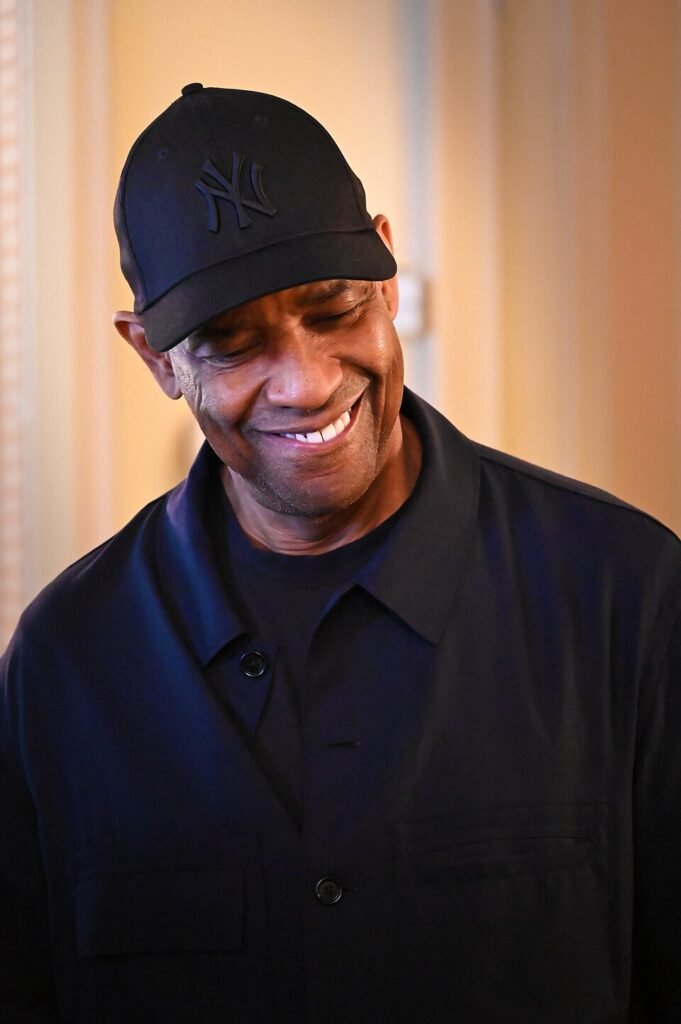
Denzel Washington at 71: The Roles, the Family and a $300 Million Career
Denzel Washington at a Glance
| Denzel Washington at a Glance | Details |
|---|---|
| Born | 28 December 1954, Mount Vernon, New York |
| Age | 71 |
| Height | 6 ft 1 in (1.85 m) |
| Net Worth | $300 million (Celebrity Net Worth) |
| Weight | No reliable published figure |
| Wife | Pauletta Washington (married 25 June 1983) |
| Children | Four: John David (b. 28 July 1984), Katia (b. 27 November 1986), Olivia and Malcolm (twins, b. 10 April 1991) |
| House | Beverly Park residence, Los Angeles; Century City condominium (see What the Fortune Rests On) |
| No verified personal account |
A Mount Vernon Boy, Son of a Preacher
Denzel Hayes Washington Jr. entered the world on 28 December 1954 in Mount Vernon, New York, a city just north of the Bronx. His father, Denzel Hayes Washington Sr., preached as a Pentecostal minister and worked for the New York City Water Department and at a local department store. His mother, Lennis “Lynne” Washington, born Lowe, owned and ran a beauty parlor in Harlem. The household joined faith, work, and discipline in equal measure, and the son absorbed all three.
His parents divorced during his teens, and his mother sent him to a private academy in upstate New York, a move he later credited with steering him away from the streets that claimed several friends. He attended Fordham University in the Bronx, where he first studied biology and then switched to drama and journalism, graduating in 1977. A summer job counseling at a camp first pushed him toward acting: colleagues urged him to try the stage after watching him perform for the campers. He won a scholarship to the American Conservatory Theater in San Francisco and trained there before returning to New York to build a career part by part.
The training shows in the work that followed. Washington carries a preacher’s cadence and a craftsman’s patience, and he prepares for roles with a rigor that directors cite decades later. He never chased celebrity as a separate career. He chased parts, and the celebrity arrived as a by-product of choosing them well for nearly fifty years.
How St. Elsewhere and Glory Built Denzel Washington
1977 — Wilma and the New York Start
Washington made his screen debut in the 1977 television production Wilma, a biographical drama about the sprinter Wilma Rudolph. The set gave him his first professional credit and, more lastingly, his wife: he met Pauletta Pearson during the production. Stage work in New York followed, and he built his technique in theater while television and small film parts accumulated around it.
1982 — St. Elsewhere
The hospital drama St. Elsewhere cast Washington as Dr. Phillip Chandler in 1982, and he played the role for six seasons. The series earned critical respect and gave American audiences a weekly view of his steadiness and warmth. Film offers grew alongside it, and he closed the decade with performances that announced a major screen actor rather than a television one.
1989 — Glory
Glory cast him as Private Trip, an escaped slave serving in a Union regiment, and his performance won the Academy Award for Best Supporting Actor. A single scene, a flogging endured in silence with one tear escaping, entered the permanent record of American screen acting. The Oscar confirmed what the industry already suspected: Washington could carry any material a writer handed him.
1992 — Malcolm X
Spike Lee directed Malcolm X in 1992 and Washington inhabited the title role across the man’s whole transformation, from street hustler to minister to martyr. Critics rank the performance among the finest of its era, and it earned him an Academy Award nomination for Best Actor. The film also began his defining director collaboration: he and Lee have now made five productions together.
1993 — Philadelphia
Philadelphia paired Washington with Tom Hanks in 1993, in a drama about a lawyer dying of AIDS and the homophobic attorney who agrees to represent him; readers can trace that partnership in Tom Hanks’s net worth profile. Washington played the attorney, and his ordinary, shifting decency gave the film its moral engine. The production reached a wide audience and strengthened his position as the rare star who could open a serious drama on his name alone.
1999 — The Hurricane
The Hurricane cast him as Rubin Carter, the boxer imprisoned for murders he maintained he did not commit, and Washington trained down to fighting weight and carried the film almost single-handedly. The performance won a Golden Globe and another Oscar nomination. He closed the decade as the most respected leading man of his generation, a status the next decade converted into outright box-office command.
2001 — Training Day
Training Day flipped his image in 2001. As Alonzo Harris, a corrupt narcotics detective, Washington played charm curdling into menace, and the performance won the Academy Award for Best Actor. The role proved his range ran to villains as convincingly as to heroes, and it delivered one of the most quoted performances of the century so far.
2006 — Inside Man and American Gangster
Inside Man, his fourth production with Spike Lee, became a major hit in 2006, and American Gangster followed in 2007 with Washington as the Harlem drug lord Frank Lucas, opposite Russell Crowe. Both films confirmed his durability: two decades after Glory, he still headlined the season’s prestige crime pictures and still filled theaters doing it.
2010 — The Book of Eli and Flight
The Book of Eli opened a run of solo-led action and drama successes in 2010, and Flight in 2012 cast him as an alcoholic airline pilot who saves a plane and then faces the investigation. The performance earned another Oscar nomination and reminded audiences that even his genre pictures carry a full character study inside them.
2014 — The Equalizer
The Equalizer launched a franchise in 2014, with Washington as Robert McCall, a retired operative who defends the powerless. Two sequels followed, and the trilogy grossed strongly worldwide. The series gave him his first true franchise at sixty, an age when most stars surrender the action market entirely.
2016 — Fences
Washington directed and starred in Fences in 2016, adapting August Wilson’s play and reprising a role he had played on Broadway to a Tony Award. The film earned him another Best Actor nomination and confirmed his standing as an interpreter of the great American stage writing. He has since produced further Wilson adaptations, extending the playwright’s reach to new audiences.
2025 — Honors and Othello
The honors arrived in a cluster. President Biden awarded him the Presidential Medal of Freedom in January 2025. He played Othello on Broadway from February to June 2025, drawing record audiences. Cannes gave him an honorary Palme d’Or in May 2025, and Highest 2 Lowest, his fifth production with Spike Lee, carried his reported fee of around $35 million, a salary figure this profile records as earnings and never as wealth. At seventy-one he works at the pace of a man half his age, and the industry keeps clearing its calendar for him.
Pauletta, Four Children and Forty Years of Marriage
Washington married Pauletta Pearson on 25 June 1983, six years after they met on the Wilma set. The couple renewed their vows in 1995 in a ceremony Archbishop Desmond Tutu officiated. The marriage has lasted more than four decades, an outlier in his industry, and both partners discuss it in practical terms: commitment, faith, and work.
Four children complete the family record. John David Washington, born 28 July 1984, played professional football before acting carried him to leading roles of his own. Katia Washington, born 27 November 1986, works in production. Twins Olivia and Malcolm Washington arrived on 10 April 1991; Olivia acts, and Malcolm directs, including a celebrated recent adaptation of a stage classic. The family produces its own second generation of filmmakers, and the parents attend their premieres like any other proud household, only with more photographers.
His parents shaped the values he cites most. His father died in 1991, before the greatest fame arrived. His mother lived to ninety-seven and died in 2021, having watched her son become, by common consent, one of the defining actors of his time. Washington funds scholarships, supports the Boys and Girls Clubs that served him as a boy, and speaks at graduations about discipline and faith. He maintains no verified personal Instagram account and conducts his public life almost entirely through the work itself.
Craft, Films and a $300 Million Fortune
Celebrity Net Worth estimates Washington’s fortune at $300 million, in a snapshot dated 4 November 2026, and this profile attributes the figure to that source at every mention. Trackers outside the named sources place him anywhere between roughly $280 million and $350 million, and the profile records that range as an unresolved disagreement rather than adopting any part of it. Forbes publishes no wealth total for him; its 2025 entertainment-earnings estimate of $38 million measures a year’s income, and this profile labels it earnings only.
The build-up spans five decades of top-of-the-market salaries. Washington commanded eight-figure fees from the 1990s onward, took profit participation on major hits, and added directing and producing income as his career matured. The reported $35 million fee for Highest 2 Lowest shows the market still prices him at the summit in his seventies. Salary totals, however large, count as earnings across a career; the $300 million Celebrity Net Worth estimate describes what remains after fifty years of them, wealth he holds in property and investments.
The Houses
His principal residence sits in Beverly Park, Los Angeles, a gated enclave where he assembled a home of roughly 29,000 to 30,000 square feet across two lots bought in the 1990s, including a purchase from Michael Eisner at a reported price close to $6.5 million. He also bought a Century City condominium in April 2022 for $10.9 million. Reported purchase prices describe transactions at the time they closed; this profile prints them as such and asserts no current valuations, because no allowed source publishes any.
The Career Where Craft Compounds Like Capital
Washington’s career offers the cleanest case in modern Hollywood for craft compounding like capital. Each decade added a defining performance, each performance raised his price and his freedom, and he spent that freedom on material that reinforced the reputation that earned it. The result reads less like stardom than like an institution: directors plan around him, younger actors study him, and audiences trust his name on a poster the way they trust few others.
The fortune follows the same pattern. Celebrity Net Worth counts $300 million, the outside range runs higher and lower, and the disagreement itself testifies to a private man who publishes nothing about his money. What the public record shows plainly is the source of it: fifty years of work at the highest level, a family that shares the industry with him, and a name that still opens films, fills theaters, and collects his country’s highest honors in a single season.