Cillian Murphy: The Cork Actor Who Let the Work Speak, and Built $20 Million Quietly
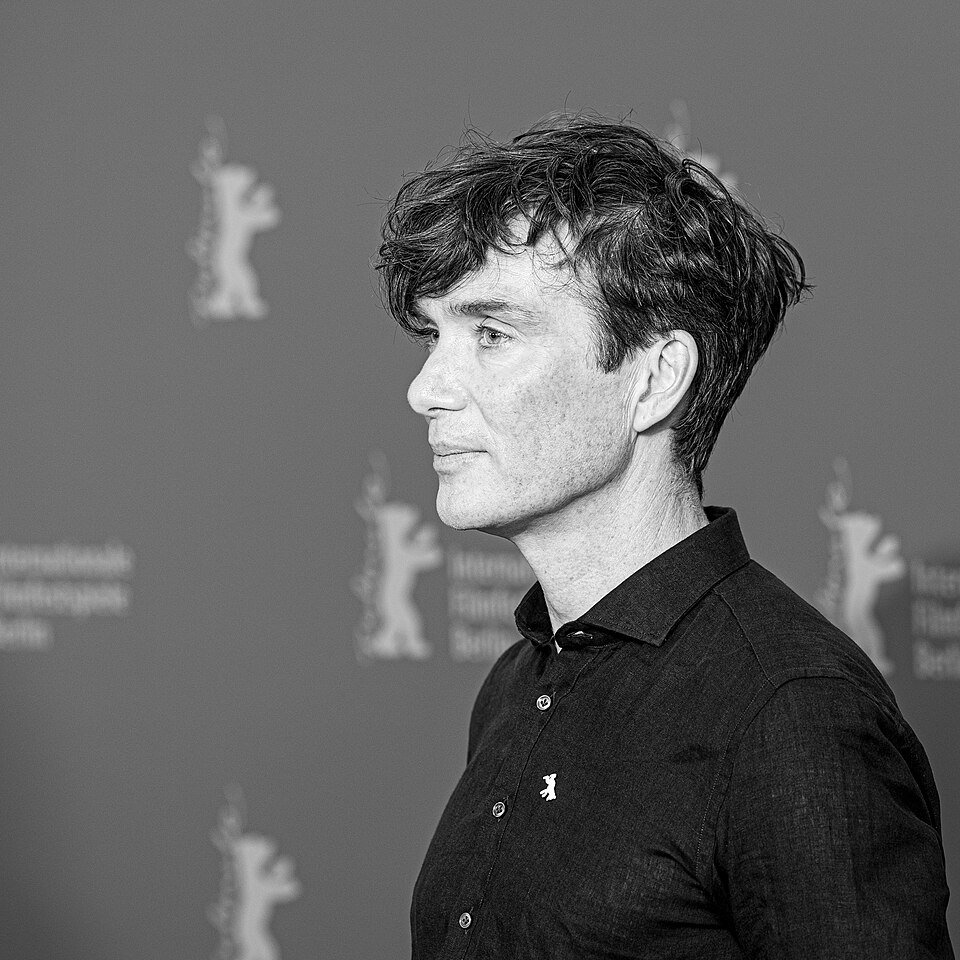
Cillian Murphy: The Cork Actor Who Let the Work Speak, and Built $20 Million Quietly
Cillian Murphy at a Glance
| Cillian Murphy at a Glance | Details |
|---|---|
| Born | May 25, 1976, in Douglas, County Cork, Ireland |
| Age | 50 |
| Height | 5 ft 9 in (IMDb lists 5 ft 7½ in) |
| Net Worth | $20 million (Celebrity Net Worth) |
| Weight | No reliable published figure |
| Wife | Yvonne McGuinness (married 2004) |
| Children | Two sons: Malachy (born December 2005) and Aran (born July 2007) |
| Parents | Brendan Murphy and his wife, a teacher of French whose name the family keeps private |
| Nationality | Irish |
| No verified personal account — he maintains no social media accounts |
A Cork Boy From a Teacher’s Family
Cillian Murphy was born on May 25, 1976, in Douglas, a suburb of Cork, Ireland, and grew up in Ballintemple. His father, Brendan Murphy, worked for the Department of Education, and his mother taught French; her name has never entered the public record, and this profile states that plainly rather than repeating an unverified aggregator guess. Murphy grew up the eldest of four children in a house full of teachers — his grandfather, aunts and uncles also taught — and attended a Presentation school in Cork. One correction belongs at the top: the bank behind this profile series files him under the United Kingdom. He is Irish, born and raised in County Cork, and the table prints his nationality accordingly.
Music came first. As a teenager he wrote songs and played in bands with friends, and a record label offered his band a deal while he was still at school; the band declined it, on advice Murphy has since endorsed, because the terms would have owned their songs. He began a law degree at University College Cork and dropped it after a year, having discovered the university’s drama society. A Cork theatre company gave him his first professional stage role, and in 1996 Enda Walsh’s play Disco Pigs handed him a lead part that toured internationally and changed his trajectory entirely. He later reprised the role in the play’s 2001 film version, his first lead on screen, and the two-hander’s intensity — a young man vibrating with devotion and menace — became the quality directors kept casting.
The stage never released him. He returned to Walsh’s writing repeatedly across his film career, including the one-man play Misterman (2011), which he performed in Galway, London and New York, and the stage adaptation of Grief Is the Thing with Feathers (2018). Theatre pays him the least of anything he does and, by his own account, tests him the most; the pattern of a film star returning to small stages between blockbusters runs through his whole working life and explains the technique other actors remark on — the stillness reads as stage discipline, not camera luck.
How 28 Days Later Launched Cillian Murphy
2002 — 28 Days Later
Danny Boyle cast him as Jim in 28 Days Later (2002), the virus thriller that revived the zombie genre, and Murphy’s gaunt, watchful presence carried the film. The filmmakers shot it on digital cameras for a small budget, and it became a worldwide hit and a permanent entry in the horror canon, and its opening image — Murphy wandering an emptied London — announced an actor who could hold a screen alone. Boyle has said the production gambled on an unknown and won; the film’s success gave Murphy his first experience of the machinery of international fame, and his response set the pattern for everything since: he went back to work and let the film do the talking. Intermission (2003) and Cold Mountain (2003) followed, and Christopher Nolan cast him as the Scarecrow in Batman Begins (2005) — the start of a director-actor partnership that runs through six films. Ken Loach’s The Wind That Shakes the Barley (2006), which won the Palme d’Or at Cannes, anchored the Irish side of the career, and Breakfast on Pluto (2005) earned him a Golden Globe nomination for playing Patrick “Kitten” Braden.
2013 — Peaky Blinders
Television gave him the role the world knows best. As Tommy Shelby in Peaky Blinders (2013–2022), Murphy built a Birmingham crime boss out of stillness and lowered eyelids across six series, leading the production opposite actors including Tom Hardy’s net worth profile, whose Alfie Solomons became the series’ great scene-stealing counterweight. The show grew from a BBC drama into a global streaming phenomenon, and Murphy’s face — flat cap, razor stare — became one of the defining television images of the decade. A Peaky Blinders film continues the story.
2005 — The Nolan partnership and the working years
The Batman role opened a partnership that structured the next two decades. Nolan cast him again in Inception (2010), as the heir Robert Fischer, the emotional target of the dream heist, and in Dunkirk (2017), as a shell-shocked soldier rescued from the sea. Between the Nolan films he worked constantly and variously: Red Eye (2005) made him a sleek American villain; Sunshine (2007) put him on a spaceship for Danny Boyle; The Wind That Shakes the Barley’s Palme d’Or anchored his Irish credentials; A Quiet Place Part II (2021) showed he could carry a studio sequel’s dramatic weight. Producers learned that Murphy raised the intelligence of any ensemble he joined, and the offers tracked that reputation upward year by year.
2023 — Oppenheimer and the Academy Award
Nolan finally built a film entirely around him: Oppenheimer (2023), with Murphy as J. Robert Oppenheimer, the physicist who led the Manhattan Project. He lost weight for the role, carried nearly every scene, and won the Academy Award for Best Actor, alongside BAFTA and Golden Globe honors. Reports put his salary for the film at $10 million — an earnings figure for one production, which the fortune section below keeps separate from his wealth. Small Things Like These (2024), which he produced and starred in, took on Ireland’s Magdalene laundries, and Steve (2025) continued his run of intimate, serious films between the larger productions.
One more strand of the work record explains his standing among directors: he finishes. Productions that hire Murphy describe a performer who arrives word-perfect, wastes no takes on temperament, and lifts the concentration of everyone around him. In an industry that prices reliability into every insurance bond and schedule, that reputation functions as a career asset as real as any award. It also explains the loyalty — Boyle, Nolan, Loach and Walsh all returned to him across decades, and loyalty from directors of that rank compounds into the filmography this profile has just walked through.
Yvonne McGuinness, Two Sons and a Quiet Marriage
Murphy married the artist Yvonne McGuinness in 2004; the couple met in 1996, when his band and the Disco Pigs tour filled his life, and she has remained his partner through every stage since. They have two sons: Malachy, born in December 2005, and Aran, born in July 2007. The family lived in London for years and moved to Dublin in 2015, a decision Murphy has explained simply — he wanted his sons to grow up Irish. He keeps no social media accounts at all, gives few interviews, and treats publicity as a cost of the work rather than a pleasure; the verified record reflects that stance, and this profile prints no handle for him because none exists.
His parents’ teaching careers shaped the household’s values — education first, privacy always — and Murphy has kept the family’s details out of the press with unusual completeness. His mother’s name stays private by the family’s choice, and his sons’ lives stay similarly unpublicized beyond their names and birth years. The next generation has begun its own quiet entry into the trade: his younger son Aran has taken early acting roles of his own, a development Murphy acknowledges with pride and no publicity campaign — the family method, applied a generation down.
Oppenheimer, Peaky Blinders and a $20 Million Fortune
Celebrity Net Worth estimates Cillian Murphy’s net worth at $20 million, in a snapshot dated November 5, 2026, and this profile attributes the figure to that source. Trackers outside the named reputable sources have run as high as $30–35 million for him in 2026; this profile records those numbers as existing and does not adopt them, because no named reputable publication stands behind them. The reported $10 million Oppenheimer salary counts as earnings from a single film — money he earned — and never as a wealth figure in itself.
The build-up reflects a career chosen for range rather than rate. Irish and British independent films pay modestly; the Nolan collaborations, the Batman trilogy, Inception and Dunkirk paid studio wages; six series of Peaky Blinders paid a leading man’s television salary across a decade, and the Oscar raised his quote for everything after. Producing income from Small Things Like These and his company adds a smaller, growing stream. Even the height in his table shows the record’s untidiness: 5 ft 9 in stands as the consensus, while IMDb lists 5 ft 7½ in, and this profile prints both rather than pretending certainty.
Murphy also held an executive producer credit on Peaky Blinders in its later series, a position that pays a share of the production’s success rather than a salary alone, and his production company extends that ownership model to his films. The Peaky Blinders film now in production extends the television pillar into a cinema payday, and the pattern of his choices suggests the fortune will keep growing the way it grew: slowly, without celebrity income of the endorsement kind, and without the overheads of a publicity machine he refuses to run. A $20 million estimate for an actor of his fame looks low only until a reader prices the career he actually chose — independent films, theatre, one great television role and one great director — rather than the franchise career he declined to chase.
The Actor Who Lets the Work Speak
Murphy spent twenty years as the actor other actors praised, then collected the defining role of his generation’s biggest director and the Academy Award that came with it, without altering a single habit — no social media, no celebrity circuit, no publicity machinery. The work accumulated until the industry could no longer describe him as anything but a leading man, and the teachers’ son from Ballintemple now teaches the profession’s loudest lesson by example: the performance is the publicity.
At 50, living in Dublin with McGuinness and their sons, he holds a $20 million fortune by Celebrity Net Worth’s estimate and a filmography that balances Palme d’Or winners with billion-dollar franchises. Cork produced him, teachers raised him, and the quiet method worked exactly as he always said it would. The industry’s loudest decade rewarded its quietest leading man, and the reward — an Oscar, a Shelby film on the way, and a quote that now prices at the top of the market — arrived without his changing a single habit to chase it.