Inside Liam Gallagher’s Fortune: The Voice of Oasis, Priced
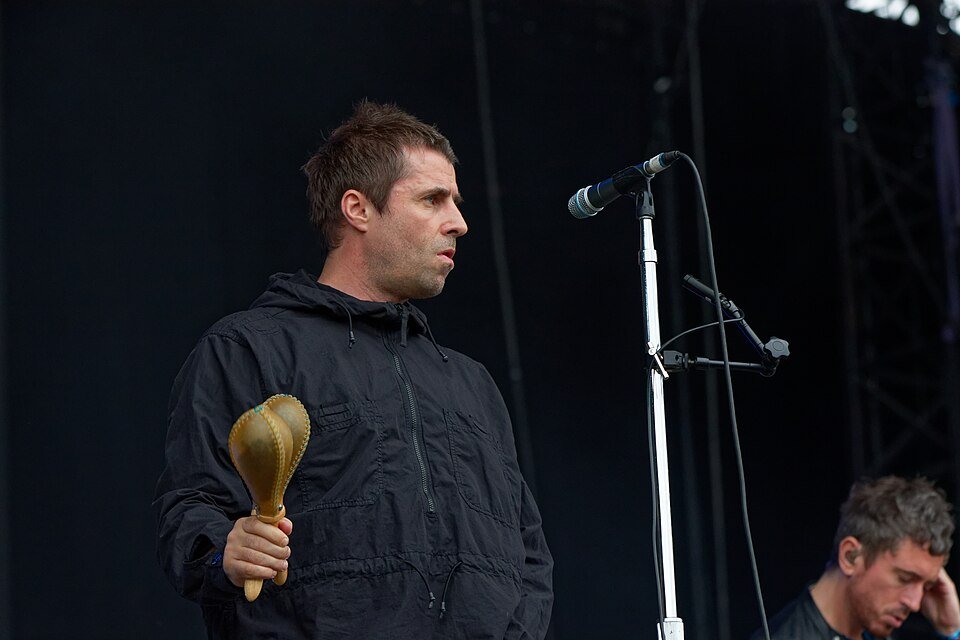
Inside Liam Gallagher’s Fortune: The Voice of Oasis, Priced
Liam Gallagher at a Glance
| Liam Gallagher at a Glance | Details |
|---|---|
| Born | September 21, 1972, in Manchester, England |
| Age | 54 |
| Height | 5 ft 10 in |
| Net Worth | $60 million (Celebrity Net Worth); the Sunday Times Rich List combines both Gallagher brothers at £375 million |
| Weight | No reliable published figure |
| Partner | Debbie Gwyther (together since 2014; engaged 2019; no marriage reported) |
| Children | Four — Molly, Lennon, Gene and Gemma |
| @liamgallagher |
A Burnage Boy, Youngest of Three
Liam Gallagher was born on September 21, 1972, in Manchester, the youngest of the three sons of Thomas Gallagher and Margaret “Peggy” Gallagher. He grew up in Burnage, in the south of the city, in a working-class family that has become one of the most retold backgrounds in British music. He is the younger brother of Paul Gallagher and of Noel Gallagher, the guitarist and songwriter whose arrival in Liam’s band at the start of the 1990s turned a local group into Oasis. School held limited appeal; music, and specifically the singing voice that teachers and friends recognized early, became the route out.
The pre-fame story is short because fame came quickly once the band aligned. Liam fronted a group called The Rain, which became Oasis when Noel joined in 1991 on the condition that he write the material. A demo reached Creation Records, a contract followed, and by the summer of 1994 the younger Gallagher was the most recognizable frontman in the country. The speed of that ascent matters to any account of his finances: the money arrived in a rush in his early twenties, and he spent and divided it in public view, and then — in the part of the story that defines his current fortune — arrived again, three decades later, at a scale nobody had forecast.
How Definitely Maybe Made Oasis Huge
1994–1997: Definitely Maybe, Morning Glory and the Peak
Oasis’s debut, Definitely Maybe (1994), became the fastest-selling debut album in British chart history to that point. (What’s the Story) Morning Glory? (1995) made the band a global act, carrying era-defining singles such as “Wonderwall,” “Don’t Look Back in Anger,” “Some Might Say” and “Champagne Supernova,” and selling in the tens of millions worldwide. The band’s two Knebworth concerts in August 1996 played to a quarter of a million people. Be Here Now (1997) sold at extraordinary speed on release. Liam’s contribution was the voice and the stance: a singer who stood still, hands behind his back, and made stillness look like confrontation. The songwriting was Noel’s; the delivery that sold it to stadiums was Liam’s.
2000–2009: The Long Second Act and the Split
The 2000s brought diminishing commercial returns but continued large-scale touring: Standing on the Shoulder of Giants (2000), Heathen Chemistry (2002), Don’t Believe the Truth (2005) and Dig Out Your Soul (2008) all reached number one in Britain. Behind the scenes, relations between the brothers deteriorated until, in August 2009, Noel left the band hours before a Paris festival performance, and Oasis ended. Liam continued with the remaining members as Beady Eye, releasing Different Gear, Still Speeding (2011) and BE (2013) before that project closed in 2014. Beady Eye’s records sold respectably and its tours played large rooms, but the project carried an unavoidable burden: audiences measured every performance against a catalog its singer had made famous but could not perform in full, and against a songwriting partnership the audience regarded as the real thing. Its closure left Gallagher, in his early forties, without a band for the first time since his teens — the lowest commercial point of his career, and the necessary prelude to what followed. The decade also included a fashion label venture and the first serious public accounting of his finances, when 2015 divorce proceedings disclosed a position far smaller than the public assumed — a figure Celebrity Net Worth records at about $15 million disclosed at that time.
2017–2024: The Solo Rebuild
Liam’s solo debut, As You Were (2017), reached number one in Britain and outperformed expectations, re-establishing him as a headline act in his own right. Why Me? Why Not. (2019) repeated the number-one result, and C’mon You Know (2022) made it three solo chart-toppers. The solo singles built their own repertoire — “Wall of Glass,” “For What It’s Worth” and “Once” from the first two records; “Everything’s Electric,” co-written with Dave Grohl, and “Diamond in the Dark” from the third — and his live album MTV Unplugged, recorded at Hull City Hall, reached number one in 2020, the first release in that series to top the chart in decades. In June 2022 he returned to Knebworth for two solo nights, twenty-six years after the Oasis concerts there — a booking that would have been unthinkable at the Beady Eye stage of the story, and the clearest possible evidence of how completely the solo rebuild had worked. Arena tours, festival headline slots and a Knebworth return in 2022 rebuilt both his audience and his balance sheet; Celebrity Net Worth’s account records his estimated position at roughly $6 million in mid-2024, immediately before the event that changed it. His solo career also demonstrated something the Oasis years had obscured: the voice, detached from his brother’s songs being new, could still fill the largest rooms in the country on catalog and presence alone. Two further projects filled the years before the reunion. In 2024 he released a collaborative record with John Squire, the former Stone Roses guitarist — Liam Gallagher & John Squire reached number one in Britain — and that summer he toured the thirtieth anniversary of Definitely Maybe, performing the debut record in full to arena audiences. Both projects pointed the same way: toward the catalog, and toward the brother who had written it. Noel Gallagher’s net worth profile examines the songwriting half of that original partnership.
2025–2026: The Reunion
In August 2024 the brothers announced the Oasis Live ’25 reunion tour, and in 2025 the band played stadium dates across Britain, Ireland and North America to demand that crashed ticketing queues and filled every seat. Industry estimates placed the brothers’ combined pre-tax earnings from the reunion at roughly $125 million each in gross terms — earnings, not net worth, and recorded here strictly as that. A reunion documentary premiered at Venice in September 2026, and the band announced a Live ’27 tour the same month. Whatever the final accounting, the reunion converted Liam Gallagher from a legacy act with a repaired fortune into one of the highest-earning live performers of the decade.
Debbie Gwyther, Four Children and a Long Engagement
Gallagher’s partner is Debbie Gwyther, formerly his assistant and then his manager. They have been together since 2014 and engaged since 2019; no report of a marriage exists, and this profile records her as his partner, not his wife. His earlier marriages were to Patsy Kensit (1997–2000) and Nicole Appleton (2008–2014). He has four children: Molly Moorish-Gallagher, born in 1998, who first met her father in 2018 and whose own son, born in 2025, made Gallagher a grandfather; Lennon, born in 1999; Gene, born in 2001; and Gemma, born in 2013. His parents, Thomas and Margaret “Peggy” Gallagher, raised the three brothers in Burnage; the brothers have conducted the fraternal relationship at the center of his career — years of public estrangement from Noel, followed by the reunion — with unusual openness on his Instagram account, @liamgallagher, where tour news and family milestones appear alongside the persona his audience expects.
Solo Albums, Reunion Tours and a $60 Million Fortune
Celebrity Net Worth estimates Liam Gallagher’s individual net worth at $60 million, and that solo figure is the headline this profile carries. A second, much larger number requires careful handling: the Sunday Times Rich List of May 2026 placed the two Gallagher brothers together at £375 million — a combined figure for Liam and Noel jointly, their first appearance on the list. This profile flags it as combined here, in the table and in this section, because quoting it as Liam’s alone would overstate his position several times over; it measures the pair’s joint standing, not either man’s individual wealth.
The tracker’s own narrative explains the shape of the $60 million. Disclosures in his 2015 divorce proceedings pointed to a position around $15 million; by mid-2024 the estimate had fallen to roughly $6 million, reflecting years in which settlements, costs and a quieter commercial period absorbed his earnings. The reunion then delivered earnings on a scale estimated at about $125 million pre-tax across the tour — again, earnings rather than wealth, subject to tax, costs and division. Readers should understand the $60 million estimate as what remains, on the tracker’s modeling, after those earnings met those obligations: catalog royalties from one of the best-selling bodies of work in British music, solo recording and touring income since 2017, and the retained share of the reunion windfall. No reliable published inventory of his property or other assets exists, and this profile offers none. One business venture belongs in the record because it consumed real money and real years: in 2009 Gallagher founded Pretty Green, a clothing label named after a Jam song, and built it into a genuine high-street presence with stores across the country before the business hit trouble and entered administration in 2019. The label showed the same pattern as the music career in miniature — a strong instinct for what his audience wanted to wear, undermined by the economics of an industry he did not control. His solo years corrected that imbalance by returning him to the one business he does control: his own voice, on stage, in front of people who pay to hear it.
The Voice That Defined British Guitar Music
Liam Gallagher’s fortune tells an unusual story: earned early, largely dispersed, rebuilt steadily as a solo act, and then transformed by the return of the band that made him. The voice that defined a generation of British guitar music turned out, thirty years on, to be an asset that had appreciated rather than depreciated — the reunion audiences of 2025 included large numbers of fans who were not born when Morning Glory came out.
At 54, with further reunion touring announced, his financial position is more secure than at any point since the 1990s. His voice, the asset underneath everything, has held up under a workload that would finish most singers: three solo records, a live album, anniversary tours and a stadium reunion inside a single decade, all delivered in the same unmistakable register that carried the 1994 debut. Producers and promoters price that reliability. A Liam Gallagher booking means the catalog, the stance and the sound, undiluted — and the reunion proved the market for it spans three generations of ticket buyers. The lasting picture is of a performer whose wealth now rests on the same foundation as his fame: a catalog that refuses to age, and a singer audiences still cross continents to hear deliver it.