How to Get Rid of Fleas on Cats: Step-by-Step Guide (2026)
Quick Answer: To get rid of fleas on cats, use a vet-approved cat flea treatment (topical spot-on, oral tablet, or flea collar), comb your cat daily with a fine flea comb, wash all bedding in hot water, and vacuum your home thoroughly. Never use dog flea products on cats – many contain permethrin, which is toxic and can be fatal to cats. Most infestations clear in 3–4 weeks with consistent treatment.
How to Tell If Your Cat Has Fleas
Cats are excellent groomers, so you might not see the fleas themselves. Look for these signs instead:
- Excessive scratching, licking, or biting at the skin, especially around the neck, base of the tail, and belly
- Tiny black specks (flea dirt) in the fur – place them on a damp paper towel; if they turn reddish-brown, it’s digested blood from fleas
- Hair loss or scabs, particularly along the back and neck
- Pale gums, which can signal anemia in severe infestations (kittens are most at risk – see a vet urgently)
Part the fur and check the skin closely. A flea comb is the most reliable detection tool.
The Flea Life Cycle: Why One Treatment Isn’t Enough
Understanding the flea life cycle explains why a single treatment never finishes the job. Adult fleas on your cat are only about 5% of the total population – the other 95% (eggs, larvae, and pupae) hides in your carpets, bedding, and furniture.
A female flea lays 20–50 eggs a day, which fall off into the environment and hatch within 2–12 days. Larvae feed and grow for 1–3 weeks, then spin cocoons and enter the pupal stage – where they can lie dormant for up to 6 months, completely resistant to insecticides. They hatch when they sense warmth or vibration, which is why infestations seem to “come back” weeks after you thought they were gone.
This is why vets recommend treating continuously for at least 3 months: you need to outlast every cocoon.
Step 1: Treat Your Cat (Cat-Safe Products Only)
This is the most important rule: only use products labeled for cats. Dog flea treatments containing permethrin or pyrethrin can cause seizures and death in cats, even in small amounts.
Safe, vet-recommended options include:
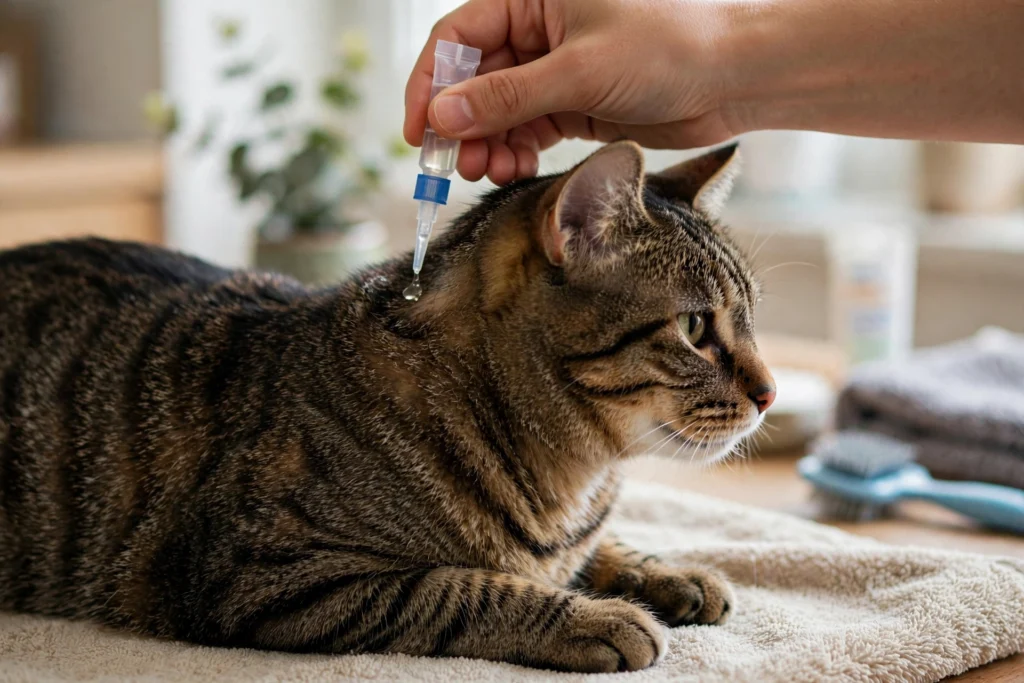
- Topical spot-on treatments (fipronil or selamectin-based) – applied monthly to the skin at the back of the neck where your cat can’t lick it. Part the fur so the liquid reaches the skin, not just the fur.
- Oral flea tablets (spinosad or nitenpyram-based) – fast-acting; some start killing fleas within 30 minutes. Good for cats that won’t tolerate spot-ons.
- Flea collars designed for cats (breakaway style for safety) – provide up to 8 months of continuous protection.
For kittens under 8 weeks old, most chemical treatments aren’t safe – use a flea comb and a warm bath with mild kitten shampoo, and ask your vet for guidance.
How to Apply a Spot-On Treatment Correctly
- Remove the applicator from its packaging and hold it upright.
- Have someone gently hold your cat, or place your cat on a stable surface.
- Part the fur at the base of the skull until you can see skin.
- Squeeze the full contents directly onto the skin in one spot.
- Don’t touch the area until dry, and don’t bathe your cat for 48 hours afterward.
Step 2: Comb and Bathe
- Flea comb daily: Run a fine-toothed flea comb through your cat’s fur, focusing on the neck, base of tail, and belly. Dip the comb in warm soapy water after each pass to drown trapped fleas. Daily combing both removes fleas and lets you monitor whether the infestation is shrinking.
- Bathing: Most cats hate water, so only bathe if your cat tolerates it. Use lukewarm water and a gentle cat shampoo – never dog shampoo or dish soap as a routine treatment. A bath removes some fleas but won’t solve the infestation alone.
Step 3: Treat Your Home
- Vacuum everything: Carpets, rugs, sofa cushions, pet beds, and along baseboards. Vacuuming removes up to 96% of flea eggs and the vibration stimulates pupae to hatch so treatments can work. Empty the vacuum bag or canister outside immediately.
- Wash bedding: Wash your cat’s bedding – and your own, if your cat sleeps with you – in hot water (at least 60°C / 140°F) and dry on high heat. Repeat weekly during an active infestation.
- Consider a home spray: For heavy infestations, use an insect growth regulator (IGR) spray on carpets and soft furnishings. IGRs don’t kill adult fleas but stop eggs and larvae developing, breaking the cycle. Keep cats out of treated rooms until fully dry, and follow label instructions exactly.
Step 4: Treat the Yard (If Your Cat Goes Outside)
If your cat roams outdoors, treat shaded, moist areas of the yard where fleas thrive – under bushes, along fences, and in mulch beds. Keep grass short and remove leaf litter where larvae hide. Outdoor cats pick up new fleas constantly, so ongoing monthly prevention is essential, not optional.
When to See the Vet
Most flea infestations can be handled at home, but see your vet promptly if:
- Your cat has pale gums, lethargy, or rapid breathing (possible flea anemia – an emergency in kittens)
- There are open sores, heavy scabbing, or hair loss that isn’t improving (possible flea allergy dermatitis or secondary infection)
- Your cat is very young, elderly, pregnant, or ill – they may need prescription-strength treatment
- You’ve treated consistently for 4+ weeks with no improvement – the product may not suit your situation
How Long Until the Fleas Are Gone?
With consistent treatment, you should see a big improvement within 1–2 weeks, and full clearance in 3–4 weeks. Don’t stop treatment early – flea pupae can survive in carpets for months and hatch later, causing a “second wave.” This is normal and doesn’t mean the treatment failed. Keep prevention going for at least 3 full months.
Preventing Future Infestations
- Keep your cat on year-round flea prevention, not just in summer – indoor heating lets fleas thrive all year
- Comb regularly to catch new fleas early
- Wash pet bedding weekly
- Treat all pets in the household at the same time – untreated pets become a reservoir that reinfests everyone
FAQs
Can I use dog flea treatment on my cat in an emergency?
No – never. Permethrin-based dog products can kill cats. If you’ve already applied one by mistake, bathe your cat immediately with mild dish soap and lukewarm water and call your vet or an emergency animal poison line right away.
Do indoor cats get fleas?
Yes. Fleas hitchhike in on clothing, other pets, or through window screens. Indoor cats still need year-round prevention.
Are natural remedies like essential oils safe for cats?
Most essential oils (tea tree, lavender, eucalyptus) are toxic to cats. Stick to vet-approved products – “natural” doesn’t mean safe for felines.
How often should I treat my cat for fleas?
Monthly, year-round, without gaps. Stopping in winter is the most common reason infestations return in spring – central heating keeps indoor fleas active all year.
Can fleas make my cat seriously ill?
Yes. Beyond itching, heavy infestations cause anemia (especially dangerous for kittens), flea allergy dermatitis, and can transmit tapeworms and Bartonella (cat scratch fever). This is why prompt, thorough treatment matters.
Conclusion
Getting rid of fleas on cats comes down to four things: a cat-safe treatment on your cat, daily combing, thorough cleaning of your home, and patience through the 3–4 week flea life cycle – with prevention continuing for at least 3 months to outlast dormant pupae. Never cut corners with dog products, and keep prevention going year-round. It’s far easier than fighting another infestation.