
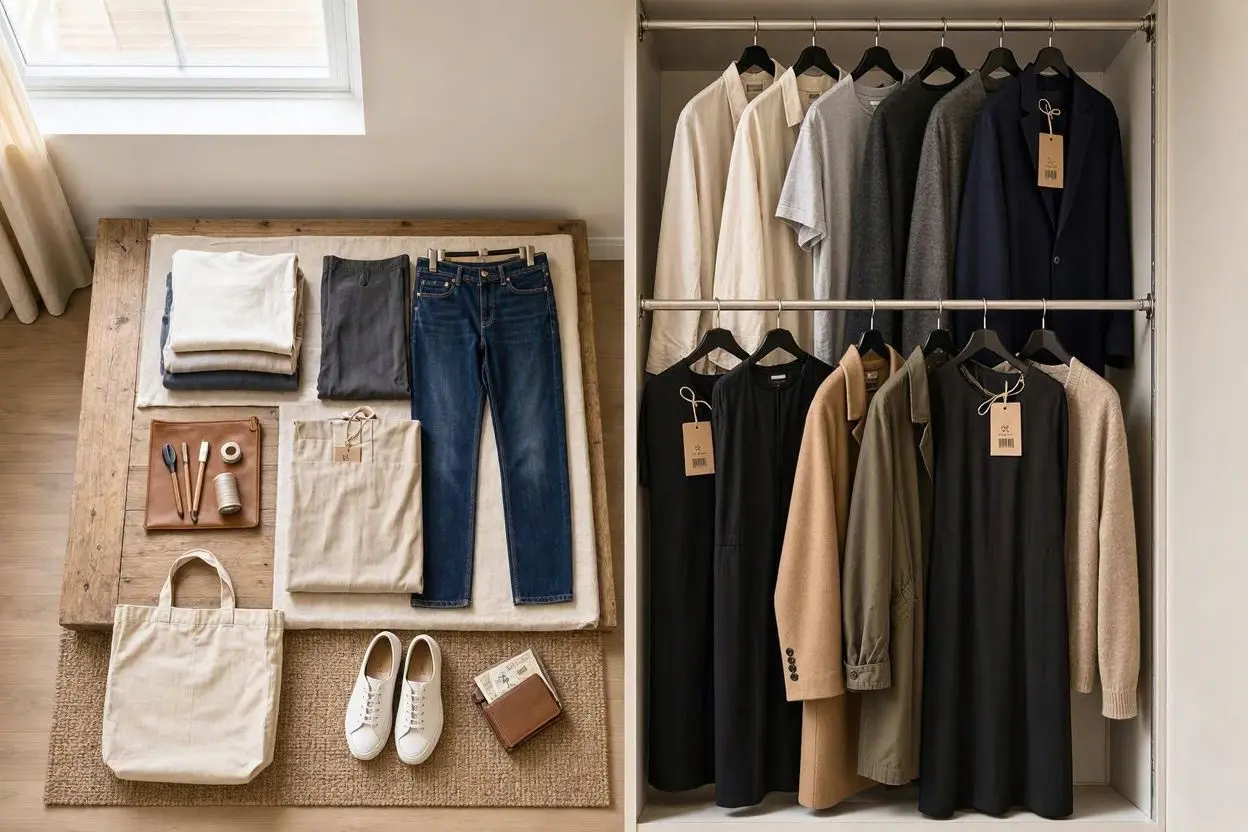
Building a minimalist wardrobe on a budget is a simple way to save money, reduce clutter, and improve your personal style. You do not need expensive clothes or a large shopping budget to look good. With a few essential clothing items, you can create many stylish outfits for different occasions.
A minimalist wardrobe focuses on quality, simplicity, and versatility. Instead of buying clothes you rarely wear, you choose pieces that match your lifestyle and work well together.
Whether you are a student, a working professional, or someone who wants to spend less on fashion, this guide will help you build a minimalist wardrobe without spending too much money.
What Is a Minimalist Wardrobe?
A minimalist wardrobe is a small collection of clothes that you love wearing and can easily mix and match. It usually includes basic shirts, comfortable trousers, versatile jackets, and a few essential accessories.
The main goal is to own fewer clothes while creating more outfit combinations.
For example, a white T-shirt can look casual with jeans or more polished with black trousers and a jacket. This makes it easier to get dressed without buying new clothes every week.
A minimalist wardrobe does not mean wearing the same outfit every day. It means making smart clothing choices that suit your needs.
1. Start by Checking Your Existing Clothes
Before buying anything new, look at the clothes you already own. You may have more useful pieces than you realize.
Take everything out of your wardrobe and sort your clothes into three groups:
- Clothes you wear regularly.
- Clothes you rarely wear but still need.
- Clothes you no longer wear or need.
Keep items that fit properly, feel comfortable, and match your personal style.
You can donate or sell clothes that are still in good condition but no longer suit you. This creates more space and may help you earn some extra money.
Budget tip: Use what you already have before spending money on new clothing.
2. Choose a Simple Color Palette
One of the easiest ways to build a minimalist wardrobe is to choose a few colors that work well together.
Neutral colors are popular because they are easy to combine. These include:
- Black
- White
- Grey
- Beige
- Navy blue
- Brown
You do not need to use every color. Choose two or three main colors that suit your taste and skin tone.
For example, black trousers, a white shirt, and a beige jacket can create several different outfits. You can also add one or two favorite colors to make your wardrobe more personal.
A simple color palette helps you get more use out of every clothing item.
3. Buy Essential Clothing Basics
Wardrobe basics are the foundation of a minimalist wardrobe. These are simple, comfortable pieces that you can wear in different ways.
Here are some affordable wardrobe essentials to consider:

Basic T-shirts
White, black, and grey T-shirts are easy to style with jeans, trousers, and jackets.

Classic Jeans
Choose comfortable jeans in a simple color that works with most of your tops.

A Simple Shirt
A plain button-down shirt is suitable for casual outings, work, and special occasions.

Black or Neutral Trousers
These can be styled with T-shirts, shirts, sweaters, and different types of footwear.

A Versatile Jacket
A simple jacket adds style and provides an extra layer when the weather gets cool.
Start with the items you need most. You do not have to buy everything at once.
4. Set a Clothing Budget
Setting a budget helps you avoid unnecessary shopping. Decide how much money you can comfortably spend on clothing each month.
For example, if your monthly clothing budget is $30, you can save it for a useful item instead of buying several cheap pieces you do not need.
Here are a few ways to manage your clothing budget:
- Make a list before shopping.
- Compare prices at different stores.
- Look for seasonal sales.
- Avoid buying clothes just because they are discounted.
- Save money for items you will wear frequently.
Remember that your budget should match your personal financial situation. Even a small amount can help you build a useful wardrobe over time.
5. Shop Secondhand to Save Money
Secondhand shopping is an affordable way to find clothing for a minimalist wardrobe. Many used clothes are still in excellent condition and can last for years with proper care.
You can explore thrift stores, charity shops, local markets, and online resale platforms.
When shopping for secondhand clothing, check the following:
- Look for stains, holes, and damaged seams.
- Check buttons, zippers, and pockets.
- Make sure the item fits comfortably.
- Choose colors that match your existing wardrobe.
- Avoid items that need expensive repairs.
You may find quality shirts, jackets, jeans, and sweaters at lower prices than new clothing.
The key is to buy useful pieces rather than purchasing something simply because it is cheap.
6. Focus on Fit Instead of Brand Names
Expensive brands are not necessary for a stylish minimalist wardrobe. Clothes that fit well and feel comfortable can look great at almost any price.
Before purchasing an item, check the shoulders, sleeves, waist, and overall length. Clothing should allow you to move comfortably without feeling too tight or too loose.
If a budget-friendly item needs a small adjustment, a simple alteration may improve its fit.
Avoid buying clothes only because a famous brand sells them. Focus on comfort, fit, fabric, and how often you will wear each piece.
7. Create More Outfits With Fewer Clothes
A minimalist wardrobe works best when your clothing items can be combined in different ways.
For example, imagine you own three tops and three bottoms. If each top works with every bottom, you can create nine basic combinations.
Here is a simple outfit guide:
| Clothing item | Outfit idea |
|---|---|
| White T-shirt | Blue jeans and sneakers |
| White T-shirt | Black trousers and a jacket |
| Black T-shirt | Blue jeans and simple shoes |
| Button-down shirt | Black trousers and loafers |
| Neutral sweater | Jeans and ankle boots |
You can also change your footwear, bag, belt, or accessories to create a different look.
Before buying something new, ask yourself whether it works with at least three items you already own. This simple rule can help you avoid unnecessary purchases.
8. Avoid Fast Fashion Impulse Buying
Fast fashion makes it easy to buy trendy clothes at low prices. However, frequent shopping can increase your spending and fill your wardrobe with items you rarely wear.
You do not have to avoid every trend. Instead, think carefully before purchasing something new.
Try the 24-hour rule: when you see an item you like, wait at least one day before buying it. For more expensive purchases, give yourself a longer period to decide.
Ask yourself these questions:
- Do I really need this item?
- Can I wear it with my existing clothes?
- Is it comfortable?
- Will I wear it regularly?
- Does it fit my budget?
These questions can help you make better fashion choices and reduce unnecessary spending.
9. Take Care of Your Clothes
Taking care of your clothing helps you get more value from your money. Even affordable clothes can last longer when you wash, dry, and store them properly.
Follow the care instructions on clothing labels. Avoid washing clothes more often than necessary, and use suitable washing settings for delicate fabrics.
Here are some simple clothing care tips:
- Wash clothes according to their care labels.
- Repair loose buttons and small tears.
- Fold sweaters instead of hanging them.
- Store seasonal clothing properly.
- Keep shoes clean and dry.
- Avoid using too much heat when drying clothes.
Small habits can help protect your wardrobe and reduce the need to replace items frequently.
10. Build Your Wardrobe Slowly
You do not need to create a complete minimalist wardrobe in one shopping trip. Building it slowly gives you time to understand your style and identify what you actually need.
Start with the clothes you wear most often. After that, add items that fill gaps in your wardrobe.
For example, if you already own several T-shirts but lack suitable trousers, focus on finding a comfortable pair of trousers instead of buying more tops.
A slow approach also allows you to compare prices and wait for better deals.
The goal is not to own the smallest number of clothes possible. The goal is to create a practical wardrobe that works for your daily life.
A Simple Minimalist Wardrobe Checklist
Use this checklist to plan your affordable capsule wardrobe. Adjust it according to your lifestyle, climate, and personal preferences.
Wardrobe essentials
0 of 82–3 basic T-shirts1–2 pairs of jeans1 pair of neutral trousers1 versatile shirt1 sweater or layering piece1 jacket suitable for your climate1 pair of comfortable everyday shoesA few useful accessoriesReset checklist
This is only a starting point. You may need fewer or more items depending on your work, daily activities, and local weather.
Conclusion
Learning how to build a minimalist wardrobe on a budget does not have to be difficult. Start by organizing your existing clothes, choosing a simple color palette, and investing in versatile wardrobe basics.
Shop secondhand when possible, compare prices, and avoid buying items you do not need. Most importantly, focus on comfort, fit, and clothing that matches your personal style.
A minimalist wardrobe is not about following strict fashion rules. It is about making thoughtful choices, saving money, and feeling confident in the clothes you already own.
With a little planning and patience, you can build a stylish and practical wardrobe without spending a fortune.
Frequently Asked Questions (FAQs)
1. How do I build a minimalist wardrobe on a budget?
Start by organizing your existing clothes and identifying the items you need. Choose versatile basics, shop during sales, and consider secondhand clothing. Buy only pieces that match your style and budget.
2. How many clothes should a minimalist wardrobe have?
There is no fixed number of clothes for a minimalist wardrobe. Some people prefer 20–30 items, while others need more for work, different seasons, and daily activities. Choose a number that suits your lifestyle.
3. What are the essential items for a minimalist wardrobe?
Essential items often include basic T-shirts, jeans, neutral trousers, a simple shirt, a versatile jacket, comfortable shoes, and a few accessories. Your ideal selection depends on your personal needs.
4. What colors are best for a minimalist wardrobe?
Black, white, grey, beige, navy blue, and brown are popular choices. These neutral colors are easy to mix and match, helping you create more outfits with fewer clothes.
5. Can I build a minimalist wardrobe with cheap clothes?
Yes. You can build a minimalist wardrobe with affordable clothing. Focus on comfortable fits, useful designs, suitable fabrics, and items that work well with your existing clothes.
6. Is a capsule wardrobe the same as a minimalist wardrobe?
They are closely related but not exactly the same. A capsule wardrobe is a small collection of clothing designed to create many outfits. A minimalist wardrobe focuses more broadly on owning fewer, more useful possessions, including clothing.
7. How can I make more outfits with fewer clothes?
Choose clothes in coordinating colors and simple styles. Make sure your tops, bottoms, and outerwear work together. Changing shoes and accessories can also help you create different looks.
8. How often should I buy new clothes?
There is no fixed schedule. Buy new clothes when you need to replace worn-out items or fill a genuine gap in your wardrobe. Planning purchases can help you avoid unnecessary spending.


Leave a Reply