Why Do Fireflies Glow in Summer? The Chemistry of Light
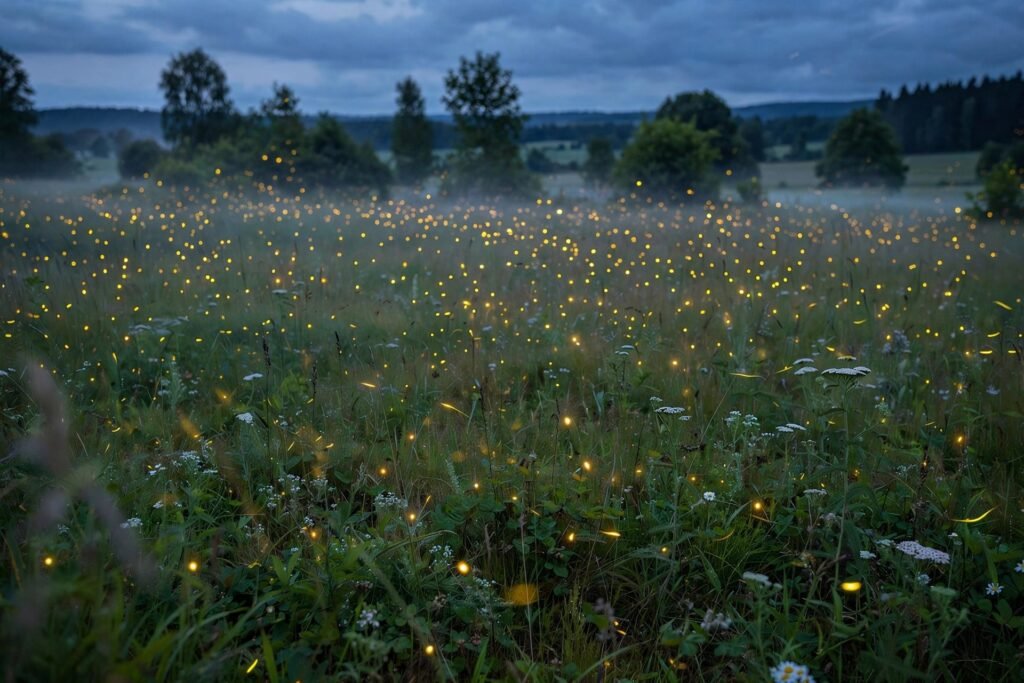
On a warm June evening, just after the light drains from the sky, backyards across the eastern United States begin to flicker. First one flash, then a dozen, then hundreds — cold green-gold sparks drifting through the dark, each one a beetle carrying a chemical lantern. Fireflies (or lightning bugs) are among the most beloved insects on Earth, and their glow is one of nature’s great unsolved-in-progress mysteries — a living light with no heat, no bulb, and an efficiency human engineers can only envy.
Why do they glow? The short answer is sex and warning. The long answer involves some of the most elegant biochemistry in nature, a mating language written in light pulses, and a conservation story that should worry anyone who loves summer nights.
The Chemistry: Cold Light
Firefly light comes from a chemical reaction in the lantern — specialized organs in the abdomen. The ingredients: luciferin (the fuel molecule), luciferase (the enzyme catalyst), ATP (cellular energy), and oxygen. When luciferase brings luciferin and oxygen together using ATP energy, the reaction releases photons — light — instead of heat. This is bioluminescence, and it is astonishingly efficient: nearly 100 percent of the energy becomes light, versus about 10 percent for an incandescent bulb (the rest wasted as heat).
The firefly controls the flash with exquisite precision by gating oxygen flow to the lantern cells — likely via nitric oxide signaling that briefly opens the oxygen supply. Light on, light off, in patterns timed to the tenth of a second. Different species produce different colors, from green-yellow to orange, determined by slight variations in the luciferase enzyme structure — the same basic reaction, tuned like an instrument.
Why Summer?
Fireflies spend most of their lives as larvae — 1-2 years underground or in leaf litter, hunting snails, worms, and slugs (firefly larvae are carnivorous predators, a fact that surprises everyone). They pupate in late spring and emerge as adults in early summer with one mission and a lifespan of just 2-4 weeks: mate. The glow is the adult’s brief, brilliant reproductive advertisement — which is why the show is seasonal, concentrated, and over by August in most regions.
The Language of Light: Mating Codes
Each of North America’s 170+ firefly species flashes a distinct code — and the females are watching for exactly the right one. The common eastern firefly (Photinus pyralis) male flies in a J-shaped swoop, flashing for half a second; a receptive female, perched in the grass, answers with a single short flash about two seconds later, timed precisely. The male homes in on her response, flashing and adjusting, until they meet.
The system has cheaters. Females of the Photuris genus — the “femme fatale” fireflies — mimic the response flashes of Photinus females to lure in males… and eat them. It is aggressive mimicry, and it works because the language of light is trusted. The stolen males provide Photuris females with defensive chemicals (lucibufagins) they cannot make themselves — a protection racket written in flashes.
Light does double duty as warning. Fireflies taste terrible — those lucibufagin defensive steroids make predators vomit — and the glow advertises the fact. Bats and spiders learn to associate the flash pattern with a disgusting meal and leave fireflies alone. Even the larvae glow, faintly, from the moment they hatch: a warning lit before they can even fly.
Why Are There Fewer Than There Used to Be?
Ask anyone over forty about childhood summers and you will hear it: there used to be more. The decline is real and documented, driven by three forces:
Light pollution. The existential threat. Firefly mating depends on detecting faint flashes in darkness; artificial light — streetlights, security floods, illuminated billboards — jams the signal. Research shows even moderate light pollution disrupts flash communication and reduces mating success. A yard blasted with LED floods is a firefly desert, however “natural” the landscaping.
Habitat loss. Fireflies need what suburbs destroy: moist leaf litter for larvae, unmowed field edges, wetlands and stream banks, and dark corridors between habitats. The manicured lawn is a food desert for larval fireflies — no leaf litter, no snails, no prey.
Pesticides. Broad-spectrum insecticides and lawn grub treatments kill firefly larvae indiscriminately. A single grub-control application can wipe out the larval population that would have become next summer’s show.
How to Bring Them Back to Your Yard
The firefly-friendly yard is gloriously low-maintenance:
Kill the lights. Turn off unnecessary outdoor lighting, or switch to motion-sensor lights that default to dark. Use warm-colored bulbs (amber/red) where light is needed — they disrupt fireflies less than cool white LEDs. Close blinds facing the yard during peak firefly hours (dusk to about 10 p.m.).
Leave the leaves. Keep a section of yard — a back corner, under trees — with undisturbed leaf litter and logs. This is larval habitat, the nursery for next year’s lights. Mow less, mow higher, and leave field edges unmowed through summer.
Skip the pesticides. No grub treatments, no broad-spectrum sprays. Accept some lawn imperfections; the trade is lightning bugs.
Add moisture. A small pond, rain garden, or even a consistently damp low area helps — many species’ larvae need moist soil. Avoid mosquito dunks with broad insecticides; use BTI-based products that target mosquito larvae specifically.
Results take patience — you are rebuilding a two-year larval cycle — but yards converted to firefly habitat often see returns within 2-3 seasons. And the darker yard has side benefits: better stargazing, lower electric bills, and the kind of summer evenings worth backyard movie nights under. If you are looking for more ways to enjoy summer outdoors without spending, our roundup of free things to do in a big city includes firefly walks and night-sky programs.
Fireflies in Science and Culture
Beyond their beauty, fireflies are scientific workhorses. Luciferase is one of biotechnology’s most important tools — the luciferin-luciferase reaction is the basis for ATP detection assays used in medical diagnostics, food safety testing, and hygiene monitoring worldwide. Every time a hospital verifies a surface is clean with a bioluminescence swab, it is using firefly chemistry.
Culturally, they are unmatched: the symbol of summer’s brevity in Japanese literature (hotaru), the emblem of countless childhood memories, and — in a nice symmetry — a flagship species for dark-sky conservation. Protecting fireflies means protecting darkness, and darkness is becoming one of the rarest habitats on Earth.
The Smithsonian (si.edu) and the National Park Service (nps.gov) both maintain firefly watching guides and research summaries, including the famous synchronous firefly displays in Great Smoky Mountains National Park each June.
Conclusion
Fireflies glow because chemistry became language: luciferin and luciferase producing cold light, shaped by evolution into species-specific mating codes and predator warnings, performed for a few weeks each summer by beetles living out their brief adult lives. They are fading not from mystery but from light pollution, habitat loss, and pesticides — all reversible, all addressable in a single backyard. Turn off the floods, leave the leaves, skip the spray. The lightning bugs will find you.
Frequently Asked Questions
How do fireflies produce light?
A chemical reaction in abdominal lantern organs: the enzyme luciferase catalyzes luciferin with oxygen and ATP, releasing photons instead of heat. The firefly controls flashing by gating oxygen flow, achieving near-100% energy-to-light efficiency.
Why do fireflies flash in patterns?
Each species has a distinct flash code for mating — males broadcast species-specific patterns and receptive females answer with precisely timed responses. The patterns prevent cross-species mating confusion.
Are fireflies declining?
Yes, documented declines are driven by light pollution (which jams mating signals), habitat loss (manicured lawns destroy larval habitat), and pesticides (grub treatments kill larvae). All three are reversible at the yard scale.
How can I attract fireflies to my yard?
Turn off or motion-sensor outdoor lights, leave leaf litter undisturbed, avoid pesticides, mow less, and maintain some moist soil or water features. Allow 2-3 seasons for the larval cycle to rebuild.
Do fireflies bite or sting?
No. Adult fireflies do not bite humans; their glow is a mating signal and predator warning. The larvae are predators of snails and worms, not people.