Why Lake Erie Is the Shallowest Great Lake: The Geology
Stand on the shore of Lake Superior and you stare into 1,300 feet of cold dark water. Stand on the shore of Lake Erie and the bottom is, on average, just 62 feet below you — the lake’s deepest point barely reaches 210 feet. Erie is the shallowest of the Great Lakes by an enormous margin, and that single fact explains almost everything distinctive about it: its warmth, its storms, its algae blooms, and its mood swings. But why is it so shallow? The answer is written in ice, rock, and 14,000 years of geologic history.
It Was Never Dug As Deep: The Glacial Story
All five Great Lakes are glacial excavations — basins gouged by continent-scale ice sheets during the last ice age. But the glaciers didn’t dig evenly. The ice lobes that carved the lakes followed the path of least resistance, and resistance depended on the bedrock. The deep basins of Superior, Michigan, and Huron were carved into relatively soft rock structures and ancient rift valleys that gave the ice something to bite into. Erie’s basin, by contrast, sits on tougher, more resistant bedrock — primarily dolomite and limestone of the Michigan Basin’s eastern edge — that the glaciers could scour but not deeply excavate.
Think of it as the difference between scooping ice cream and scraping a frozen pizza. The ice sheets were the same; the substrate wasn’t. The U.S. Geological Survey’s mapping of Great Lakes geology shows Erie’s basin as a broad, shallow depression rather than the deep glacial troughs of its siblings.
Shape Matters: Erie’s Bathtub Geometry
Erie isn’t just shallow — it’s shaped like a tilted bathtub, deepening gently from west to east. The western basin averages barely 24 feet deep; you could stand a three-story building on the bottom and see its roof. The central basin runs about 60 feet; only the eastern basin, near Buffalo, drops past 100 feet to the lake’s 210-foot maximum. No other Great Lake has this extreme gradient — Superior’s average depth is 483 feet, and even shallow Huron averages 195.
This geometry is a legacy of the ice flow direction. Glacial lobes moved generally west-to-east through the Erie basin, entering over a resistant rock sill near what is now the Detroit River area and deepening their cut as they went. The result: a lake that gets progressively deeper toward its eastern outlet at Niagara — which is exactly why the Niagara River exists where it does, draining the shallow lake over the escarpment.
Shallow Means Volatile: Why Depth Changes Everything
Erie’s shallowness makes it the most thermally responsive of the lakes — it warms fastest in spring and summer, and cools fastest in fall. Surface temperatures regularly reach the high 70s°F in summer, making Erie the warmest Great Lake and the most popular for swimming. But that warmth is a double-edged sword: warm, shallow, nutrient-rich water is ideal for algal blooms, which is why Erie’s western basin — the shallowest part, receiving farm runoff from the Maumee River watershed — suffers the region’s worst harmful blooms.
Shallowness also makes Erie the stormiest lake. Wind transfers energy to water more effectively in shallow basins, so Erie builds dangerous waves faster than its deeper siblings — the lake that sank ships in November gales did so partly because 15-foot waves in 60 feet of water are far more violent than the same waves over 500 feet. The Environmental Protection Agency’s Great Lakes monitoring tracks how Erie’s rapid warming and cooling cycles amplify both ecological and weather volatility.
Humans Made It Shallower (Slightly)
There’s a modern footnote: sediment. Agricultural runoff and shoreline development have deposited silt into Erie’s western basin for over a century, measurably reducing depth in some areas. Dredged shipping channels — maintained at 27+ feet for freighters — are now deeper than much of the natural lakebed around them, an odd inversion where the artificial is deeper than the natural. Conservation tillage and wetland restoration in the Maumee watershed are slowly reversing the sediment trend, but on geologic timescales, human siltation is a blink.
Could Erie Ever Get Deeper?
Not naturally, and not soon. The basin’s shape is set in bedrock; only another ice age could re-carve it, and that’s not on any relevant schedule. Isostatic rebound — the land still rising after the glaciers’ weight lifted, about a foot per century in parts of the basin — actually tilts the lake slightly over millennia, but the effect on depth is negligible for human purposes. Erie will be the shallow Great Lake for as long as anyone reading this is concerned with.
That permanence is worth appreciating. Erie’s shallowness gives the region its warmest beaches, its most productive fishery (shallow water grows more fish-supporting life), and its most dramatic seasonal transformations — including the spectacular sight of the lake freezing nearly shore-to-shore in cold winters, something the deep lakes almost never do. For a different perspective on the region’s waters, see the best way to see Niagara Falls — the waterfall that exists because Erie ends where the deep cut begins. And since lake water quality affects millions of taps, it’s worth knowing how tap water safety is assessed wherever you travel.
Erie’s Shallow-Water Superpower: The Fishery
There is an upside to being shallow that anglers know well: Erie is the most biologically productive of the Great Lakes. Sunlight reaches more of the water column, warming it and fueling the food web from the bottom up. The lake supports a legendary walleye fishery — fisheries biologists have called its walleye population one of the finest in the world — plus smallmouth bass, perch, and steelhead runs that draw anglers from across the country. Depth builds mystery; shallowness builds life, and Erie’s charter fishing industry is the economic proof.
Conclusion
Lake Erie is the shallowest Great Lake because glaciers carving through resistant bedrock couldn’t dig it as deep as its siblings, leaving a tilted, bathtub-shaped basin that deepens only toward its eastern outlet. That 62-foot average depth explains Erie’s warm summers, violent storms, algal blooms, and productive fisheries — the lake’s entire personality flows from its geology. Shallow isn’t lesser. It’s just different, and in Erie’s case, dramatically so.
Frequently Asked Questions
How deep is Lake Erie compared to the other Great Lakes?
Erie averages 62 feet deep with a 210-foot maximum. By comparison, Superior averages 483 feet, Michigan 279, Huron 195, and Ontario 283. Erie is by far the shallowest.
Why is Lake Erie so warm in summer?
Its shallow depth means less water volume to heat — solar energy warms the full water column quickly, with surface temperatures regularly reaching the upper 70s°F.
Is Lake Erie getting shallower?
Slightly, in parts of the western basin, due to sediment from agricultural runoff — but the change is measured in inches over decades, not feet. The basin’s bedrock shape is permanent.
Can you see the bottom of Lake Erie?
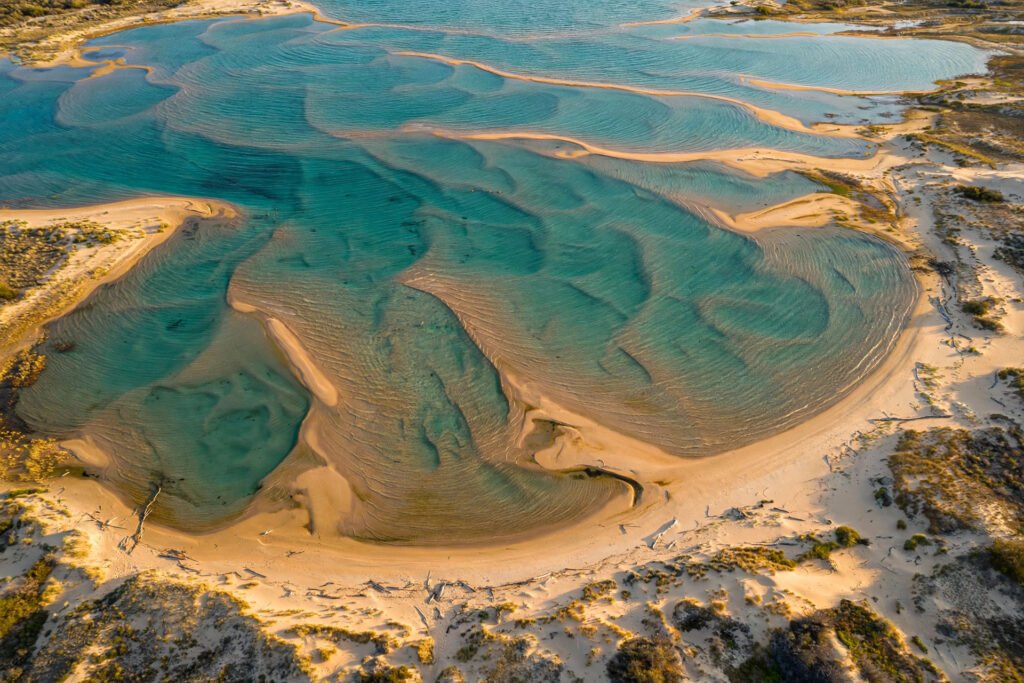
In the western basin on calm, clear days, yes — large areas are under 25 feet deep with sandy bottoms visible from boats. It’s the only Great Lake where that’s routinely possible.
Does Lake Erie’s shallowness cause more storms?
Yes. Wind builds waves faster and more violently over shallow water, making Erie the most dangerous Great Lake for boaters during storms despite being the smallest by volume.