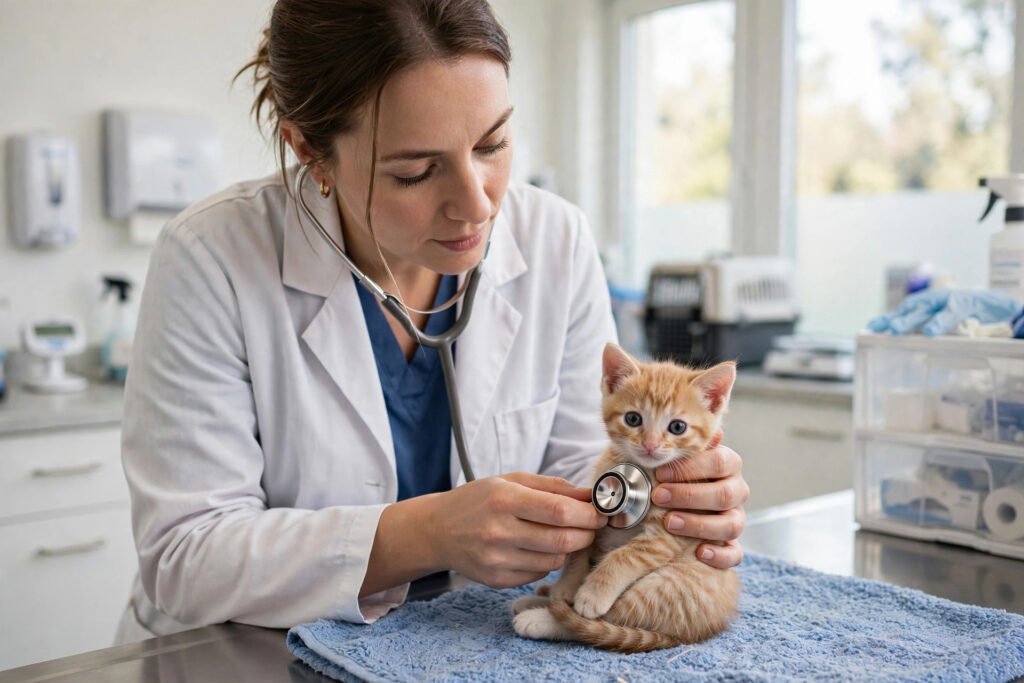
When Should Kittens Get Their First Vet Checkup? (Guide)
You just brought home an eight-week-old kitten — a tiny, chaotic miracle — and now you are wondering when this fragile creature needs to see a vet. Too early and you stress a baby that is barely settled; too late and you miss the window for critical vaccinations, parasite treatment, and the baseline health assessment that catches congenital issues while they are still fixable. The timing of a kitten’s first vet visit matters more than most new owners realize.
Here is exactly when kittens should get their first vet checkup, what happens at each early visit, the vaccination schedule your vet will follow, and the warning signs in a new kitten that mean “go now, not next week.”
When: Within the First Week Home
The answer is simple: schedule the first vet visit within a few days of bringing your kitten home — ideally within 48 to 72 hours, and no later than the first week. This first visit is not primarily about vaccinations (though those start soon). It is a comprehensive baseline: the vet confirms the kitten’s age and weight, checks for congenital issues (heart murmurs, hernias, cleft palate), screens for parasites, and establishes the health record everything else builds on.
This timing also protects you. Reputable breeders and shelters provide health guarantees with short windows — often 72 hours to two weeks — requiring a vet exam to validate. If the exam reveals a serious congenital problem, you need that documentation inside the guarantee period. And if you adopted from a shelter, the first visit confirms the shelter’s intake exam and vaccination records match the kitten in your arms.
What Happens at the First Visit
The nose-to-tail exam
Expect a thorough physical: weight and body condition, eyes and ears, mouth and teeth (checking bite alignment and retained baby teeth later), heart and lung sounds, abdominal palpation, skin and coat assessment, and a check for fleas, ticks, and ear mites. The vet will estimate age from weight, teeth, and development — important because vaccine timing keys off age.
Parasite screening and treatment
Nearly all kittens have intestinal parasites — roundworms especially, transmitted through the mother’s milk. A fecal test identifies them, and deworming starts immediately — the Cornell Feline Health Center details the parasite protocols behind this schedule —, typically repeated two to three times at two-to-three-week intervals. Flea treatment begins if needed. This is routine, not alarming — but untreated parasites stunt growth and, in heavy infestations, can be dangerous.
The care plan
You will leave with a vaccination schedule, a spay/neuter timeline, nutrition guidance, and litter-box and behavior basics. Bring questions: the first visit is your best opportunity for unhurried advice. Ask about pet insurance — enrolling a healthy kitten now, before any pre-existing conditions exist, is the cheapest it will ever be. And if you are still deciding, honestly assess whether a pet fits a busy lifestyle — a kitten is a 15-plus-year commitment, not a trial. The same cost-awareness that informs planning for vet bills anywhere applies here: ask for an itemized estimate and plan early rather than scrambling later.
The Kitten Vaccination Schedule
Core vaccinations follow a series because maternal antibodies — the American Association of Feline Practitioners publishes the guidelines most vets follow — — passed through the mother’s milk — interfere with early vaccines unpredictably. The series ensures protection takes hold as maternal immunity fades. The standard schedule:
6–8 weeks: first FVRCP
The first “distemper” combination vaccine covers feline viral rhinotracheitis, calicivirus, and panleukopenia. Often given by the breeder or shelter before you take the kitten home — confirm and get records.
9–12 weeks: FVRCP booster, plus FeLV discussion
The second FVRCP booster, and your vet will discuss feline leukemia virus (FeLV) vaccination based on lifestyle — recommended for kittens that will go outdoors or live with FeLV-positive cats, increasingly recommended for all kittens given their unpredictable futures.
12–16 weeks: final boosters and rabies
The final FVRCP in the series and the rabies vaccine (required by law in most states, including Michigan). After this series, boosters move to annual or triennial schedules depending on the vaccine and local law. Your vet will also discuss FIV testing, especially for shelter kittens of unknown background.
Spay/Neuter Timing
Most veterinarians recommend spaying or neutering between 4 and 6 months — before the first heat cycle in females, which can occur as early as 4 months. Early spay/neuter is safe, routine, and dramatically reduces the risk of mammary cancer and eliminates pyometra risk in females. Pediatric spay/neuter (as young as 8 weeks) is practiced by many shelters. Unless your vet advises otherwise for a specific medical reason, the 4-to-6-month window is the standard — and an intact kitten that escapes can produce a litter shockingly young.
Warning Signs: Go Now, Not Next Week
Kittens are fragile, and they decline fast. Seek prompt veterinary care — same-day, not “at the next appointment” — for: refusal to eat for more than 12 hours (kittens can develop fatal hepatic lipidosis quickly), persistent diarrhea or vomiting, lethargy or weakness, difficulty breathing, discharge from eyes or nose with sneezing (upper respiratory infections spread fast in kittens), a distended belly with visible discomfort, or any injury. Emergency signs — trouble breathing, seizures, collapse, uncontrolled bleeding — mean the emergency clinic immediately.
Between visits, monitor the basics: steady weight gain (kittens should gain roughly half an ounce to an ounce daily in early weeks), good appetite, playful energy between naps, and normal litter-box habits. You are the early-warning system — the vet sees the kitten for minutes; you see them for hours. If holiday travel is in your future, plan kitten care early — from trusted sitters to pet-friendly hotels that do not charge huge fees if the kitten travels with you.
Conclusion
Kittens should get their first vet checkup within the first week home — within 48 to 72 hours is ideal — for a baseline exam, parasite screening, and care planning, followed by the FVRCP series at 6–8, 9–12, and 12–16 weeks plus rabies, with spay/neuter at 4 to 6 months. Do not wait for problems to appear: the first visit catches the congenital and parasitic issues that are cheapest to fix early, and it starts the preventive-care relationship that keeps your cat healthy for 15-plus years. The tiny miracle on your couch is counting on you to make the appointment.
Frequently Asked Questions
How soon after adoption should a kitten see a vet?
Within the first week, ideally 48 to 72 hours. This validates health guarantees, establishes a baseline, and starts parasite treatment — do not wait for the vaccination appointment to make first contact.
What shots does a kitten need and when?
FVRCP (distemper combination) at 6–8, 9–12, and 12–16 weeks; rabies at 12–16 weeks; FeLV based on lifestyle risk. Your vet tailors the plan, but this core series is standard.
How much does a kitten’s first vet visit cost?
Typically $75 to $150 for the exam plus fecal testing, with the full first-year vaccine series, deworming, and spay/neuter bringing first-year veterinary costs to roughly $600 to $1,000. Low-cost clinics can reduce this substantially.
When should kittens be spayed or neutered?
Between 4 and 6 months for most kittens, before the first heat. Pediatric altering from 8 weeks is common in shelters and considered safe. Discuss timing with your vet.
My kitten is sneezing. Is it an emergency?
Occasional sneezing with clear discharge and normal energy is usually mild — monitor. Persistent sneezing with colored discharge, lethargy, appetite loss, or eye involvement warrants prompt vet attention; upper respiratory infections can escalate quickly in kittens.