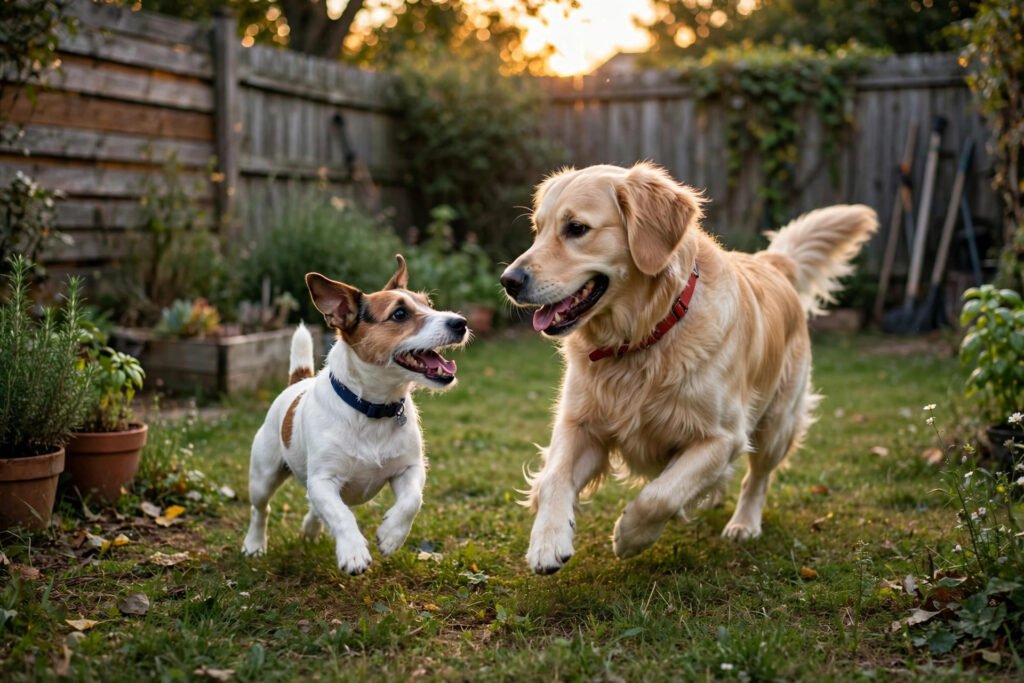
Is a Second Dog a Good Idea for Your First Dog? (Guide)
Your dog is perfect. Your dog is also lonely when you are at work, according to the guilt you feel every morning at the door. So the thought arrives, seductive and simple: get a second dog! A built-in best friend! Twice the love! It is one of the most common impulses in pet ownership — and one of the most consequential decisions, because a second dog does not halve your workload. It more than doubles it.
Here is the honest framework for deciding: the real reasons to get a second dog, the reasons that backfire, how to know your first dog is actually ready, and the practical math — money, time, space — that determines whether two dogs means twice the joy or twice the chaos.
Good Reasons to Get a Second Dog
Your first dog genuinely loves other dogs
Some dogs are social butterflies who light up at every canine encounter, play beautifully at daycare, and seem bored as an only dog despite plenty of human attention. The American Kennel Club notes that successful multi-dog households start with honest temperament assessment, not wishful thinking. For these dogs, a compatible companion is a real quality-of-life upgrade. The key word is compatible — more on choosing below.
You have the resources for two
Time, money, space, and energy — all must scale. Two dogs means double vet bills (budget $1,000 to $2,000-plus per dog annually for routine care alone), double food, double training, and walks that take longer or require more management. If those numbers work comfortably, not barely, the practical foundation exists.
You want to, for you
“I want another dog” is a valid reason — provided it is honest and not outsourced to the first dog’s supposed needs. Owners who genuinely want two dogs, with eyes open about the work, are usually happy with the decision.
Bad Reasons That Backfire
To fix the first dog’s behavior problems
The most common and most disastrous reason. A second dog does not cure separation anxiety, reactivity, destructiveness, or poor training — it gives you two dogs with problems, and the new dog often learns the old dog’s bad habits. Fix the first dog’s issues first, then consider adding — the ASPCA’s multi-pet household resources cover the common pitfalls.
Because the first dog is old and you are pre-grieving
Getting a “replacement” before the senior passes often backfires: the puppy’s energy stresses the senior’s final months, and the older dog’s decline plus a demanding puppy is emotionally brutal. Grieve, then decide with a clear head — or consider whether your senior would actually enjoy a calm adult companion rather than a puppy.
Because puppies are cute together
Two puppies at once — “littermate syndrome” territory even with unrelated pups — bond to each other instead of to you, making training exponentially harder. The recommended gap is at least a year, ideally two, with the first dog reliably trained before the second arrives.
Is Your First Dog Ready?
The readiness checklist: reliably house-trained, solid basic obedience (sit, stay, recall, loose-leash walking), no unresolved reactivity or aggression, comfortable with other dogs in the home (foster a dog short-term to test this — it is the single best trial run), and at least 18 to 24 months old with training proofed. A first dog that is itself still learning cannot mentor a newcomer; you will be training two beginners simultaneously.
Consider the pairing deliberately. Opposite sexes tend to coexist most easily; two intact males are the highest-conflict combination. A significant age gap (senior plus puppy) can work but demands careful management: neutral-ground first meetings, separate feeding stations and resting spaces from day one, and supervised integration over weeks rather than days.
The Practical Math
Money
Double everything: food ($400 to $800 per dog annually), routine vet care ($300 to $600 per dog), preventatives, grooming, toys, and the emergency fund — which should now cover two potential $5,000 emergencies, not one. Pet insurance for two dogs runs $60 to $140 monthly. Boarding two dogs costs nearly double. Run the full annual number before deciding; “we will figure it out” is how dogs end up rehomed.
Time
Training a second dog takes as long as training the first — they do not learn by osmosis. Walks take longer (or happen separately during training phases). Vet appointments double. The daily time cost of two dogs is roughly 1.5 to 2 times one dog, not the same. Be honest about your schedule: the same clear-eyed assessment behind deciding whether a pet fits a busy lifestyle applies with double weight here.
Space and logistics
Two large dogs in a studio apartment is a different proposition than two small dogs in a house with a yard. Consider: separate feeding areas, crate space, car transport (does your vehicle fit two crates, and how will you handle the doubled shedding and mud?), and rental or HOA pet limits — many allow two but not three, which matters for future-you. The everyday logistics of keeping your car clean with kids and pets get twice as relevant with a second dog along for the ride.
Making Two Dogs Work
Train separately before training together — each dog needs individual sessions to learn reliably. Feed separately always; food is the top inter-dog conflict trigger. Give each dog one-on-one time with you daily; the first dog’s relationship with you must not feel diluted. Maintain the first dog’s routines exactly — their life should change as little as possible. And budget a decompression period: the first month is management-heavy, and that is normal.
The daily rhythm of two
Plan the logistics of an average day before deciding. Two dogs means morning walks that take longer (or happen in shifts during training), double the feeding stations to manage, and evening routines where each dog gets individual attention. Boarding, daycare, and vet visits all double in cost and complexity — call your vet and preferred boarder for two-dog pricing before committing, since multi-pet discounts vary widely. The happiest two-dog households are the ones where the humans did this math honestly and still said yes.
Conclusion
A second dog is a great idea when your first dog is well-trained and genuinely social, your behavior motivations are honest (not fixing problems or pre-grieving), and the money, time, and space math works comfortably. It is a bad idea when used as a behavior fix, when the first dog is still learning, or when resources are stretched. Get the timing and the pairing right, and two dogs is not double the work — it is a pack, and there is nothing quite like watching your dogs become each other’s favorite thing.
Frequently Asked Questions
What is the best age gap between dogs?
Two to four years is the sweet spot: the first dog is trained and mature but still young enough to enjoy a companion. Gaps under a year create training chaos; very large gaps pair a demanding puppy with a senior who needs peace.
Should I get the same breed or a different one?
Temperament compatibility matters more than breed. That said, similar energy levels and play styles predict harmony — a mellow companion breed and a high-drive working breed often frustrate each other regardless of individual sweetness.
Is it harder to train two dogs?
Training the second dog takes the same effort as the first, but managing two simultaneously — especially during the new dog’s learning phase — is significantly more work. Train separately, proof individually, then combine.
Will my first dog feel replaced?
Dogs do not think in those terms, but they do notice reduced attention. Deliberately maintaining the first dog’s routines, privileges, and one-on-one time prevents the behavioral fallout that owners misread as jealousy.