How to Find Lost Pets Using Local Shelters (2026 Guide)
Your dog slipped the leash at the park. Your indoor cat darted out the open door. The first hour is panic; the next 48 are critical. Here is the good news most owners do not hear: the majority of lost pets are recovered, and the ones found fastest are the ones whose owners work the system immediately and correctly. Local shelters are the backbone of that system — but only if you know how to use them.
Here is exactly how to find lost pets using local shelters: what to do in the first hours, how shelter stray-hold systems work, the databases and networks that multiply your reach, and the mistakes that cost owners their pets.
The First Two Hours: Act, Do Not Just Worry
Start searching immediately on foot — most lost dogs are found within a mile of home, and most lost indoor cats within a few houses, hiding in silence. Bring strong-smelling food, call calmly (panic in your voice can frighten a scared animal further), and check hiding spots obsessively: under porches, in garages, behind sheds, under bushes. Cats especially go to ground nearby and stay silent — the “lost cat” is often a “hiding cat” twenty feet from the door.
While one person searches, another works the phones and internet. Call your local animal control and every shelter within a 20-mile radius — stray animals cross jurisdictions constantly. File lost reports with each: species, breed, color, weight, age, sex, collar/tags, microchip number, where and when lost, and your contact info. Email a clear photo. Time matters because of stray holds (below) — a pet can be legally adopted out or worse if you are slow.
How Shelter Stray-Hold Systems Work
When a shelter or animal control picks up a stray, the law requires a holding period before the animal can be adopted out or euthanized — typically 3 to 7 days depending on the state and whether the animal has identification. Michigan’s stray hold is generally 4 days for dogs without ID, longer with. This is your window, and it is shorter than most owners realize.
Critical: shelters are overwhelmed and identification is imperfect. A stressed, dirty, matted version of your pet may not match the photo in your head — or the intake photo on the website. Go in person to check, and go repeatedly: daily for the first week, every few days after. Phone descriptions (“brown medium dog”) match dozens of animals; your eyes do not lie. Ask to see all areas, including medical and quarantine holds, where new intakes may not yet appear on public listings.
Microchips: the difference-maker
A registered microchip with current contact info is the single biggest factor in lost-pet recovery — chipped pets are reunited at dramatically higher rates. But the chip only works if the registration is current: update it when you move or change numbers, and verify the registration exists (many owners discover too late that the chip was never registered). If your pet is chipped, call the chip company immediately to flag the pet as lost — some offer broadcast alerts to nearby shelters and vets.
Multiply Your Reach: Databases and Networks
Online lost-pet databases
Post on every major platform: PawBoost (the largest, with email alerts to local subscribers), Petco Love Lost (uses facial recognition to match found-pet photos against lost listings — genuinely effective technology), the Center for Lost Pets, and your local shelters’ lost-and-found pages. Include multiple clear photos, the exact last-seen location, and a phone number — not just email, since speed matters.
Social media done right
Local lost-pet Facebook groups are among the most effective recovery tools in existence — join every group covering your county and neighboring ones. Post on Nextdoor, which reaches exactly the neighbors most likely to spot your pet. Ask friends to share with location set to public. Update posts when found — groups remember, and stale posts waste volunteers’ energy. If the search pulls you away from home for days, line up pet-friendly hotels that do not charge huge fees near the search area so you can stay in the field.
Physical flyers still work
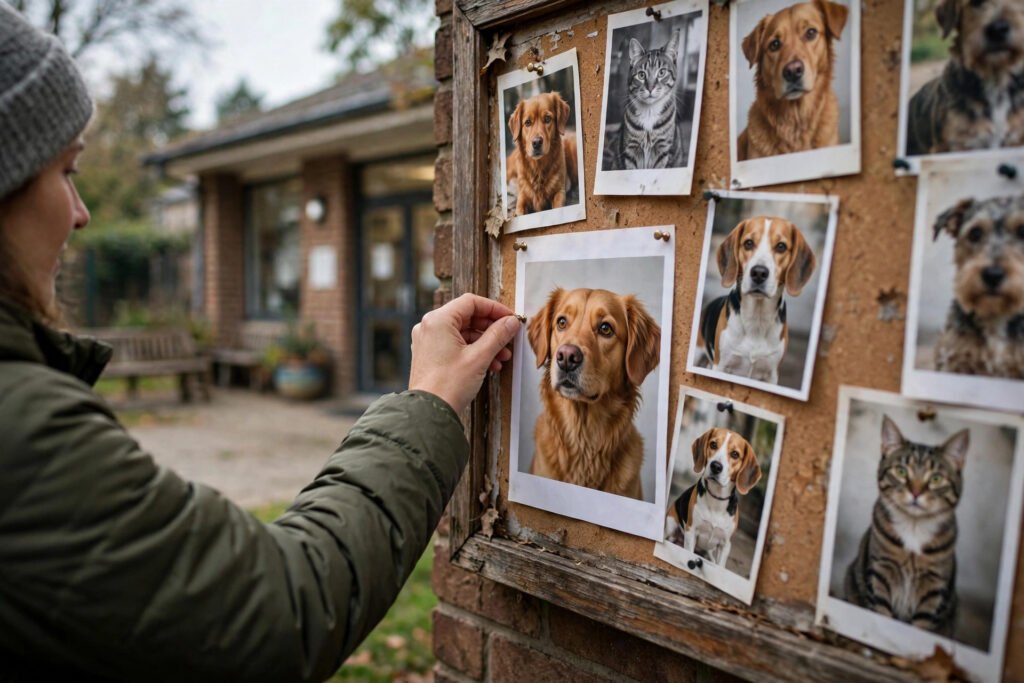
Not everyone is online. Post large, bright, simple flyers — “LOST DOG,” one big photo, phone number in huge type — at intersections near the last sighting, vet offices, pet stores, groomers, and community boards. Offer a reward if you can (no amount specified — “reward” alone motivates). Talk to mail carriers, delivery drivers, and landscapers — they cover ground daily and notice animals.
What Not to Do
Do not assume your pet will come home on their own — some do, many do not, and waiting wastes the stray-hold window. Do not chase a scared pet on foot or by car; it drives them further and into traffic. Instead, sit quietly with food and let them approach. Do not rely on a single shelter — check all of them, in person, repeatedly. Do not give up after a week: pets are recovered after weeks and months, especially cats, who can live as neighborhood strays indefinitely.
And beware of scams: anyone demanding payment before returning your pet, refusing to meet at a safe public place, or asking for gift cards is a scammer. Real finders want to reunite you; meet at a police station or shelter if anything feels off.
Prevention: Never Need This Guide Again
The best lost-pet strategy is never losing one. Secure fencing with locked gates, leashes on every outing (retractable leashes fail — use fixed-length), crates and closed rooms during parties and fireworks, and current ID on collars plus registered microchips. If you are still deciding on pet ownership, understanding whether a pet fits a busy lifestyle includes honestly assessing whether your home and routine can keep an animal safely contained — prevention is a daily discipline, not a one-time purchase.
Conclusion
Finding lost pets through local shelters means acting in the first hours, filing reports with every shelter in a 20-mile radius, checking in person daily during the short stray-hold window, keeping microchip registration current, and multiplying your reach through PawBoost, Petco Love Lost’s facial recognition, local Facebook groups, Nextdoor, and physical flyers. Most lost pets are recovered — but speed, persistence, and working every channel at once are what separate the reunions from the heartbreaks.
Frequently Asked Questions
How long do shelters hold stray animals?
Typically 3 to 7 days depending on state law and whether the animal has ID — Michigan generally holds unidentified strays about 4 days. After the hold expires, the animal can be adopted out. This is why immediate, in-person checking matters.
What are the chances of finding a lost indoor cat?
Good — studies show most lost indoor cats are found very close to home, often within a few houses, hiding in silence. They rarely travel far. Intensive nearby searching, especially at dawn and dusk, is the highest-yield strategy.
Does Petco Love Lost facial recognition actually work?
Yes — it is one of the more effective tools available, matching found-pet photos from shelters and individuals against lost listings. It is free and worth using alongside every other channel, not instead of them.
Should I offer a reward for my lost pet?
It can motivate finders, but never specify an amount publicly, never pay before you have your pet back, and meet in a safe public place. Be aware that reward posts attract scammers — verify before paying anything.
My pet has been missing for weeks. Should I keep looking?
Yes. Pets — especially cats — are recovered after weeks and months. Keep shelter checks going (weekly after the first month), keep online posts active and updated, and keep flyers fresh. Do not let the search go silent.